What does Leviticus 11:4 mean?
“Nevertheless these shall ye not eat of them that chew the cud, or of them that divide the hoof: as the camel, because he cheweth the cud, but divideth not the hoof; he is unclean unto you.” — Leviticus 11:4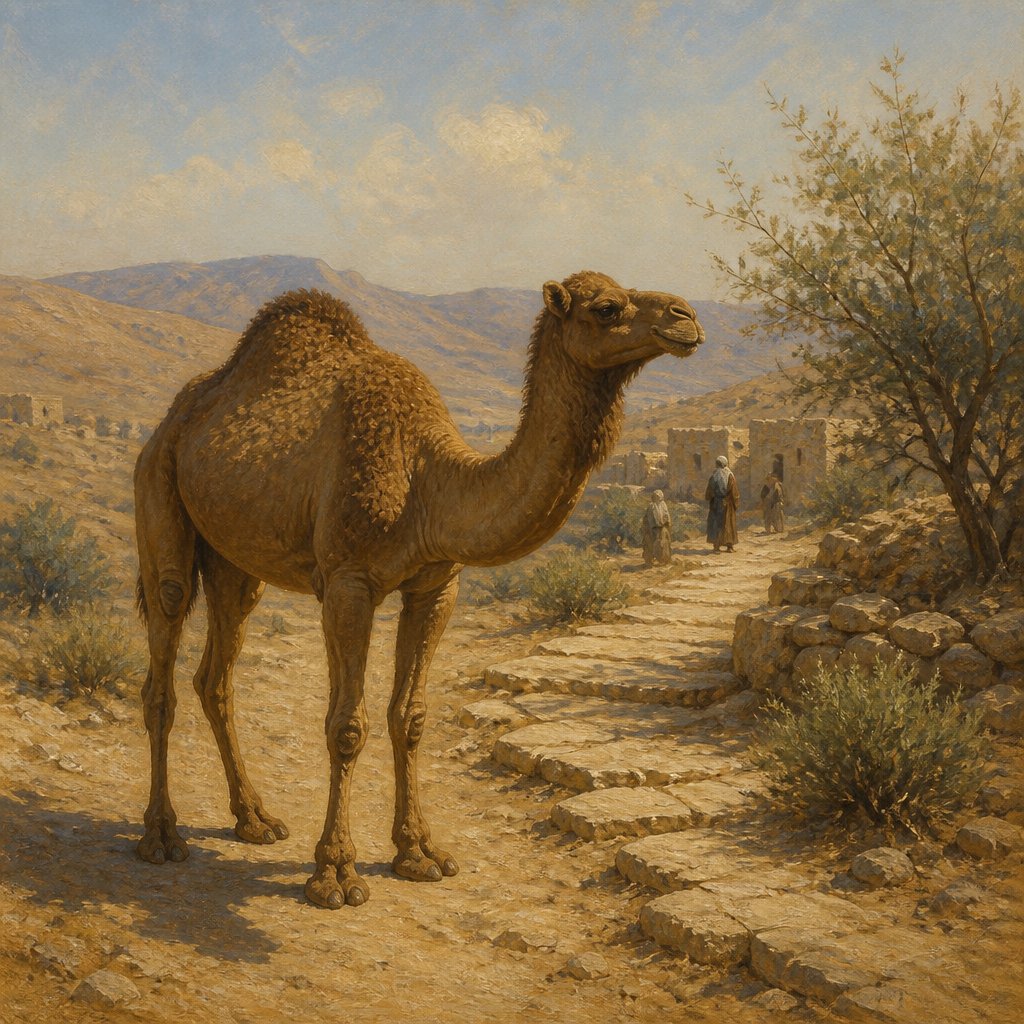
Leviticus 11:4 from the King James Version of the Bible reads, "Nevertheless these shall ye not eat of them that chew the cud, or of them that divide the hoof: as the camel, because he cheweth the cud, but divideth not the hoof; he is unclean unto you."
This verse is part of the dietary laws outlined in the book of Leviticus, which is the third book of the Hebrew Bible and the Old Testament. The book contains a list of laws and regulations that were given to the Israelites by God through Moses, particularly focusing on how they were to live their lives in a way that was set apart or holy.
The dietary laws in Leviticus were intended to set the Israelites apart from other nations and to remind them of the importance of living in a way that was pleasing to God. These laws served as a way of strengthening the spiritual, moral, and ethical character of the Israelites, and they helped to remind the people that their lives were meant to be lived with a sense of reverence and holiness before God.
In Leviticus 11:4, the specific animals mentioned, such as the camel which chews the cud but does not have a divided hoof, are considered unclean. This distinction between clean and unclean animals was intended to teach the Israelites about the importance of purity and separation. It was a way for them to understand that their lives were to be lived in a way that was distinct from the practices of the surrounding nations, and it was also a way for them to demonstrate their obedience and reverence towards God.
The theme of purity is central to the dietary laws in Leviticus. The idea of clean and unclean animals was not just about physical health, but it was also about spiritual purity. By following these laws, the Israelites were constantly reminded of the need to live in a way that was morally and spiritually pure. The dietary laws were also a way for the Israelites to demonstrate their trust in God's wisdom and guidance, even in areas as seemingly mundane as what they could or could not eat.
Another important theme in Leviticus 11:4 is obedience. The Israelites were expected to obey the laws and regulations that were given to them by God. This obedience was not simply a matter of blind adherence to rules, but it was about showing reverence and respect for the authority of God. By following the dietary laws, the Israelites were demonstrating their willingness to submit to the will of God and to live in a way that was pleasing to Him.
The symbolism in this verse is also worth noting. The clean animals, those that both chew the cud and have a divided hoof, are often interpreted as symbols of moral and spiritual purity. The unclean animals, like the camel mentioned in Leviticus 11:4, are seen as symbols of impurity. This symbolism served as a constant reminder to the Israelites of the importance of living a life that was separate from sin and temptation, and it also pointed to the need for spiritual cleansing and purification.
Overall, Leviticus 11:4 and the surrounding dietary laws carry important themes of purity, obedience, and reverence. They were intended to guide the Israelites in living a life that was set apart and holy, and they served as a constant reminder of the need to live in a way that was morally and spiritually pure. These laws were not just about what the Israelites could or could not eat, but they were about shaping the character and identity of God's chosen people. Through these laws, the Israelites were called to be a people who were obedient, reverent, and devoted to living in a way that pleased God.
Get our apps


Artwork for Leviticus 11:4

Leviticus 11:4 - "Nevertheless these shall ye not eat of them that chew the cud, or of them that divide the hoof: as the camel, because he cheweth the cud, but divideth not the hoof; he is unclean unto you."
"Nevertheless these shall ye not eat of them that chew the cud, or of them that divide the hoof: as the camel, because he cheweth the cud, but divideth not the hoof; he is unclean unto you." - Leviticus 11:4

Leviticus 4:11 - "And the skin of the bullock, and all his flesh, with his head, and with his legs, and his inwards, and his dung,"
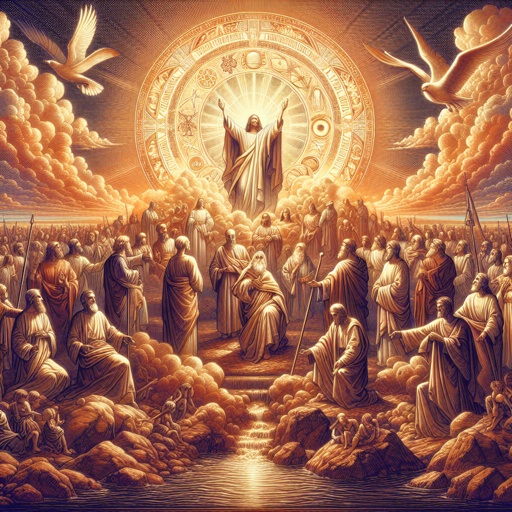
Leviticus 11:22
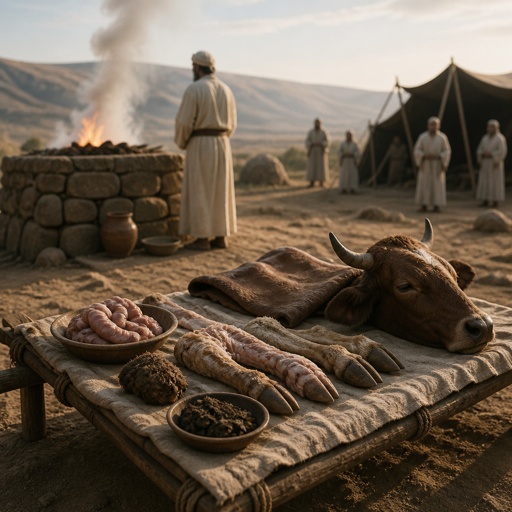
"And the skin of the bullock, and all his flesh, with his head, and with his legs, and his inwards, and his dung," - Leviticus 4:11
Leviticus 11:18 - "And the swan, and the pelican, and the gier eagle,"
Leviticus 11:17 - "And the little owl, and the cormorant, and the great owl,"

Leviticus 11:14 - "And the vulture, and the kite after his kind;"
Leviticus 11:15 - "Every raven after his kind;"

Leviticus 11:30 - "And the ferret, and the chameleon, and the lizard, and the snail, and the mole."

Leviticus 26: 4-6

Leviticus 11:19 - "And the stork, the heron after her kind, and the lapwing, and the bat."
Leviticus 26: 4-6

Leviticus 26: 4-6

Leviticus 9:11 - "And the flesh and the hide he burnt with fire without the camp."

Leviticus 4:1 - "And the LORD spake unto Moses, saying,"

Leviticus 11:1 - "And the LORD spake unto Moses and to Aaron, saying unto them,"

Leviticus 11:16 - "And the owl, and the night hawk, and the cuckow, and the hawk after his kind,"

Leviticus 27:4 - "And if it be a female, then thy estimation shall be thirty shekels."

Leviticus 11:41 - "And every creeping thing that creepeth upon the earth shall be an abomination; it shall not be eaten."

Leviticus 19:11 - "¶ Ye shall not steal, neither deal falsely, neither lie one to another."

Leviticus 7:11 - "And this is the law of the sacrifice of peace offerings, which he shall offer unto the LORD."

"And the swan, and the pelican, and the gier eagle," - Leviticus 11:18

Leviticus 11:12 - "Whatsoever hath no fins nor scales in the waters, that shall be an abomination unto you."

Leviticus 11:8 - "Of their flesh shall ye not eat, and their carcase shall ye not touch; they are unclean to you."

Leviticus 26:11 - "And I will set my tabernacle among you: and my soul shall not abhor you."

Leviticus 11:24 - "And for these ye shall be unclean: whosoever toucheth the carcase of them shall be unclean until the even."

Leviticus 3:11 - "And the priest shall burn it upon the altar: it is the food of the offering made by fire unto the LORD."

Leviticus 11:5 - "And the coney, because he cheweth the cud, but divideth not the hoof; he is unclean unto you."

Leviticus 11:20 - "All fowls that creep, going upon all four, shall be an abomination unto you."