What does Leviticus 11:31 mean?
“These are unclean to you among all that creep: whosoever doth touch them, when they be dead, shall be unclean until the even.” — Leviticus 11:31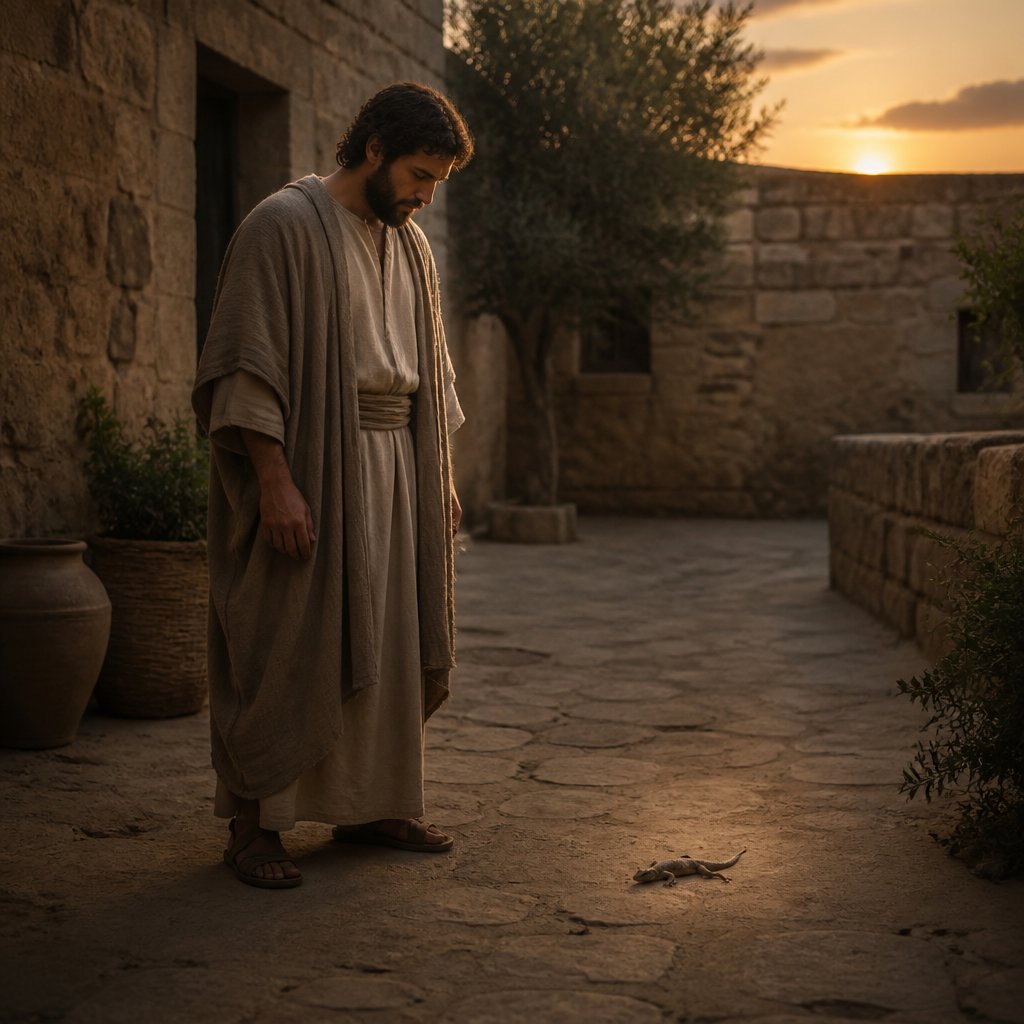
Leviticus 11:31 (KJV) states: "These are unclean to you among all that creep: whosoever doth touch them, when they be dead, shall be unclean until the even."
This verse comes from the book of Leviticus, which is the third book of the Hebrew Bible and the Old Testament of the Christian Bible. It is a book of laws and regulations, particularly in regards to the Israelites' religious and moral conduct. Leviticus is named after the Levites, the priestly tribe of Israel, and it is believed to have been written by Moses. The purpose of this verse, and the larger context of Leviticus, is to establish and maintain the purity and holiness of the Israelite community.
The verse specifically addresses the issue of uncleanness that arises from physical contact with certain creatures that "creep" or crawl. In the preceding verses of Leviticus 11, there is a list of animals that are considered unclean to the Israelites, including various insects, certain birds, and rodents. The verse in question warns that anyone who touches these unclean creatures when they are dead will themselves become unclean until the evening.
The theme of uncleanness and purity in Leviticus is not just about physical hygiene, but also about spiritual and moral purity. The categorization of certain animals as unclean is a reflection of the ancient Israelites' understanding of cleanliness and uncleanliness as a holistic concept that encompassed both the physical and the spiritual. By avoiding contact with these creatures, the Israelites were symbolically maintaining their separation from impurity and sin.
The principle of uncleanness extending from contact with unclean creatures reflects the broader idea that impurity can be transmitted through physical contact. This underscores the importance of maintaining personal and communal purity in the eyes of God. In the same way that physical uncleanness could be remedied through rituals of cleansing and purifying, the Israelites were also expected to engage in spiritual and moral purification to restore their relationship with God.
In a broader cultural and historical context, the regulations regarding purity and uncleanness in Leviticus were unique to the Israelites and set them apart from the surrounding ancient Near Eastern cultures. These laws served to define the Israelites as a distinct and separate community with its own unique religious and moral identity.
The symbolism in Leviticus 11:31 is also worth exploring. The idea of something being unclean until the evening suggests a temporary state of impurity that can be remedied through the passage of time. This can be seen as a reflection of the Israelites' belief in the potential for spiritual renewal and cleansing. It also emphasizes the importance of taking immediate action to address impurity and restore purity.
In Christian theology, Leviticus is often interpreted as a precursor to the New Testament concept of purity and holiness. While the teachings of Jesus Christ focus on the internal state of the heart rather than external rituals, there are still parallels between the Old Testament concept of purity and the Christian understanding of spiritual cleanliness. In this sense, Leviticus 11:31 can be seen as foreshadowing the need for spiritual purification and the capacity for renewal and restoration of God's grace.
In conclusion, Leviticus 11:31 illustrates the ancient Israelite understanding of purity and uncleanness as a holistic concept that encompassed physical, spiritual, and moral dimensions. The regulations in Leviticus aimed to establish and maintain the purity and holiness of the Israelite community, setting them apart as a distinct and separate people. The verse also carries symbolic and theological significance, pointing to the concepts of spiritual renewal and the need for personal and communal purification.
Get our apps


Artwork for Leviticus 11:31

Leviticus 11:31 - "These are unclean to you among all that creep: whosoever doth touch them, when they be dead, shall be unclean until the even."
"These are unclean to you among all that creep: whosoever doth touch them, when they be dead, shall be unclean until the even." - Leviticus 11:31

Leviticus 7:31 - "And the priest shall burn the fat upon the altar: but the breast shall be Aaron's and his sons'."

Leviticus 22:31 - "Therefore shall ye keep my commandments, and do them: I am the LORD."

Leviticus 16:31 - "It shall be a sabbath of rest unto you, and ye shall afflict your souls, by a statute for ever."
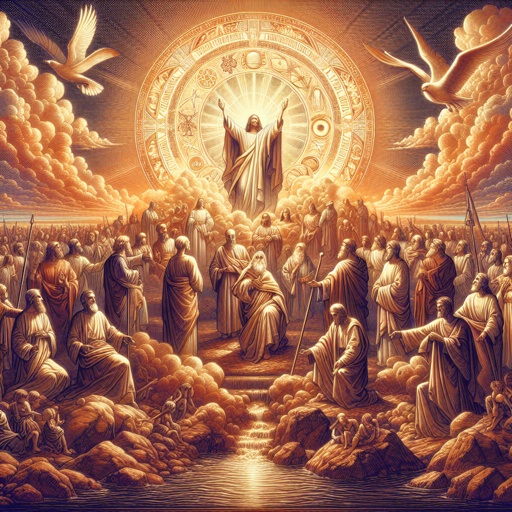
Leviticus 11:22

Leviticus 27:31 - "And if a man will at all redeem ought of his tithes, he shall add thereto the fifth part thereof."

Leviticus 23:31 - "Ye shall do no manner of work: it shall be a statute for ever throughout your generations in all your dwellings."
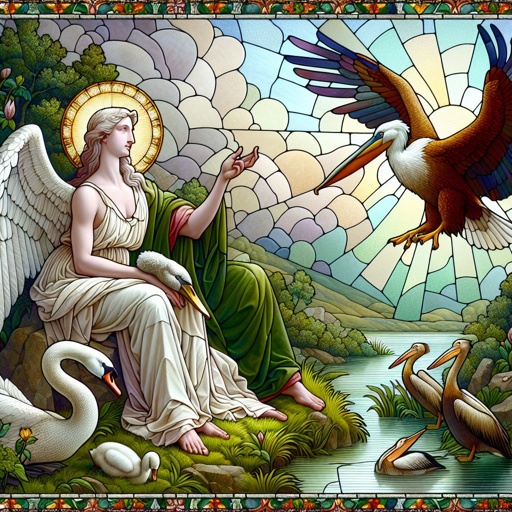
Leviticus 11:18 - "And the swan, and the pelican, and the gier eagle,"

Leviticus 19:31 - "¶ Regard not them that have familiar spirits, neither seek after wizards, to be defiled by them: I am the LORD your God."

Leviticus 11:17 - "And the little owl, and the cormorant, and the great owl,"

Leviticus 11:14 - "And the vulture, and the kite after his kind;"

Leviticus 11:15 - "Every raven after his kind;"
Leviticus 26:31 - "And I will make your cities waste, and bring your sanctuaries unto desolation, and I will not smell the savour of your sweet odours."

Leviticus 15:31 - "Thus shall ye separate the children of Israel from their uncleanness; that they die not in their uncleanness, when they defile my tabernacle that is among them."

1 Kings 11:30-31

1 Kings 11:30-31

1 Kings 11:30-31

Leviticus 11:30 - "And the ferret, and the chameleon, and the lizard, and the snail, and the mole."

Job 31:11 - "For this is an heinous crime; yea, it is an iniquity to be punished by the judges."

Ecclesiates 3:1

Leviticus 25:31 - "But the houses of the villages which have no wall round about them shall be counted as the fields of the country: they may be redeemed, and they shall go out in the jubile."

Leviticus 11:19 - "And the stork, the heron after her kind, and the lapwing, and the bat."

Lamentations 3:1-18

1 John 3:1-3

Leviticus 9:11 - "And the flesh and the hide he burnt with fire without the camp."

1 Corinthians 11:31 - "For if we would judge ourselves, we should not be judged."

Numbers 31:11 - "And they took all the spoil, and all the prey, both of men and of beasts."

Leviticus 14:31 - "Even such as he is able to get, the one for a sin offering, and the other for a burnt offering, with the meat offering: and the priest shall make an atonement for him that is to be cleansed before the LORD."

1 Samuel 3:1-10