What does Leviticus 12:3 mean?
“And in the eighth day the flesh of his foreskin shall be circumcised.” — Leviticus 12:3
Leviticus 12:3 in the King James Version (KJV) of the Bible states, "And in the eighth day the flesh of his foreskin shall be circumcised." This verse is part of a larger passage in the book of Leviticus which describes the laws and rituals related to childbirth and purification after childbirth. In this particular verse, the focus is on the circumcision of male infants on the eighth day after their birth.
The act of circumcision holds great significance in the Hebrew Bible and the Jewish tradition. It is considered a covenant between God and Abraham, as described in Genesis 17:10-14. In that passage, God tells Abraham to circumcise himself, his male descendants, and any male slaves and foreign-born men in his household as a sign of the covenant between God and the Israelites. This covenant is a central theme in the Old Testament and is a symbol of the special relationship between the Israelites and God.
In a broader theological sense, circumcision is also seen as a symbol of purification and consecration. The removal of the foreskin is viewed as a physical and spiritual purification, symbolizing the removal of impurity and the separation of the Israelites as a holy people. The act of circumcision also serves as a way for the individual to be dedicated to God and his covenant.
In the specific context of Leviticus 12:3, the requirement for circumcision on the eighth day is significant. The number eight is often associated with new beginnings and the fulfillment of a promise. In the Bible, the number eight is often linked to resurrection and regeneration, as seen in the story of Noah and the flood, where eight people survived and made a new beginning for humanity. Therefore, the timing of circumcision on the eighth day can be seen as symbolizing the new life and new beginning that comes with the covenant relationship with God.
Furthermore, the emphasis on the eighth day is also significant in terms of medical and physiological understanding. It has been observed that on the eighth day of life, infants have a higher level of vitamin K, which is necessary for blood clotting, and their immune systems are stronger. This is an example of how the biblical practice of circumcision aligns with modern medical science and reflects an understanding of the optimal time for this procedure.
In addition to its theological and symbolic significance, circumcision has also played a crucial role in the identity and solidarity of the Jewish people throughout history. It has served as a visible marker of Jewish identity and has been a key aspect of Jewish communal and ritual life. The practice of circumcision has been maintained and celebrated by Jewish communities as a way of perpetuating their unique covenant with God and their distinct cultural and religious heritage.
Overall, Leviticus 12:3 and the broader context of circumcision in the Bible highlight the themes of covenant, purification, consecration, and identity. The act of circumcision serves as a physical and spiritual sign of the covenant between God and the Israelites, and it has been a central practice in Jewish tradition for millennia. The emphasis on the eighth day and the symbolism associated with it further reinforce the significance of this ritual in the biblical narrative. As such, this verse continues to be a central part of Jewish tradition and provides a rich source of theological reflection and spiritual understanding.
Get our apps


Artwork for Leviticus 12:3

Leviticus 12:3 - "And in the eighth day the flesh of his foreskin shall be circumcised."

"And in the eighth day the flesh of his foreskin shall be circumcised." - Leviticus 12:3

Leviticus 3:12 - "¶ And if his offering be a goat, then he shall offer it before the LORD."

"¶ And if his offering be a goat, then he shall offer it before the LORD." - Leviticus 3:12
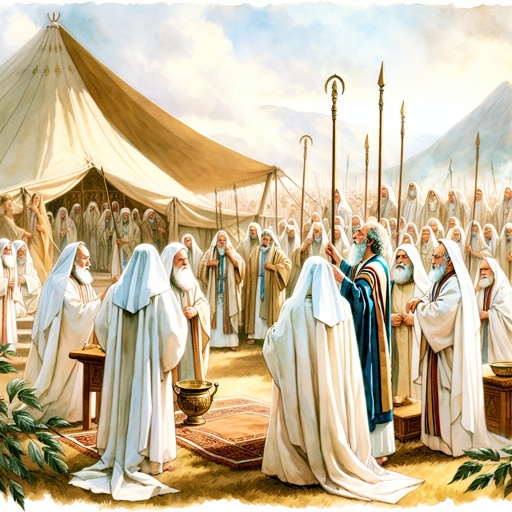
Leviticus 8:1-12

Leviticus 12:1 - "And the LORD spake unto Moses, saying,"

Leviticus 24:12 - "And they put him in ward, that the mind of the LORD might be shewed them."

Leviticus 26:12 - "And I will walk among you, and will be your God, and ye shall be my people."

Leviticus 11:12 - "Whatsoever hath no fins nor scales in the waters, that shall be an abomination unto you."
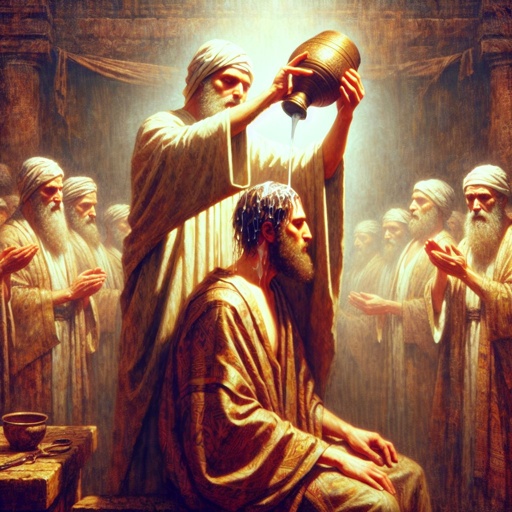
Leviticus 8:12 - "And he poured of the anointing oil upon Aaron's head, and anointed him, to sanctify him."

Leviticus 25:12 - "For it is the jubile; it shall be holy unto you: ye shall eat the increase thereof out of the field."

"And the LORD spake unto Moses, saying," - Leviticus 12:1

Leviticus 8:3 - "And gather thou all the congregation together unto the door of the tabernacle of the congregation."

Leviticus 26:3 - "¶ If ye walk in my statutes, and keep my commandments, and do them;"

Leviticus 18:12 - "Thou shalt not uncover the nakedness of thy father's sister: she is thy father's near kinswoman."

Leviticus 22:12 - "If the priest's daughter also be married unto a stranger, she may not eat of an offering of the holy things."

Leviticus 27:12 - "And the priest shall value it, whether it be good or bad: as thou valuest it, who art the priest, so shall it be."

Leviticus 3:7 - "If he offer a lamb for his offering, then shall he offer it before the LORD."

Leviticus 7:3 - "And he shall offer of it all the fat thereof; the rump, and the fat that covereth the inwards,"

Leviticus 3:3 - "And he shall offer of the sacrifice of the peace offering an offering made by fire unto the LORD; the fat that covereth the inwards, and all the fat that is upon the inwards,"

Leviticus 2:12 - "¶ As for the oblation of the firstfruits, ye shall offer them unto the LORD: but they shall not be burnt on the altar for a sweet savour."

Leviticus 3:11 - "And the priest shall burn it upon the altar: it is the food of the offering made by fire unto the LORD."

Leviticus 15:12 - "And the vessel of earth, that he toucheth which hath the issue, shall be broken: and every vessel of wood shall be rinsed in water."

Leviticus 11:3 - "Whatsoever parteth the hoof, and is clovenfooted, and cheweth the cud, among the beasts, that shall ye eat."

Leviticus 19:12 - "¶ And ye shall not swear by my name falsely, neither shalt thou profane the name of thy God: I am the LORD."

Leviticus 17:3 - "What man soever there be of the house of Israel, that killeth an ox, or lamb, or goat, in the camp, or that killeth it out of the camp,"

Leviticus 16:3 - "Thus shall Aaron come into the holy place: with a young bullock for a sin offering, and a ram for a burnt offering."

Matthew 3:11-12

Leviticus 9:12 - "And he slew the burnt offering; and Aaron's sons presented unto him the blood, which he sprinkled round about upon the altar."

Matthew 3:11-12