What does Leviticus 13:28 mean?
“And if the bright spot stay in his place, and spread not in the skin, but it be somewhat dark; it is a rising of the burning, and the priest shall pronounce him clean: for it is an inflammation of the burning.” — Leviticus 13:28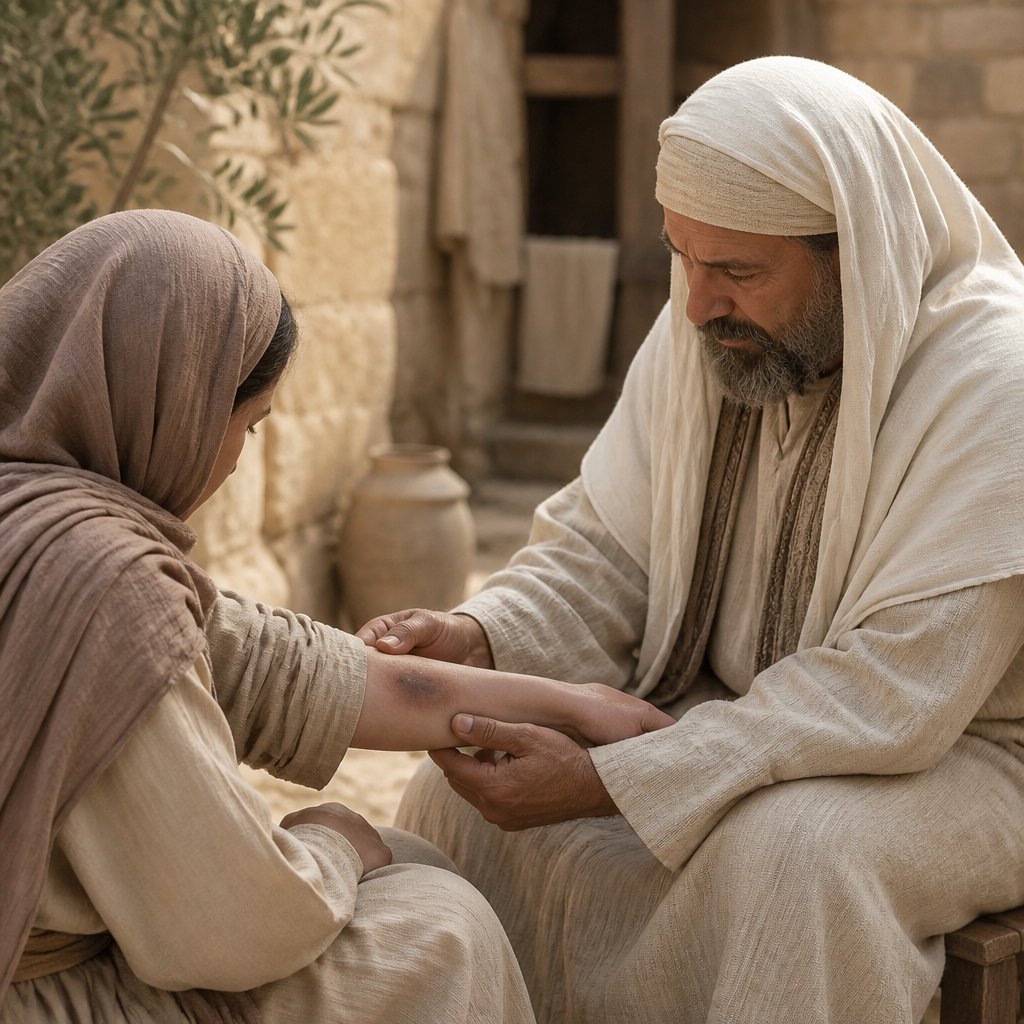
Leviticus 13:28 (KJV) - "And if the bright spot stay in his place, and spread not in the skin, but it be somewhat dark; it is a rising of the burning, and the priest shall pronounce him clean: for it is an inflammation of the burning."
The book of Leviticus is part of the Pentateuch, the first five books of the Bible, and more specifically, it is a book of laws and regulations given to the Israelites by God through Moses. Leviticus 13 specifically deals with laws about leprosy, skin diseases, and mildew, and the passage in question is one of many verses in this chapter that provides guidance and instructions for determining whether an individual is clean or unclean due to a skin ailment.
In this particular verse, the focus is on a bright spot that stays in its place and does not spread in the skin, but is somewhat dark. The significance of this bright spot not spreading could suggest that it is not an infectious or contagious condition, and the fact that it is somewhat dark may indicate a different type of skin issue than the one previously described. The priest is instructed to pronounce the individual as clean, as it is determined to be an inflammation of the burning.
At a surface level, this verse may seem to be addressing purely physical health and cleanliness. However, when examined in context and within the broader themes of the Bible, there are deeper spiritual and symbolic meanings that can be derived from this passage.
One of the key themes present in Leviticus 13 and throughout the Bible is the concept of purity and cleanliness. In the Old Testament, physical ailments and impurities were often mirrored by spiritual impurities, and the act of being declared clean or unclean had implications not only for one's physical health but also for their standing before God. This can be seen as a foreshadowing of the spiritual purification and redemption brought about by Jesus Christ in the New Testament. Just as the priest pronounced individuals clean or unclean based on physical signs, Jesus offers spiritual cleansing to those who believe in Him.
Furthermore, the idea of a bright spot that does not spread and remains in its place can be seen as a metaphor for standing firm in one's faith and not succumbing to the temptations and influences of the world. The darkness of the spot could represent sin and spiritual impurity, while the fact that it does not spread signifies an individual's ability to resist and overcome such influences.
The role of the priest in pronouncing the individual clean also holds symbolic significance. In the Bible, priests served as mediators between God and the people, and their role in declaring someone clean or unclean reflects the authority and judgment given to them by God. In the New Testament, Jesus is described as the ultimate high priest who intercedes on behalf of believers, providing spiritual cleansing and restoration.
In addition to these spiritual themes, there is also an element of trust and reliance on the judgment of the priest. The Israelites were instructed to follow the guidance of the priests in matters of purity and cleanliness, demonstrating their trust in God's appointed leaders. This trust in the priest's judgment can also be seen as a precursor to the trust and faith that believers are called to place in God and His representatives.
Overall, Leviticus 13:28 offers a multi-layered and thought-provoking exploration of purity, faith, and trust within the context of physical health and spiritual symbolism. It serves as a reminder of the interconnectedness of physical and spiritual well-being and the importance of seeking purification and restoration both in body and spirit.
Get our apps


Artwork for Leviticus 13:28

Leviticus 13:28 - "And if the bright spot stay in his place, and spread not in the skin, but it be somewhat dark; it is a rising of the burning, and the priest shall pronounce him clean: for it is an inflammation of the burning."
"And if the bright spot stay in his place, and spread not in the skin, but it be somewhat dark; it is a rising of the burning, and the priest shall pronounce him clean: for it is an inflammation of the burning." - Leviticus 13:28

Leviticus 7:28 - "¶ And the LORD spake unto Moses, saying,"

Leviticus 22:28 - "And whether it be cow or ewe, ye shall not kill it and her young both in one day."

Genesis 28-13

Ezekiel 28:13

"¶ And the LORD spake unto Moses, saying," - Leviticus 7:28

Leviticus 24:13 - "And the LORD spake unto Moses, saying,"

Mark 13:28-37

Mark 13:28-37

Leviticus 21:13 - "And he shall take a wife in her virginity."

Leviticus 13:1 - "And the LORD spake unto Moses and Aaron, saying,"

Leviticus 11:28 - "And he that beareth the carcase of them shall wash his clothes, and be unclean until the even: they are unclean unto you."

Leviticus 18:28 - "That the land spue not you out also, when ye defile it, as it spued out the nations that were before you."

Leviticus 6:28 - "But the earthen vessel wherein it is sodden shall be broken: and if it be sodden in a brasen pot, it shall be both scoured, and rinsed in water."

Leviticus 15:28 - "But if she be cleansed of her issue, then she shall number to herself seven days, and after that she shall be clean."

Mark 13:28-37

luke 13:28-37

Luke 13:28-27

Luke 13:28-27

Luke 13:28-27

Mark 13:28-37

luke 13:28-37

Leviticus 13:35 - "But if the scall spread much in the skin after his cleansing;"

Leviticus 23:28 - "And ye shall do no work in that same day: for it is a day of atonement, to make an atonement for you before the LORD your God."

Leviticus 13:29 - "¶ If a man or woman have a plague upon the head or the beard;"

Leviticus 26:28 - "Then I will walk contrary unto you also in fury; and I, even I, will chastise you seven times for your sins."

Exodus 28:13 - "¶ And thou shalt make ouches of gold;"

Leviticus 13:18 - "¶ The flesh also, in which, even in the skin thereof, was a boil, and is healed,"

Leviticus 16:28 - "And he that burneth them shall wash his clothes, and bathe his flesh in water, and afterward he shall come into the camp."