What does Leviticus 13:31 mean?
“And if the priest look on the plague of the scall, and, behold, it be not in sight deeper than the skin, and that there is no black hair in it; then the priest shall shut up him that hath the plague of the scall seven days:” — Leviticus 13:31
Leviticus 13:31 in the King James Version of the Bible reads, "And if the priest look on the plague of the scall, and, behold, it be not in sight deeper than the skin, and that there is no black hair in it; then the priest shall shut up him that hath the plague of the scall seven days."
This verse is part of the book of Leviticus, which is the third book of the Bible and is filled with detailed instructions for the Israelites on how to live a holy and consecrated life. Leviticus is often seen as a book of laws and regulations, but it also reveals important insights into the nature of God and the relationship between Him and His people.
The specific verse in question deals with a skin condition known as scall, which the Israelites were to be mindful of. The priest was to examine the affected person and determine whether the scall had spread deeper than the skin and if there was any black hair within it. If the condition did not meet these criteria, the person was to be quarantined for seven days.
From a literal perspective, this verse is a part of the extensive regulations set forth to ensure the physical and ritual purity of the Israelites. Skin diseases and other bodily ailments were considered to be external manifestations of internal impurity, and the priests were responsible for examining and diagnosing these conditions.
From a spiritual perspective, this verse highlights the importance of discernment and careful observation. The priest was not to simply assume the severity of the condition but was to thoroughly examine it before making a judgment. This attention to detail and careful consideration is a reminder of the importance of wisdom and discernment in the life of a believer.
The symbolism within this verse is profound. The scall itself can be seen as a metaphor for sin or impurity. The meticulous examination by the priest serves as a reminder that sin should not be taken lightly or dismissed without careful consideration. Just as the priest carefully inspected the scall, believers are called to examine their own hearts and lives for any signs of sin or impurity.
The seven-day quarantine period also holds spiritual significance. The number seven is often associated with completion and rest in the Bible. The quarantine represents a period of waiting and reflection, allowing the person to be isolated and examined before being declared clean. This mirrors the importance of taking time for self-reflection and seeking spiritual cleansing and healing.
Furthermore, the emphasis on the color of the hair within the scall could be symbolic of the presence of sin. In ancient Hebrew culture, black hair was often associated with mourning and impurity, and here it could represent the presence of sin within the person. The absence of black hair in the scall could then be seen as a symbol of purity and the absence of sin.
The broader context of Leviticus 13 also sheds light on the themes of holiness, purity, and the role of the priestly class in ancient Israel. As the Israelites sought to live in accordance with God's commands, they were constantly reminded of the need for physical and spiritual purity. The intricate rituals and regulations outlined in Leviticus served as a constant reminder of the seriousness with which God views sin and impurity.
In conclusion, Leviticus 13:31 may seem like a mundane regulation at first glance, but it holds deep spiritual and symbolic significance. It serves as a reminder of the importance of discernment, self-reflection, and the pursuit of holiness in the life of a believer. The careful examination of the scall by the priest and the subsequent quarantine period can be seen as a metaphor for the meticulous examination of our hearts and lives for any signs of sin or impurity, and the importance of seeking spiritual cleansing and healing.
Get our apps


Artwork for Leviticus 13:31
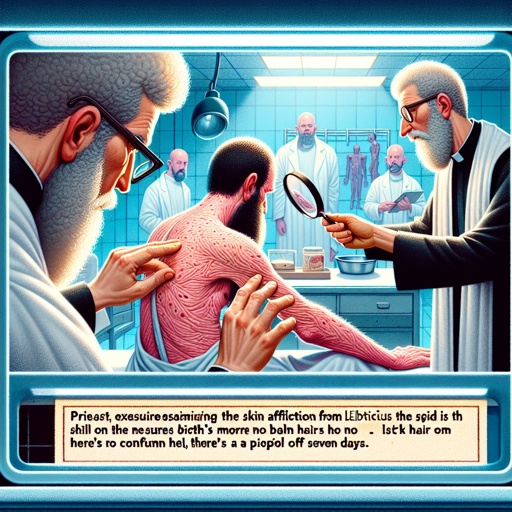
Leviticus 13:31 - "And if the priest look on the plague of the scall, and, behold, it be not in sight deeper than the skin, and that there is no black hair in it; then the priest shall shut up him that hath the plague of the scall seven days:"

"And if the priest look on the plague of the scall, and, behold, it be not in sight deeper than the skin, and that there is no black hair in it; then the priest shall shut up him that hath the plague of the scall seven days:" - Leviticus 13:31

1 John 3:1-3

Altar rebuilt in Jerusalem. Ezra 3:1-3

Leviticus 7:31 - "And the priest shall burn the fat upon the altar: but the breast shall be Aaron's and his sons'."

Leviticus 22:31 - "Therefore shall ye keep my commandments, and do them: I am the LORD."

Leviticus 16:31 - "It shall be a sabbath of rest unto you, and ye shall afflict your souls, by a statute for ever."

Leviticus 27:31 - "And if a man will at all redeem ought of his tithes, he shall add thereto the fifth part thereof."

Leviticus 23:31 - "Ye shall do no manner of work: it shall be a statute for ever throughout your generations in all your dwellings."

John 13:31-35

Leviticus 11:31 - "These are unclean to you among all that creep: whosoever doth touch them, when they be dead, shall be unclean until the even."

Leviticus 19:31 - "¶ Regard not them that have familiar spirits, neither seek after wizards, to be defiled by them: I am the LORD your God."

1 Sam 31: 12-13

Leviticus 24:13 - "And the LORD spake unto Moses, saying,"

Leviticus 15:31 - "Thus shall ye separate the children of Israel from their uncleanness; that they die not in their uncleanness, when they defile my tabernacle that is among them."
Leviticus 26:31 - "And I will make your cities waste, and bring your sanctuaries unto desolation, and I will not smell the savour of your sweet odours."

Leviticus 21:13 - "And he shall take a wife in her virginity."

Leviticus 13:1 - "And the LORD spake unto Moses and Aaron, saying,"

Leviticus 13:35 - "But if the scall spread much in the skin after his cleansing;"

Leviticus 25:31 - "But the houses of the villages which have no wall round about them shall be counted as the fields of the country: they may be redeemed, and they shall go out in the jubile."

Leviticus 13:29 - "¶ If a man or woman have a plague upon the head or the beard;"

Proverbs 31:13 - "She seeketh wool, and flax, and worketh willingly with her hands."

Leviticus 13:18 - "¶ The flesh also, in which, even in the skin thereof, was a boil, and is healed,"

Leviticus 13:14 - "But when raw flesh appeareth in him, he shall be unclean."

Leviticus 13:47 - "¶ The garment also that the plague of leprosy is in, whether it be a woollen garment, or a linen garment;"

Leviticus 14:31 - "Even such as he is able to get, the one for a sin offering, and the other for a burnt offering, with the meat offering: and the priest shall make an atonement for him that is to be cleansed before the LORD."

Leviticus 13:9 - "¶ When the plague of leprosy is in a man, then he shall be brought unto the priest;"

Mark 13:31 - "Heaven and earth shall pass away: but my words shall not pass away."

Leviticus 13:22 - "And if it spread much abroad in the skin, then the priest shall pronounce him unclean: it is a plague."

Leviticus 25:13 - "In the year of this jubile ye shall return every man unto his possession."