What does Leviticus 16:20 mean?
“And when he hath made an end of reconciling the holy place, and the tabernacle of the congregation, and the altar, he shall bring the live goat:” — Leviticus 16:20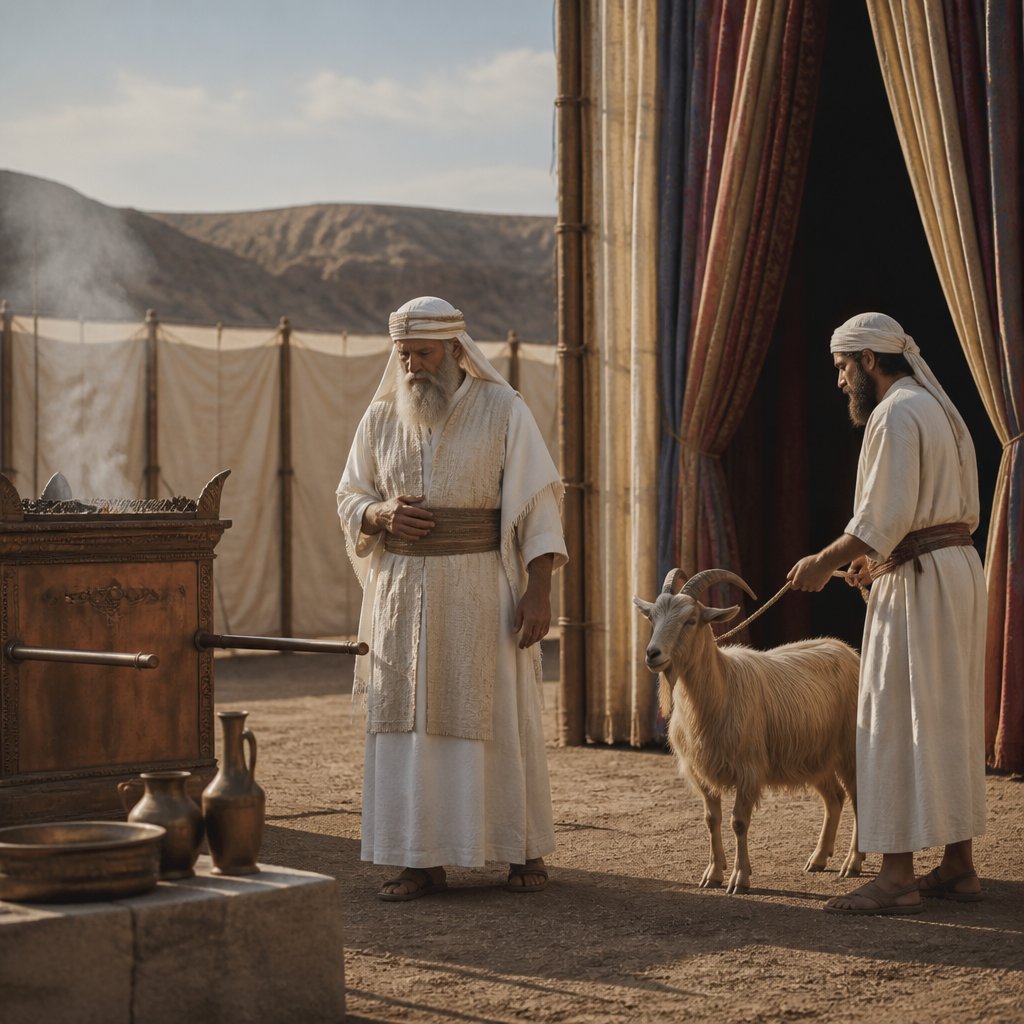
Leviticus 16:20 - "And when he hath made an end of reconciling the holy place, and the tabernacle of the congregation, and the altar, he shall bring the live goat:"
This verse comes from the book of Leviticus in the Old Testament of the Bible. Leviticus is a part of the Torah, which contains the laws and regulations given to the Israelites by God through Moses. In the broader context of Leviticus, this verse appears in a passage that describes the rituals and protocols for the Day of Atonement, also known as Yom Kippur.
The Day of Atonement was the most important and solemn annual event in the religious calendar of ancient Israel. It was a day of repentance and seeking forgiveness for sins, both individually and collectively as a community. The rituals outlined in Leviticus 16 were designed to purify the people and the tabernacle from sin and to restore the relationship between God and his people through the removal of impurity and guilt.
In Leviticus 16:20, the focus is on the live goat, which plays a significant role in the Day of Atonement ritual. This verse occurs after the High Priest has completed the atonement process for the Most Holy Place, the tent of meeting, and the altar. The live goat is an integral part of the ritual, and its purpose is to symbolize the removal of the sins of the people.
The live goat is presented before the Lord, and the High Priest confesses over it all the sins and transgressions of the people, symbolically transferring these sins onto the goat. This act of confessing and transferring sin onto the goat illustrates the concept of substitutionary atonement, where an innocent creature bears the burden of the people's sins. The live goat is then released into the wilderness, carrying away the sins of the people and symbolizing their removal from the community and their reconciliation with God.
From a thematic perspective, Leviticus 16:20 underscores the significance of atonement and reconciliation in the religious life of the Israelites. The idea of atonement is central to the Hebrew Bible, emphasizing the need for addressing sin and guilt in order to restore harmony and relationship with God. The Day of Atonement rituals provided a means for the people to seek forgiveness, to purify themselves, and to renew their commitment to living in alignment with God's laws and commandments.
The context of Leviticus 16:20 is also important for understanding its significance. The Israelites were a community living in a covenant relationship with God, and the rituals of the Day of Atonement were integral to maintaining that covenant. The Day of Atonement was a time of deep reflection, repentance, and renewal, as the people sought to be cleansed from their sins and to be reconciled with God.
Furthermore, the symbolism of the live goat in Leviticus 16:20 points to the theological concept of sacrifice and redemption. The live goat serves as a scapegoat, bearing the burden of the people's sins and carrying them away into the wilderness. This imagery foreshadows the ultimate sacrifice of Jesus Christ in the New Testament, who is described as the "Lamb of God" who takes away the sins of the world (John 1:29). The parallels between the sacrificial goat and the sacrificial nature of Jesus Christ point to the interconnectedness of the Old and New Testaments and the continuity of God's redemptive plan for humanity.
In conclusion, Leviticus 16:20 as part of the broader Day of Atonement rituals, highlights the themes of atonement, reconciliation, and sacrifice in the religious life of ancient Israel. The verse illustrates the profound significance of seeking forgiveness and cleansing from sin in order to maintain a relationship with God. Additionally, the symbolism of the live goat points to the theological underpinnings of sacrifice and redemption, foreshadowing the ultimate sacrifice of Jesus Christ in the New Testament. As such, Leviticus 16:20 remains a powerful and meaningful expression of the central themes of the biblical narrative.
Get our apps


Artwork for Leviticus 16:20

Leviticus 16:20 - "¶ And when he hath made an end of reconciling the holy place, and the tabernacle of the congregation, and the altar, he shall bring the live goat:"
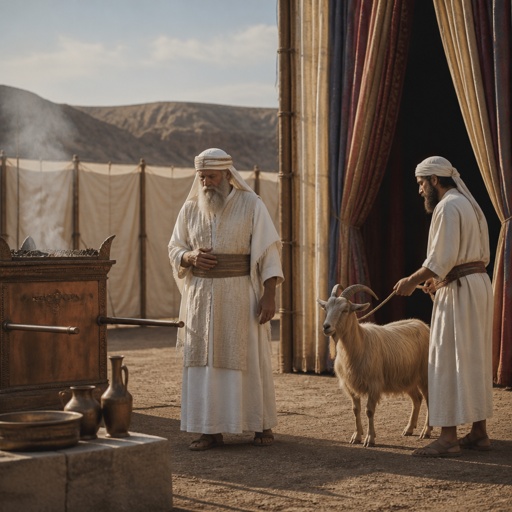
"¶ And when he hath made an end of reconciling the holy place, and the tabernacle of the congregation, and the altar, he shall bring the live goat:" - Leviticus 16:20

Leviticus 23:20

Leviticus 24:20-23

Leviticus 16:8

Leviticus 20:1 - "And the LORD spake unto Moses, saying,"

Leviticus 10:20 - "And when Moses heard that, he was content."

leviticus 16:7-10

Leviticus 21:16 - "¶ And the LORD spake unto Moses, saying,"

Leviticus 20:22-26 simple picture

Picture to summarize Leviticus 20:22-26

Leviticus 20:20 - "And if a man shall lie with his uncle's wife, he hath uncovered his uncle's nakedness: they shall bear their sin; they shall die childless."

Leviticus 9:16 - "And he brought the burnt offering, and offered it according to the manner."

Leviticus 9:20 - "And they put the fat upon the breasts, and he burnt the fat upon the altar:"

Leviticus 8:20 - "And he cut the ram into pieces; and Moses burnt the head, and the pieces, and the fat."

Leviticus 22:20 - "But whatsoever hath a blemish, that shall ye not offer: for it shall not be acceptable for you."

Leviticus 4:16 - "And the priest that is anointed shall bring of the bullock's blood to the tabernacle of the congregation:"

Leviticus 11:16 - "And the owl, and the night hawk, and the cuckow, and the hawk after his kind,"

Leviticus 16:25 - "And the fat of the sin offering shall he burn upon the altar."

Leviticus 20:7 - "¶ Sanctify yourselves therefore, and be ye holy: for I am the LORD your God."

Mark 16:20
Mark 16:20

Deuteronomy 20:16
Mark 16:20

Genesis 20-16

Mark 16:20

Deuteronomy 20:16

Mark 16:20

Deuteronomy 20:16

Leviticus 18:16 - "Thou shalt not uncover the nakedness of thy brother's wife: it is thy brother's nakedness."