What does Leviticus 17:4 mean?
“And bringeth it not unto the door of the tabernacle of the congregation, to offer an offering unto the LORD before the tabernacle of the LORD; blood shall be imputed unto that man; he hath shed blood; and that man shall be cut off from among his people:” — Leviticus 17:4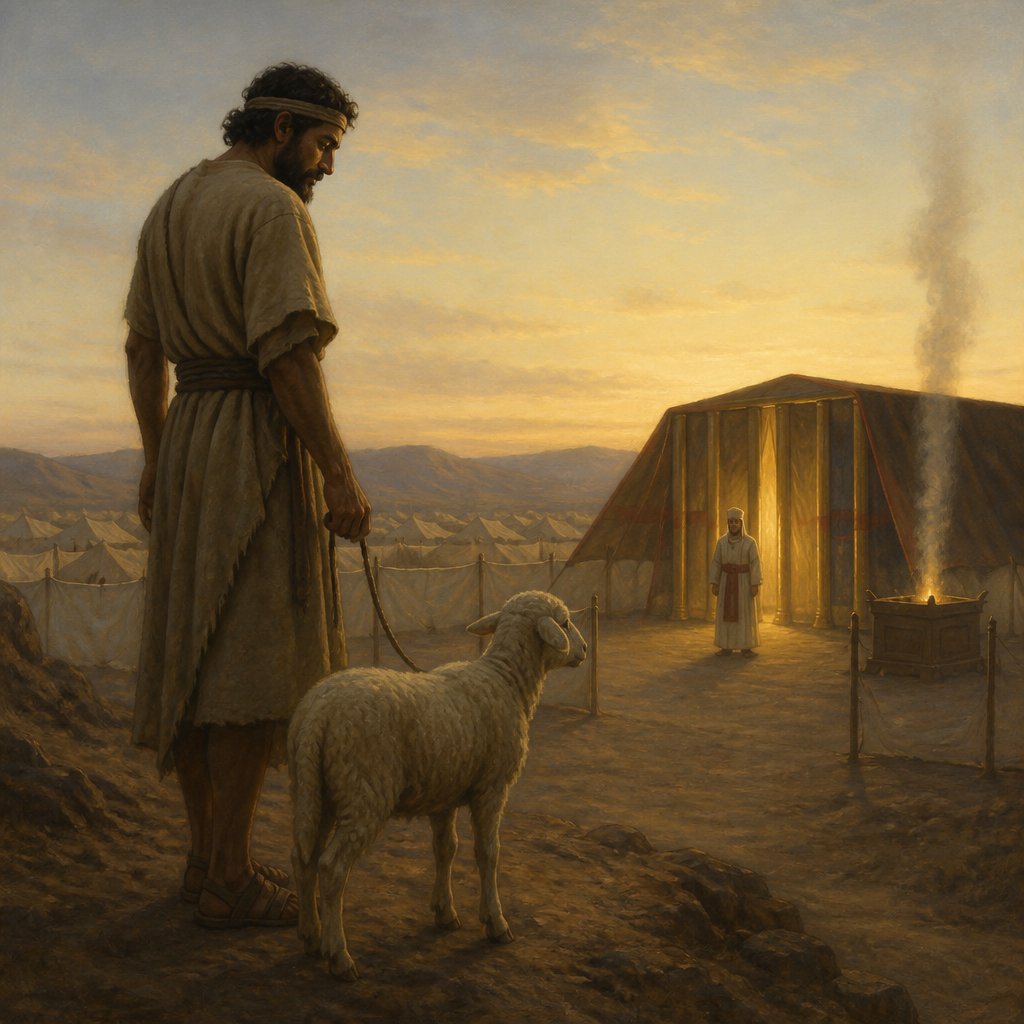
Leviticus 17:4 (KJV) states, "And bringeth it not unto the door of the tabernacle of the congregation, to offer an offering unto the Lord before the tabernacle of the Lord; blood shall be imputed unto that man; he hath shed blood; and that man shall be cut off from among his people."
This verse is part of the Book of Leviticus, which is the third book of the Old Testament and a foundational text in the Torah. Leviticus is primarily concerned with laws and regulations related to ritual purity, sacrifices, and the priesthood. The verse has both historical and religious significance, as it sheds light on the practices and beliefs of the ancient Israelites and provide guidance for their religious observance.
The verse emphasizes the importance of bringing offerings to the proper place and in the prescribed manner. In ancient Israel, the tabernacle was a portable tent-like structure that served as a sacred place for worship and sacrifice. It was believed to be the dwelling place of God among the Israelites, and thus, offerings were to be brought to the door of the tabernacle as a sign of reverence and obedience.
The act of bringing offerings to the tabernacle was a central aspect of Israelite religious life. By requiring that offerings be brought to the tabernacle, the verse underscores the idea that worship and sacrifice should be centralized and conducted in a specific and regulated manner. This reflects the belief that God's presence was closely associated with the tabernacle and that proper worship required adherence to specific rituals and protocols.
The use of blood in the verse is significant as well. In the ancient world, blood was often seen as a powerful symbol of life and death. In the context of sacrifice, the shedding of blood was a central element, symbolizing the offering of life to the divine. The verse's mention of imputing blood to the man who fails to bring his offering to the tabernacle emphasizes the gravity of this oversight. It suggests that the failure to perform the proper rituals and offer sacrifices in the prescribed manner is tantamount to shedding blood, which is a serious transgression. This underscores the importance of obedience and adherence to religious practices in the Israelite community.
The consequence for failing to bring offerings to the tabernacle as described in the verse is being "cut off from among his people." This phrase is often interpreted as meaning excommunication or exclusion from the community. This severe penalty underscores the importance of the ritual practices and the seriousness with which they were taken in ancient Israel. It served as a deterrent against disobedience and a means of upholding the religious and social order within the community.
The themes present in Leviticus 17:4 include obedience, ritual purity, and the importance of proper worship. The verse serves as a reminder of the significance of religious rituals and the need for adherence to specific practices in the worship of God. It also highlights the belief in the sanctity of the tabernacle as the central place of worship and sacrifice.
In a broader religious and theological context, Leviticus 17:4 can be seen as an expression of the Israelites' understanding of their relationship with God. It reflects their belief in the necessity of ritual purity and obedience to religious laws as a means of maintaining a right relationship with the divine. The verse also carries symbolic significance in its emphasis on the importance of offering sacrifices and the use of blood as a powerful symbol of atonement and reconciliation with God.
Overall, Leviticus 17:4 is a verse that holds profound religious and historical significance. It offers insight into the religious practices and beliefs of the ancient Israelites and provides valuable lessons on the importance of obedience, ritual purity, and proper worship in the context of the Israelite community. As part of the larger mosaic of biblical teachings, it contributes to the understanding of the ancient religious worldview and the ways in which the Israelites sought to connect with the divine.
Get our apps


Artwork for Leviticus 17:4

Leviticus 17:4 - "And bringeth it not unto the door of the tabernacle of the congregation, to offer an offering unto the LORD before the tabernacle of the LORD; blood shall be imputed unto that man; he hath shed blood; and that man shall be cut off from among his people:"
"And bringeth it not unto the door of the tabernacle of the congregation, to offer an offering unto the LORD before the tabernacle of the LORD; blood shall be imputed unto that man; he hath shed blood; and that man shall be cut off from among his people:" - Leviticus 17:4

Leviticus 4:17 - "And the priest shall dip his finger in some of the blood, and sprinkle it seven times before the LORD, even before the vail."

Leviticus 17:7

Leviticus 23:17-22

Leviticus 11:17 - "And the little owl, and the cormorant, and the great owl,"

Leviticus 22:17 - "¶ And the LORD spake unto Moses, saying,"

Leviticus 17:1 - "And the LORD spake unto Moses, saying,"

"And the priest shall dip his finger in some of the blood, and sprinkle it seven times before the LORD, even before the vail." - Leviticus 4:17

Leviticus 7:17 - "But the remainder of the flesh of the sacrifice on the third day shall be burnt with fire."

Leviticus 24:17 - "¶ And he that killeth any man shall surely be put to death."

Leviticus 26: 4-6
Leviticus 26: 4-6

Leviticus 26: 4-6

Leviticus 4:1 - "And the LORD spake unto Moses, saying,"

Leviticus 17:3 - "What man soever there be of the house of Israel, that killeth an ox, or lamb, or goat, in the camp, or that killeth it out of the camp,"

Leviticus 15:17 - "And every garment, and every skin, whereon is the seed of copulation, shall be washed with water, and be unclean until the even."

"¶ And the LORD spake unto Moses, saying," - Leviticus 22:17

"And the LORD spake unto Moses, saying," - Leviticus 17:1

"And the little owl, and the cormorant, and the great owl," - Leviticus 11:17

Leviticus 27:17 - "If he sanctify his field from the year of jubile, according to thy estimation it shall stand."

Leviticus 17:16 - "But if he wash them not, nor bathe his flesh; then he shall bear his iniquity."

Leviticus 27:4 - "And if it be a female, then thy estimation shall be thirty shekels."

Leviticus 9:17 - "And he brought the meat offering, and took an handful thereof, and burnt it upon the altar, beside the burnt sacrifice of the morning."

Leviticus 8:17 - "But the bullock, and his hide, his flesh, and his dung, he burnt with fire without the camp; as the LORD commanded Moses."

Leviticus 4:16 - "And the priest that is anointed shall bring of the bullock's blood to the tabernacle of the congregation:"
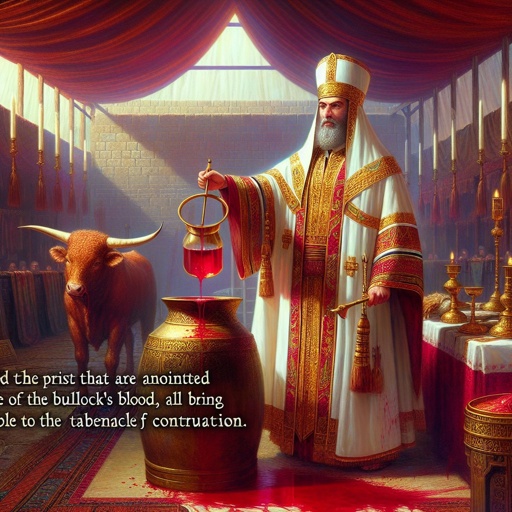
Leviticus 4:5 - "And the priest that is anointed shall take of the bullock's blood, and bring it to the tabernacle of the congregation:"

Leviticus 3:17 - "It shall be a perpetual statute for your generations throughout all your dwellings, that ye eat neither fat nor blood."

Leviticus 17:9 - "And bringeth it not unto the door of the tabernacle of the congregation, to offer it unto the LORD; even that man shall be cut off from among his people."

Leviticus 25:17 - "Ye shall not therefore oppress one another; but thou shalt fear thy God: for I am the LORD your God."