What does Leviticus 17:8 mean?
“And thou shalt say unto them, Whatsoever man there be of the house of Israel, or of the strangers which sojourn among you, that offereth a burnt offering or sacrifice,” — Leviticus 17:8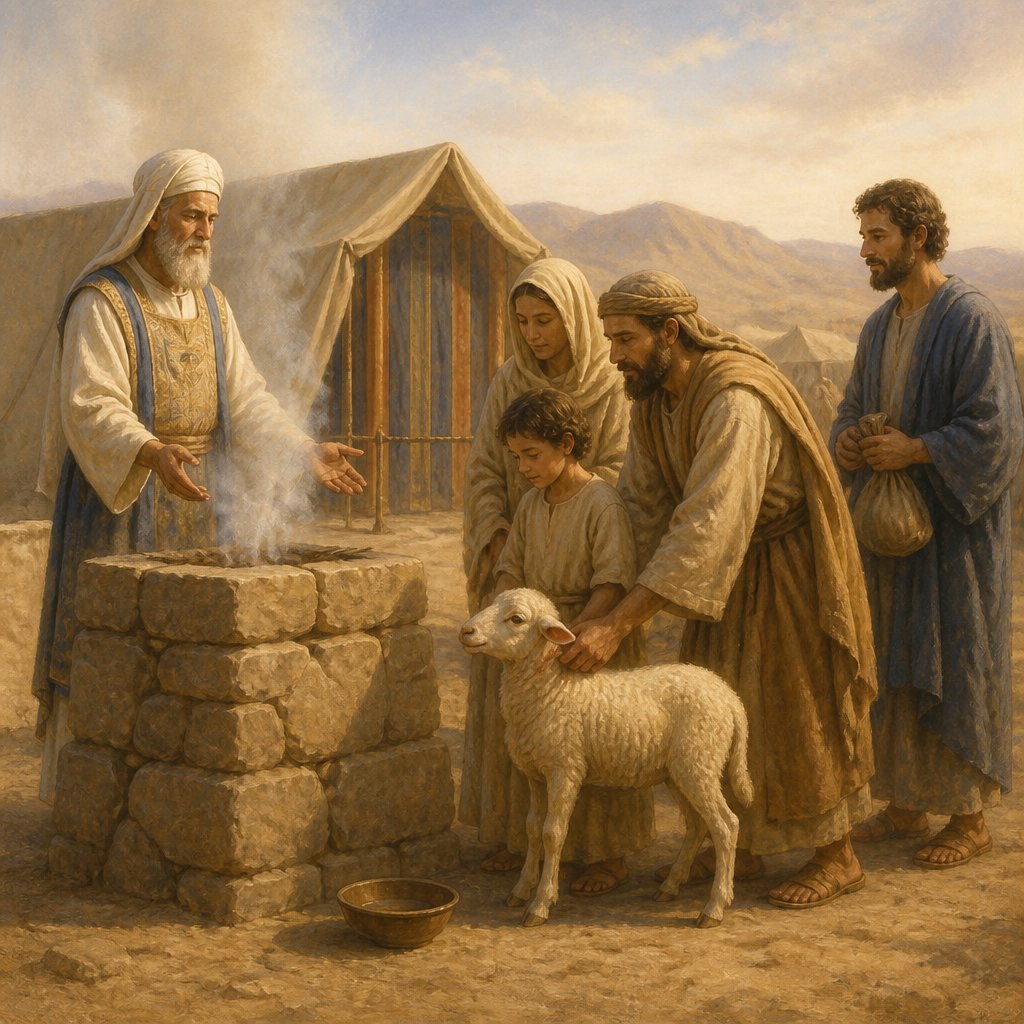
Leviticus 17:8 (KJV) states, "And thou shalt say unto them, Whatsoever man there be of the house of Israel, or of the strangers which sojourn among you, that offereth a burnt offering or sacrifice."
The book of Leviticus is part of the Pentateuch, the first five books of the Hebrew Bible, and is traditionally attributed to Moses as its author. Leviticus is primarily concerned with outlining the laws and regulations given by God to the Israelites through Moses. These laws cover a broad range of subjects including moral conduct, sacrifice and worship, cleanliness, and dietary restrictions. Leviticus 17 specifically addresses the proper way to make offerings and sacrifices to the Lord.
In Leviticus 17:8, God commands the Israelites to inquire about anyone, whether they are native Israelites or foreigners living among them, who presents an offering or sacrifice. This verse highlights the inclusivity of the Israelite community and demonstrates that every individual is held accountable for their worship and obedience to God's commandments.
The offering of a burnt offering or sacrifice was a vital part of ancient Israelite religious life. These rituals were seen as a means of seeking forgiveness for sins, giving thanks to God, and establishing a personal connection with the divine. However, it was crucial for these offerings to be performed in the prescribed manner and at the designated place, the tabernacle or later the temple in Jerusalem.
By emphasizing that both native Israelites and foreigners were subject to the same rules regarding offerings and sacrifices, Leviticus 17:8 promotes equality and fairness within the community. It also reflects God's impartiality and insistence that all people, regardless of their background, adhere to the same standards of worship and devotion.
The inclusion of foreigners in this commandment is particularly noteworthy, as it exemplifies the idea of religious tolerance and the acceptance of outsiders within the Israelite community. The Bible frequently emphasizes the importance of treating strangers with kindness and compassion, reflecting the broader ethical and moral principles that underpin the laws given to the Israelites.
Furthermore, Leviticus 17:8 underscores the significance of intentionality and sincerity in worship. The act of offering a burnt offering or sacrifice was not to be taken lightly or done haphazardly; it required a genuine desire to seek reconciliation with God and express devotion. This verse serves as a reminder that outward religious practices must be accompanied by an inward commitment to God and a genuine desire to cultivate a relationship with the divine.
In the wider context of Leviticus, this verse is part of a larger framework of regulations concerning the proper handling of blood in sacrificial rituals. The prohibition against consuming blood is repeated several times throughout the chapter, emphasizing the sacred nature of blood and its role in atonement and purification. This emphasis on the sanctity of blood serves as a reminder of the serious nature of sin and the need for a means of expiation.
Symbolically, the burnt offering or sacrifice can be seen as a foreshadowing of the ultimate sacrifice of Jesus Christ on the cross, which Christians believe fulfilled and superseded the sacrificial system of the Old Testament. Just as the ancient Israelites sought forgiveness and restoration through their offerings, Christians believe that Jesus's sacrifice provided the means for reconciliation between humanity and God once and for all.
In conclusion, Leviticus 17:8 provides insights into the inclusive nature of the Israelite community, the importance of sincerity in worship, and the symbolic significance of offerings and sacrifices. It also aligns with broader themes of ethical conduct, religious tolerance, and the pursuit of a genuine relationship with the divine. While rooted in its historical and cultural context, the verse continues to resonate with contemporary readers as a reminder of the universal principles that underlie religious devotion and moral conduct.
Get our apps


Artwork for Leviticus 17:8

Leviticus 17:8 - "¶ And thou shalt say unto them, Whatsoever man there be of the house of Israel, or of the strangers which sojourn among you, that offereth a burnt offering or sacrifice,"
"¶ And thou shalt say unto them, Whatsoever man there be of the house of Israel, or of the strangers which sojourn among you, that offereth a burnt offering or sacrifice," - Leviticus 17:8

Leviticus 8:17 - "But the bullock, and his hide, his flesh, and his dung, he burnt with fire without the camp; as the LORD commanded Moses."

Leviticus 17:7

Leviticus 23:17-22

Leviticus 11:17 - "And the little owl, and the cormorant, and the great owl,"

Leviticus 22:17 - "¶ And the LORD spake unto Moses, saying,"

Leviticus 16:8

Leviticus 8:30

Leviticus 17:1 - "And the LORD spake unto Moses, saying,"
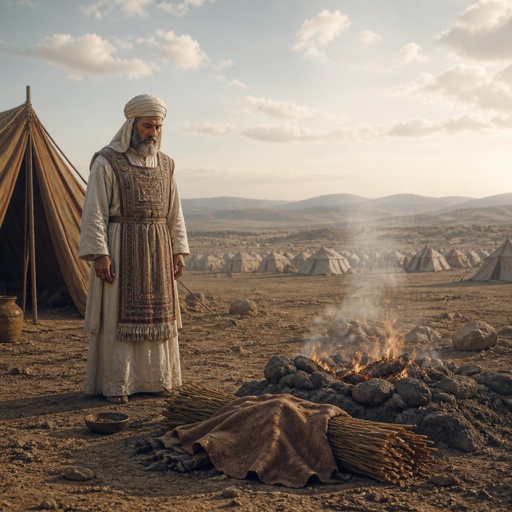
"But the bullock, and his hide, his flesh, and his dung, he burnt with fire without the camp; as the LORD commanded Moses." - Leviticus 8:17
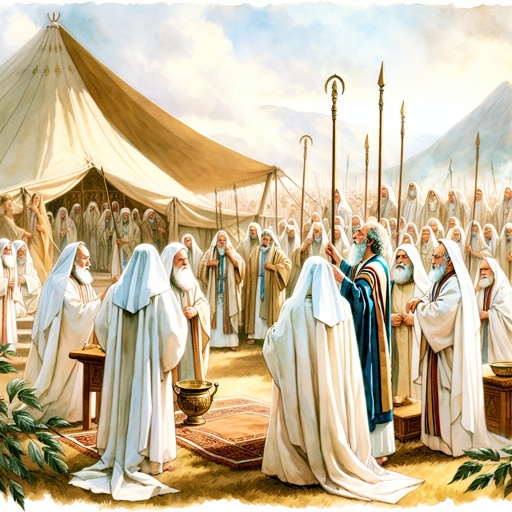
Leviticus 8:1-12

Leviticus 8:8 - "And he put the breastplate upon him: also he put in the breastplate the Urim and the Thummim."

Leviticus 7:17 - "But the remainder of the flesh of the sacrifice on the third day shall be burnt with fire."

Leviticus 6:8 - "¶ And the LORD spake unto Moses, saying,"
Leviticus 10:8 - "¶ And the LORD spake unto Aaron, saying,"

Leviticus 24:17 - "¶ And he that killeth any man shall surely be put to death."

Leviticus 8:1 - "And the LORD spake unto Moses, saying,"

Leviticus 8:32 - "And that which remaineth of the flesh and of the bread shall ye burn with fire."

Leviticus 17:3 - "What man soever there be of the house of Israel, that killeth an ox, or lamb, or goat, in the camp, or that killeth it out of the camp,"

Leviticus 15:17 - "And every garment, and every skin, whereon is the seed of copulation, shall be washed with water, and be unclean until the even."

Leviticus 8:6 - "And Moses brought Aaron and his sons, and washed them with water."

Leviticus 8:19 - "And he killed it; and Moses sprinkled the blood upon the altar round about."

Leviticus 8:3 - "And gather thou all the congregation together unto the door of the tabernacle of the congregation."

Leviticus 8:5 - "And Moses said unto the congregation, This is the thing which the LORD commanded to be done."

"¶ And the LORD spake unto Moses, saying," - Leviticus 22:17

"And the LORD spake unto Moses, saying," - Leviticus 17:1

"And the little owl, and the cormorant, and the great owl," - Leviticus 11:17

Leviticus 27:17 - "If he sanctify his field from the year of jubile, according to thy estimation it shall stand."

Leviticus 17:16 - "But if he wash them not, nor bathe his flesh; then he shall bear his iniquity."