What does Leviticus 21:2 mean?
“But for his kin, that is near unto him, that is, for his mother, and for his father, and for his son, and for his daughter, and for his brother,” — Leviticus 21:2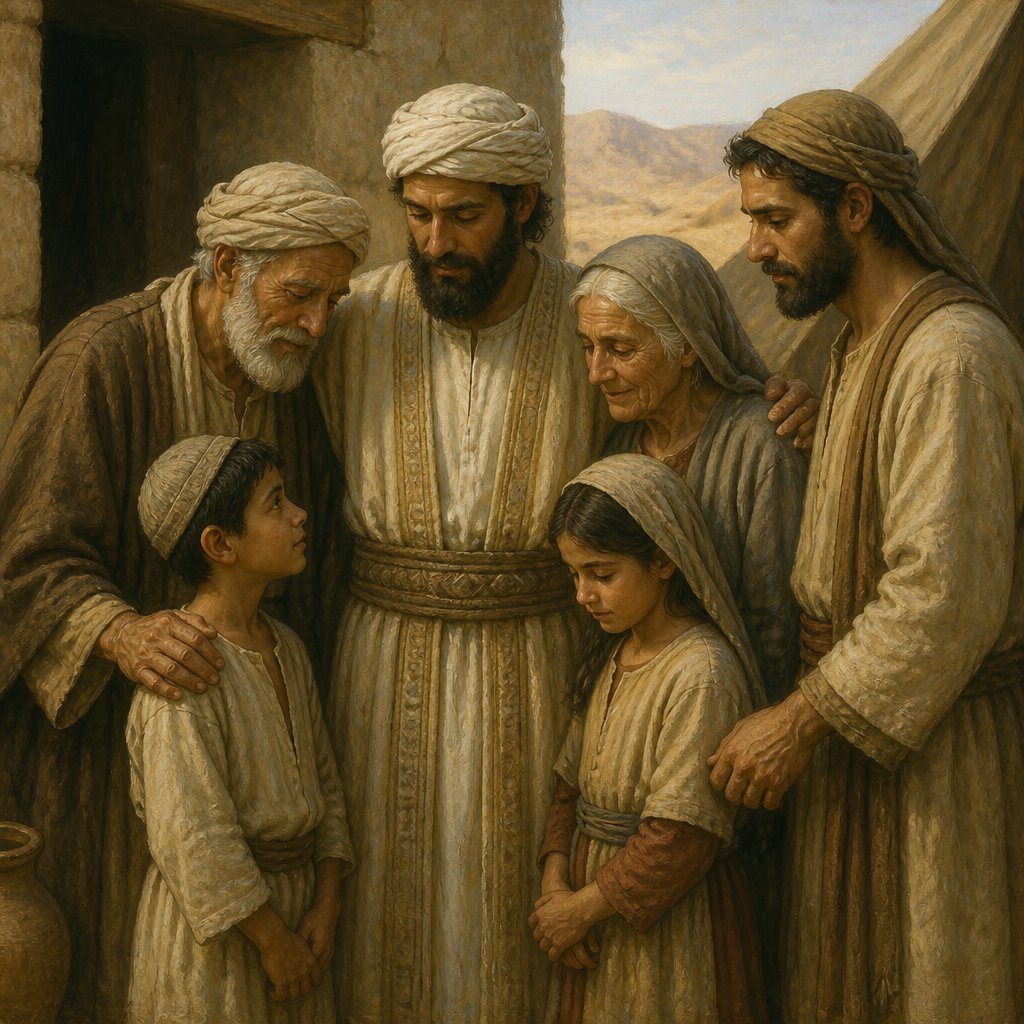
Leviticus 21:2 from the King James Version of the Bible states: "But for his kin, that is near unto him, that is, for his mother, and for his father, and for his son, and for his daughter, and for his brother." This verse is part of a larger passage in the book of Leviticus, which details the laws and regulations that the Israelites were to follow as part of their covenant with God. This particular verse addresses the conduct and behavior of the priests, who were required to maintain a high standard of holiness and purity in their lives.
In this verse, God is instructing the priests that they are to show special consideration and respect for their closest relatives – their mother, father, son, daughter, and brother. This emphasis on honoring and caring for one's family members reflects the importance of familial relationships and the value of love and support within the community. It also serves as a reminder that even those in positions of authority and leadership are not exempt from the duties and responsibilities of family life.
One of the key themes of this verse is the concept of holiness and purity. Throughout the book of Leviticus, there is a strong emphasis on the importance of maintaining physical, moral, and spiritual purity. The priests were held to a higher standard of purity than the rest of the Israelites, as they were the mediators between the people and God. By showing special consideration for their family members, the priests were demonstrating their commitment to upholding the principles of holiness and purity in all aspects of their lives.
Another important theme in this verse is the idea of honoring one's parents and family members. This concept is deeply rooted in the Judeo-Christian tradition, and it is evident in numerous passages throughout the Bible. The command to honor one's parents is one of the Ten Commandments, and it is considered a fundamental aspect of living a righteous and moral life. By specifically directing the priests to care for their closest relatives, God is underscoring the importance of family relationships and the duty to care for and support one's loved ones.
The context of this verse is also significant. The book of Leviticus was written during a time when the Israelites were establishing themselves as a nation and forming their identity as the chosen people of God. The laws and regulations outlined in Leviticus were intended to set the Israelites apart from the surrounding pagan cultures and to guide them in living according to God's will. The instructions given to the priests in this verse were meant to ensure that the religious leaders of the community exemplified holiness, integrity, and reverence for the sacred.
Symbolism plays a role in understanding this verse as well. The emphasis on the family unit as a fundamental aspect of the priests' conduct symbolizes the importance of strong family ties and the role of the family in shaping individuals' character and moral values. Additionally, the concept of holiness and purity symbolizes the need for spiritual cleanliness and moral uprightness in order to approach God and fulfill one's divine calling. By upholding these principles, the priests were symbolically representing the larger community and setting an example for the people to follow.
In conclusion, Leviticus 21:2 from the King James Version of the Bible carries significant meaning and relevance for believers today. It emphasizes the value of family relationships, the call to honor and care for one's loved ones, and the importance of maintaining holiness and purity in all aspects of life. This verse serves as a reminder of the enduring principles of morality and righteousness that are foundational to the Judeo-Christian faith and provides insight into the values and expectations that God has for his people.
Get our apps


Artwork for Leviticus 21:2

Leviticus 21:2 - "But for his kin, that is near unto him, that is, for his mother, and for his father, and for his son, and for his daughter, and for his brother,"
"But for his kin, that is near unto him, that is, for his mother, and for his father, and for his son, and for his daughter, and for his brother," - Leviticus 21:2

Leviticus 23:21

Leviticus 23:21

Leviticus 23:21

Leviticus 23:21

Leviticus 23:21

Leviticus 23:21

Leviticus 21:19 - "Or a man that is brokenfooted, or brokenhanded,"

Leviticus 21:16 - "¶ And the LORD spake unto Moses, saying,"

Leviticus 21:13 - "And he shall take a wife in her virginity."

"Or a man that is brokenfooted, or brokenhanded," - Leviticus 21:19

Leviticus 21:22 - "He shall eat the bread of his God, both of the most holy, and of the holy."

Leviticus 21:24 - "And Moses told it unto Aaron, and to his sons, and unto all the children of Israel."

Leviticus 9:21 - "And the breasts and the right shoulder Aaron waved for a wave offering before the LORD; as Moses commanded."

Leviticus 21:4 - "But he shall not defile himself, being a chief man among his people, to profane himself."

Leviticus 21:20 - "Or crookbackt, or a dwarf, or that hath a blemish in his eye, or be scurvy, or scabbed, or hath his stones broken;"
"¶ And the LORD spake unto Moses, saying," - Leviticus 21:16

Leviticus 24:21 - "And he that killeth a beast, he shall restore it: and he that killeth a man, he shall be put to death."

Leviticus 21:21 - "No man that hath a blemish of the seed of Aaron the priest shall come nigh to offer the offerings of the LORD made by fire: he hath a blemish; he shall not come nigh to offer the bread of his God."

Leviticus 25:21 - "Then I will command my blessing upon you in the sixth year, and it shall bring forth fruit for three years."

Leviticus 21:15 - "Neither shall he profane his seed among his people: for I the LORD do sanctify him."

Leviticus 21:3 - "And for his sister a virgin, that is nigh unto him, which hath had no husband; for her may he be defiled."

Leviticus 15:21 - "And whosoever toucheth her bed shall wash his clothes, and bathe himself in water, and be unclean until the even."

Leviticus 21:11 - "Neither shall he go in to any dead body, nor defile himself for his father, or for his mother;"

"And he shall take a wife in her virginity." - Leviticus 21:13

Leviticus 27:21 - "But the field, when it goeth out in the jubile, shall be holy unto the LORD, as a field devoted; the possession thereof shall be the priest's."

Leviticus 19:21 - "And he shall bring his trespass offering unto the LORD, unto the door of the tabernacle of the congregation, even a ram for a trespass offering."

Leviticus 4:21 - "And he shall carry forth the bullock without the camp, and burn him as he burned the first bullock: it is a sin offering for the congregation."

Leviticus 21:14 - "A widow, or a divorced woman, or profane, or an harlot, these shall he not take: but he shall take a virgin of his own people to wife."