What does Leviticus 25:3 mean?
“Six years thou shalt sow thy field, and six years thou shalt prune thy vineyard, and gather in the fruit thereof;” — Leviticus 25:3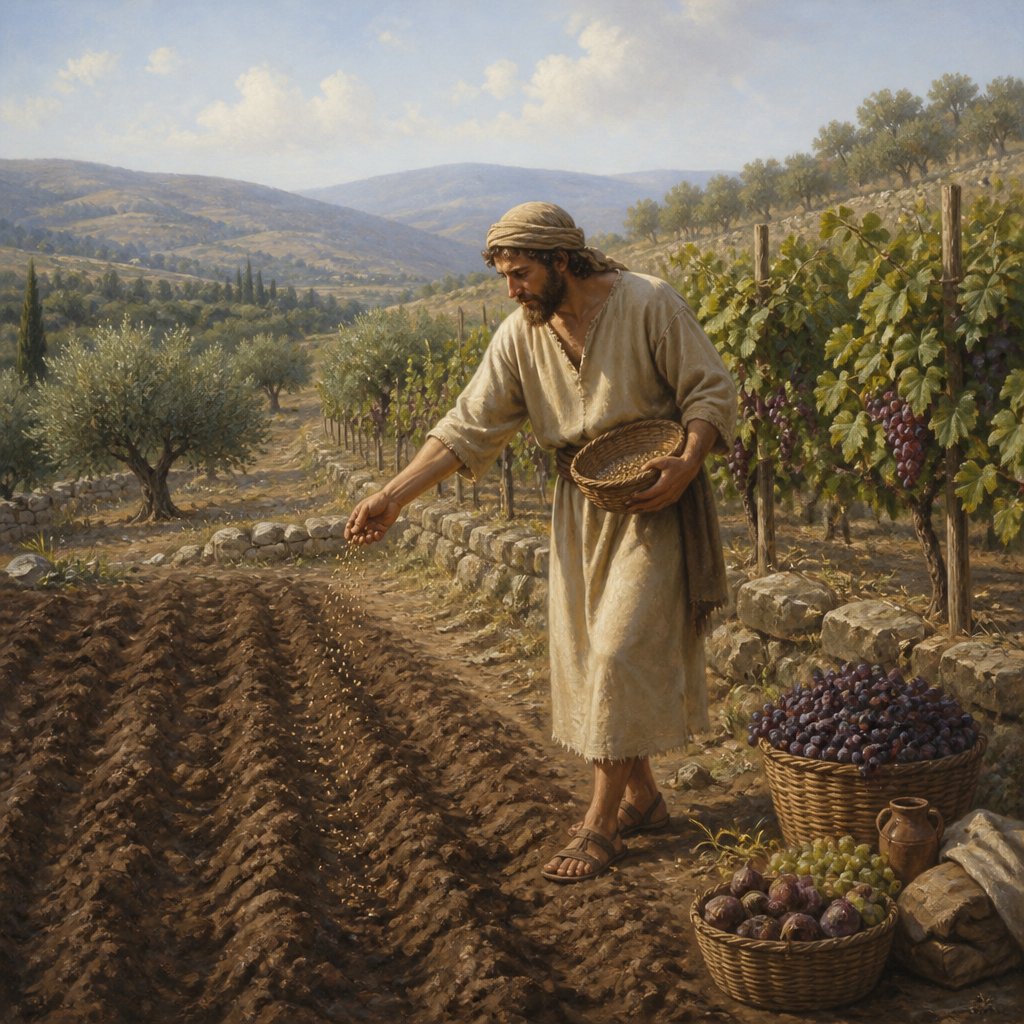
Leviticus 25:3 in the King James Version reads, "Six years thou shalt sow thy field, and six years thou shalt prune thy vineyard, and gather in the fruit thereof."
This verse comes from the book of Leviticus, which is the third book of the Hebrew Bible and the Christian Old Testament. The book is a part of the Torah, which is the central reference of the religious Judaic tradition. The book of Leviticus primarily deals with the laws and regulations that the Israelites were to follow to maintain ritual purity and holiness.
In Leviticus 25:3, the verse introduces the concept of the Sabbath Year, which is outlined in greater detail later in the chapter. The Sabbath Year was a period of rest for the land, where the Israelites were commanded to let the land lay fallow and refrain from sowing their fields or pruning their vineyards. The verse itself establishes a cycle of six years of labor followed by a year of rest for the land.
The Sabbath Year was a significant concept in the religious and agricultural life of the Israelites. It was a way of demonstrating their trust in God's provision and acknowledging that the land ultimately belonged to God. By observing the Sabbath Year, the Israelites were practicing stewardship of the land and allowing it to replenish itself, ensuring its long-term productivity.
One of the key themes in Leviticus 25:3 is the concept of stewardship and responsibility. The Israelites were instructed to care for the land and manage it well, and part of that stewardship involved recognizing the limits of their own control. By allowing the land to rest during the Sabbath Year, they were acknowledging their dependence on God's provision and demonstrating their faith in His ability to provide for them.
Another important theme in this verse is the idea of cycles and rhythms in agricultural life. The concept of resting the land every seventh year mirrored the weekly Sabbath observance, emphasizing the importance of rest and renewal in the rhythms of life. This emphasis on balance and moderation aligns with broader themes of wholeness and holiness that are woven throughout the book of Leviticus.
Symbolically, the Sabbath Year has been interpreted as a reminder of God's sovereignty over all creation. By giving the land a year of rest, the Israelites were acknowledging that the earth ultimately belonged to God, and they were simply its caretakers. Additionally, the Sabbath Year served as a practical demonstration of trust and obedience to God's commandments, reinforcing the Israelites' covenantal relationship with Him.
In a broader context, Leviticus 25:3 and the surrounding passages reveal important insights into the Hebrew view of the land and the interconnectedness of religious, agricultural, and ethical principles. The passage provides a framework for understanding the Israelites' relationship with the land and the ways in which their religious beliefs impacted their agricultural practices.
In conclusion, Leviticus 25:3 serves as a foundational verse for the Sabbath Year, highlighting themes of stewardship, dependence on God, and the rhythms of agricultural life. The verse's significance extends beyond its literal instructions for agricultural practice, pointing to deeper theological and ethical principles that were central to the religious worldview of the Israelites. This verse continues to offer insights and inspiration for contemporary readers seeking to understand the biblical perspective on the relationship between humanity, nature, and the divine.
Get our apps


Artwork for Leviticus 25:3

Leviticus 25:3 - "Six years thou shalt sow thy field, and six years thou shalt prune thy vineyard, and gather in the fruit thereof;"
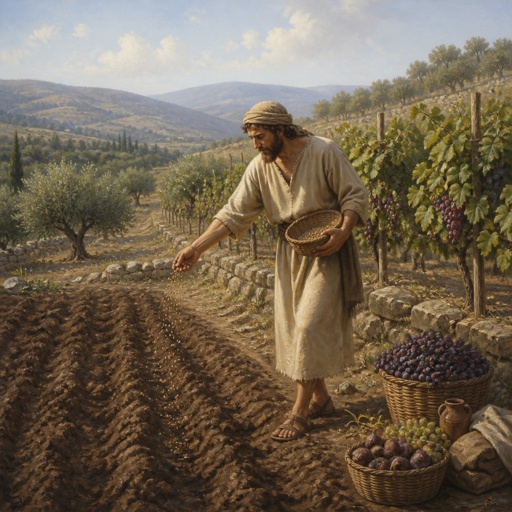
"Six years thou shalt sow thy field, and six years thou shalt prune thy vineyard, and gather in the fruit thereof;" - Leviticus 25:3

Leviticus 25:26 - "And if the man have none to redeem it, and himself be able to redeem it;"

Leviticus 25:34 - "But the field of the suburbs of their cities may not be sold; for it is their perpetual possession."

Leviticus 25:1 - "And the LORD spake unto Moses in mount Sinai, saying,"

Leviticus 16:25 - "And the fat of the sin offering shall he burn upon the altar."

Leviticus 25:24 - "And in all the land of your possession ye shall grant a redemption for the land."

Leviticus 25:13 - "In the year of this jubile ye shall return every man unto his possession."

Leviticus 25:23 - "¶ The land shall not be sold for ever: for the land is mine; for ye are strangers and sojourners with me."
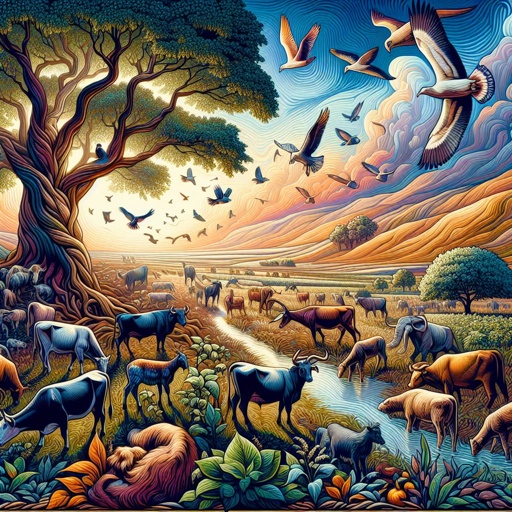
Leviticus 25:7 - "And for thy cattle, and for the beast that are in thy land, shall all the increase thereof be meat."
Leviticus 25:43 - "Thou shalt not rule over him with rigour; but shalt fear thy God."

Leviticus 25:32 - "Notwithstanding the cities of the Levites, and the houses of the cities of their possession, may the Levites redeem at any time."

Leviticus 27:25 - "And all thy estimations shall be according to the shekel of the sanctuary: twenty gerahs shall be the shekel."

Leviticus 25:25 - "¶ If thy brother be waxen poor, and hath sold away some of his possession, and if any of his kin come to redeem it, then shall he redeem that which his brother sold."

Leviticus 25:12 - "For it is the jubile; it shall be holy unto you: ye shall eat the increase thereof out of the field."

Leviticus 25:40 - "But as an hired servant, and as a sojourner, he shall be with thee, and shall serve thee unto the year of jubile:"

Cycle of sabbath rest year. Leviticus 25:1-7

Leviticus 25:42 - "For they are my servants, which I brought forth out of the land of Egypt: they shall not be sold as bondmen."
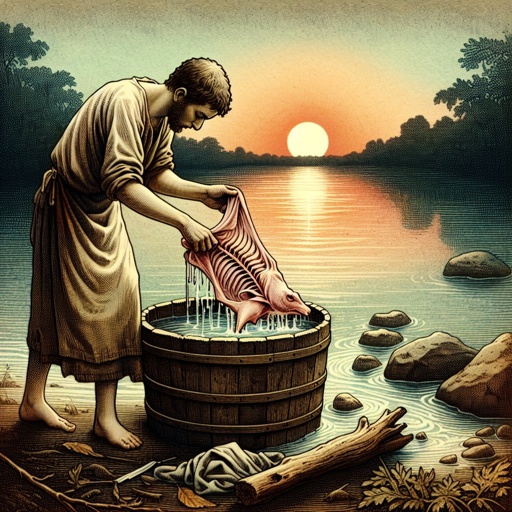
Leviticus 11:25 - "And whosoever beareth ought of the carcase of them shall wash his clothes, and be unclean until the even."

Leviticus 25:48 - "After that he is sold he may be redeemed again; one of his brethren may redeem him:"

Leviticus 25:36 - "Take thou no usury of him, or increase: but fear thy God; that thy brother may live with thee."

Leviticus 25:19 - "And the land shall yield her fruit, and ye shall eat your fill, and dwell therein in safety."

Leviticus 25:21 - "Then I will command my blessing upon you in the sixth year, and it shall bring forth fruit for three years."

Leviticus 25:37 - "Thou shalt not give him thy money upon usury, nor lend him thy victuals for increase."

Leviticus 23:25 - "Ye shall do no servile work therein: but ye shall offer an offering made by fire unto the LORD."

Leviticus 25:54 - "And if he be not redeemed in these years, then he shall go out in the year of jubile, both he, and his children with him."

Leviticus 25:53 - "And as a yearly hired servant shall he be with him: and the other shall not rule with rigour over him in thy sight."

Leviticus 18:25 - "And the land is defiled: therefore I do visit the iniquity thereof upon it, and the land itself vomiteth out her inhabitants."

Leviticus 25:39 - "¶ And if thy brother that dwelleth by thee be waxen poor, and be sold unto thee; thou shalt not compel him to serve as a bondservant:"

Leviticus 25:18 - "¶ Wherefore ye shall do my statutes, and keep my judgments, and do them; and ye shall dwell in the land in safety."