What does Leviticus 25:49 mean?
“Either his uncle, or his uncle’s son, may redeem him, or any that is nigh of kin unto him of his family may redeem him; or if he be able, he may redeem himself.” — Leviticus 25:49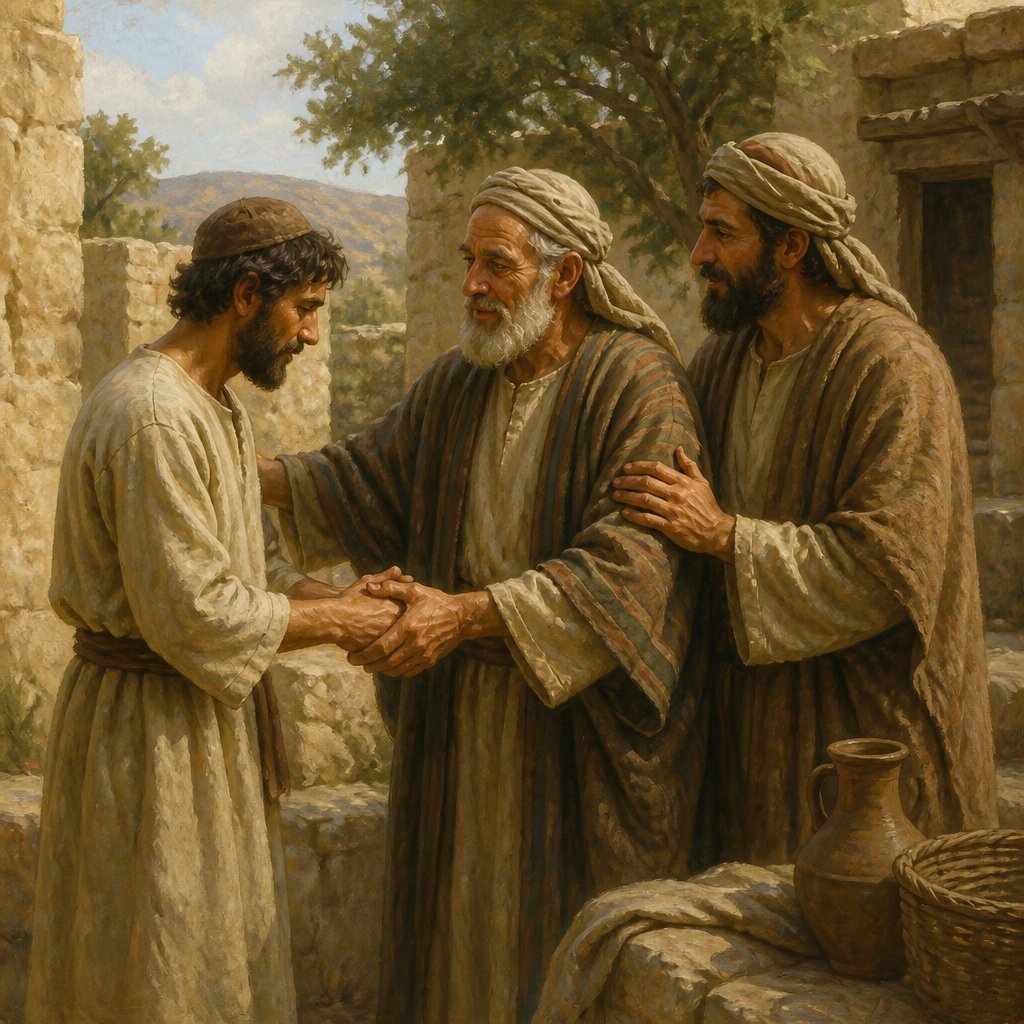
Leviticus 25:49 in the King James Version reads, "Either his uncle, or his uncle's son, may redeem him, or any that is nigh of kin unto him of his family may redeem him; or if he be able, he may redeem himself."
The book of Leviticus is the third book of the Bible and is primarily concerned with religious laws and rituals for the Israelites. The verse in question comes from a section of the book that deals with the practice of redemption and release. In this particular verse, the concept of redemption is discussed in the context of the Hebrews who have become slaves to other Hebrews.
This verse is part of a larger series of laws pertaining to the treatment of slaves among the Israelites. It outlines the procedure for the redemption of a Hebrew who has been sold into slavery due to poverty or debt. The Hebrew word for "redeem" used in this verse is "ga'al" which means to deliver, buy back, or act as a kinsman redeemer. The concept of redemption in the Bible often involves the idea of liberation from bondage or the payment of a price to secure freedom.
The verse provides several options for the redemption of a Hebrew slave. Firstly, it states that the slave's uncle or cousin may act as a redeemer, indicating that the responsibility falls to the closest kin. This reinforces the importance of family and community in the Israelite society, and the obligation to care for one another, particularly in times of hardship.
Furthermore, the verse implies that the slave himself may also have the opportunity to redeem his own freedom if he is able to do so. This highlights the value of self-reliance and personal agency, even in difficult circumstances. However, it's important to note that this requirement for self-redemption may be difficult for a slave who has been impoverished and may not have the means to buy his own freedom.
The broader theme of redemption in the Bible is deeply intertwined with the concept of God's grace and mercy. Throughout the Old and New Testaments, the theme of redemption is recurrent, often symbolizing God's intervention to deliver his people from sin, suffering, and spiritual slavery. This verse, therefore, reflects the principles of justice, compassion, and the potential for renewal and freedom that are central to the Christian understanding of redemption.
In a broader cultural context, the concept of redemption—both in the biblical and secular sense—carries significant symbolism. For the Hebrews, the practice of redemption for slaves was not only a legal and social matter, but also held deep spiritual and moral significance. The idea of liberation from bondage and the restoration of one's freedom reverberates in different religious and cultural narratives, representing the yearning for deliverance and the promise of a new beginning.
In conclusion, Leviticus 25:49 offers a glimpse into the complex and multifaceted nature of redemption in the Bible. It emphasizes the importance of familial and communal bonds, the principles of justice and mercy, and the potential for personal agency in seeking liberation and renewal. This verse serves as a reminder of the enduring relevance of the biblical concept of redemption, and its symbolism of hope and transformation that resonates across different cultures and traditions.
Get our apps


Artwork for Leviticus 25:49
Leviticus 25:49 - "Either his uncle, or his uncle's son, may redeem him, or any that is nigh of kin unto him of his family may redeem him; or if he be able, he may redeem himself."
"Either his uncle, or his uncle's son, may redeem him, or any that is nigh of kin unto him of his family may redeem him; or if he be able, he may redeem himself." - Leviticus 25:49

Jeremiah 49:25 - "How is the city of praise not left, the city of my joy!"

Leviticus 14:49 - "And he shall take to cleanse the house two birds, and cedar wood, and scarlet, and hyssop:"

Leviticus 13:49 - "And if the plague be greenish or reddish in the garment, or in the skin, either in the warp, or in the woof, or in any thing of skin; it is a plague of leprosy, and shall be shewed unto the priest:"

"How is the city of praise not left, the city of my joy!" - Jeremiah 49:25

Leviticus 25:26 - "And if the man have none to redeem it, and himself be able to redeem it;"

Leviticus 25:34 - "But the field of the suburbs of their cities may not be sold; for it is their perpetual possession."

Leviticus 25:1 - "And the LORD spake unto Moses in mount Sinai, saying,"
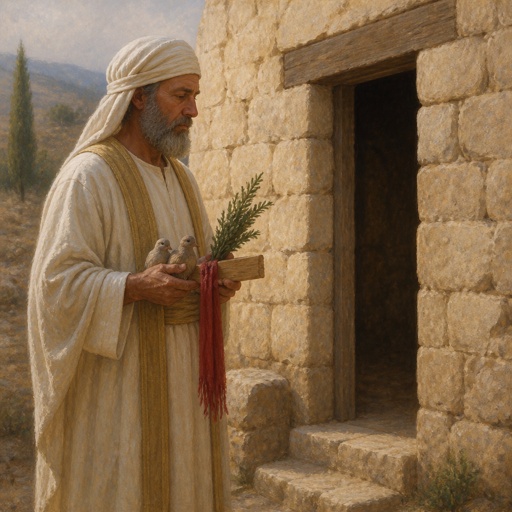
"And he shall take to cleanse the house two birds, and cedar wood, and scarlet, and hyssop:" - Leviticus 14:49

Leviticus 16:25 - "And the fat of the sin offering shall he burn upon the altar."

Isaiah 49:25 - "But thus saith the LORD, Even the captives of the mighty shall be taken away, and the prey of the terrible shall be delivered: for I will contend with him that contendeth with thee, and I will save thy children."

Genesis 49:25 - "Even by the God of thy father, who shall help thee; and by the Almighty, who shall bless thee with blessings of heaven above, blessings of the deep that lieth under, blessings of the breasts, and of the womb:"

Leviticus 25:24 - "And in all the land of your possession ye shall grant a redemption for the land."

Leviticus 25:13 - "In the year of this jubile ye shall return every man unto his possession."

Leviticus 25:23 - "¶ The land shall not be sold for ever: for the land is mine; for ye are strangers and sojourners with me."

Leviticus 25:7 - "And for thy cattle, and for the beast that are in thy land, shall all the increase thereof be meat."
Leviticus 25:43 - "Thou shalt not rule over him with rigour; but shalt fear thy God."

Leviticus 25:32 - "Notwithstanding the cities of the Levites, and the houses of the cities of their possession, may the Levites redeem at any time."

Leviticus 27:25 - "And all thy estimations shall be according to the shekel of the sanctuary: twenty gerahs shall be the shekel."

Leviticus 25:25 - "¶ If thy brother be waxen poor, and hath sold away some of his possession, and if any of his kin come to redeem it, then shall he redeem that which his brother sold."

Leviticus 25:12 - "For it is the jubile; it shall be holy unto you: ye shall eat the increase thereof out of the field."

Leviticus 25:40 - "But as an hired servant, and as a sojourner, he shall be with thee, and shall serve thee unto the year of jubile:"

Cycle of sabbath rest year. Leviticus 25:1-7

Leviticus 25:42 - "For they are my servants, which I brought forth out of the land of Egypt: they shall not be sold as bondmen."
Leviticus 11:25 - "And whosoever beareth ought of the carcase of them shall wash his clothes, and be unclean until the even."

Leviticus 25:48 - "After that he is sold he may be redeemed again; one of his brethren may redeem him:"

Leviticus 25:36 - "Take thou no usury of him, or increase: but fear thy God; that thy brother may live with thee."

Leviticus 25:19 - "And the land shall yield her fruit, and ye shall eat your fill, and dwell therein in safety."

Leviticus 25:21 - "Then I will command my blessing upon you in the sixth year, and it shall bring forth fruit for three years."