What does Leviticus 26:33 mean?
“And I will scatter you among the heathen, and will draw out a sword after you: and your land shall be desolate, and your cities waste.” — Leviticus 26:33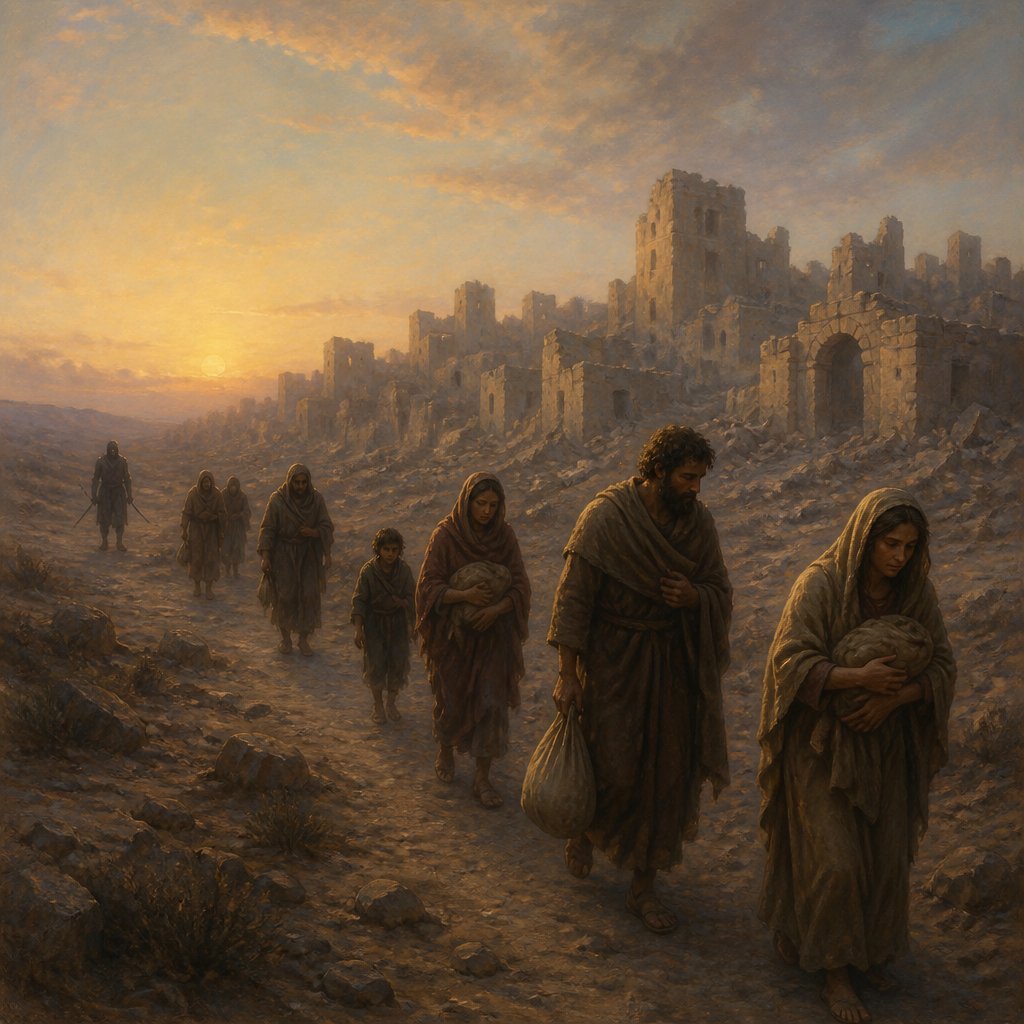
Leviticus 26:33 in the King James Version of the Bible states, "And I will scatter you among the heathen, and will draw out a sword after you: and your land shall be desolate, and your cities waste."
This verse comes from the book of Leviticus, which is the third book of the Hebrew Bible and the Old Testament. The book of Leviticus is attributed to Moses and is part of the Law, or Torah, which is foundational to Judaism. This particular verse is found within a section of verses that describe the consequences of disobedience to God's laws and commandments.
The overarching theme of Leviticus 26 is the covenant between God and the people of Israel. The chapter begins with a list of blessings that will come upon the Israelites if they obey God's commandments. However, it also outlines the curses and punishments that will result from disobedience. Leviticus 26:33 falls within the latter category, marking a turning point in the chapter where God warns the Israelites of the consequences of their disobedience.
In this specific verse, God warns the Israelites that as a result of their disobedience, they will be scattered among the heathen, and a sword will be drawn out against them. This imagery suggests a state of turmoil, conflict, and vulnerability. Furthermore, the land of the Israelites will be desolate, and their cities will be left in waste. This indicates a loss of their homeland and the destruction of their communities.
The scattering of the Israelites among the heathen holds significant symbolism. It represents a loss of identity and communal cohesion. Being dispersed among foreign nations means that the Israelites will be separated from each other and from their homeland. This carries with it a sense of estrangement and disconnection, leaving the Israelites vulnerable to assimilation and the potential loss of their distinct cultural and religious heritage.
The drawing out of a sword after the Israelites denotes the threat of violence and conflict that will accompany their dispersal. It symbolizes the danger and suffering that they will face in the foreign lands where they are scattered. This imagery emphasizes the severity of the consequences of their disobedience and underscores the gravity of their situation.
The desolation of their land and the waste of their cities serves as a visual representation of the destruction and abandonment of their homeland. It conveys the idea of loss and ruin, with once-thriving communities being reduced to desolate and uninhabited areas. This further emphasizes the severity of God's judgment and the extent of the Israelites' suffering as a result of their disobedience.
As with other verses in Leviticus 26, this passage serves as a warning to the Israelites about the consequences of failing to uphold their covenant with God. It portrays God as a just and righteous ruler who upholds the terms of the covenant, both in bestowing blessings for obedience and in administering punishment for disobedience.
In a broader context, Leviticus 26:33 can be seen as a reflection of the theological understanding of the Israelites' history. It speaks to the ancestral experiences of exile, hardship, and displacement that the people of Israel faced over the centuries. The scattering among the heathen, the drawing out of a sword, and the desolation of their land are not merely future-oriented warnings but also resonate with the historical memory of the Israelites' suffering and struggles.
In conclusion, Leviticus 26:33 conveys a powerful message about the consequences of disobedience to God's commandments. It serves as a warning to the Israelites about the potential loss of their homeland, the dangers they will face, and the desolation that will befall their communities. It reflects the theme of divine judgment and the enforceability of the covenant between God and the people of Israel. The imagery and symbolism used in this verse emphasize the severity of the consequences of disobedience and impart a sense of the Israelites' vulnerability and suffering.
Get our apps


Artwork for Leviticus 26:33

Leviticus 26:33 - "And I will scatter you among the heathen, and will draw out a sword after you: and your land shall be desolate, and your cities waste."
"And I will scatter you among the heathen, and will draw out a sword after you: and your land shall be desolate, and your cities waste." - Leviticus 26:33

Leviticus 23:33 - "¶ And the LORD spake unto Moses, saying,"
Matthew 10:26-33

Exodus 26:31-33

Leviticus 14:33 - "¶ And the LORD spake unto Moses and unto Aaron, saying,"

Numbers 33:26 - "And they removed from Makheloth, and encamped at Tahath."

Leviticus 26: 4-6

1 Corinthians 14:26-33

Leviticus 19:33 - "¶ And if a stranger sojourn with thee in your land, ye shall not vex him."

Leviticus 26: 4-6
Leviticus 26: 4-6

Leviticus 22:33 - "That brought you out of the land of Egypt, to be your God: I am the LORD."

Leviticus 23:26 - "¶ And the LORD spake unto Moses, saying,"

Leviticus 22:26 - "¶ And the LORD spake unto Moses, saying,"

"¶ And the LORD spake unto Moses, saying," - Leviticus 23:33

Leviticus 11:33 - "And every earthen vessel, whereinto any of them falleth, whatsoever is in it shall be unclean; and ye shall break it."

Leviticus 26:14 - "¶ But if ye will not hearken unto me, and will not do all these commandments;"

Leviticus 25:26 - "And if the man have none to redeem it, and himself be able to redeem it;"

Leviticus 15:33 - "And of her that is sick of her flowers, and of him that hath an issue, of the man, and of the woman, and of him that lieth with her that is unclean."

Leviticus 20:22-26 simple picture

Picture to summarize Leviticus 20:22-26

Genesis 26:33 - "And he called it Shebah: therefore the name of the city is Beer-sheba unto this day."

Leviticus 26:23 - "And if ye will not be reformed by me by these things, but will walk contrary unto me;"

Leviticus 26:3 - "¶ If ye walk in my statutes, and keep my commandments, and do them;"

Leviticus 14:26 - "And the priest shall pour of the oil into the palm of his own left hand:"

Leviticus 7:33 - "He among the sons of Aaron, that offereth the blood of the peace offerings, and the fat, shall have the right shoulder for his part."

"And they removed from Makheloth, and encamped at Tahath." - Numbers 33:26

Leviticus 26:27 - "And if ye will not for all this hearken unto me, but walk contrary unto me;"

Leviticus 26:7 - "And ye shall chase your enemies, and they shall fall before you by the sword."