What does Leviticus 27:19 mean?
“And if he that sanctified the field will in any wise redeem it, then he shall add the fifth part of the money of thy estimation unto it, and it shall be assured to him.” — Leviticus 27:19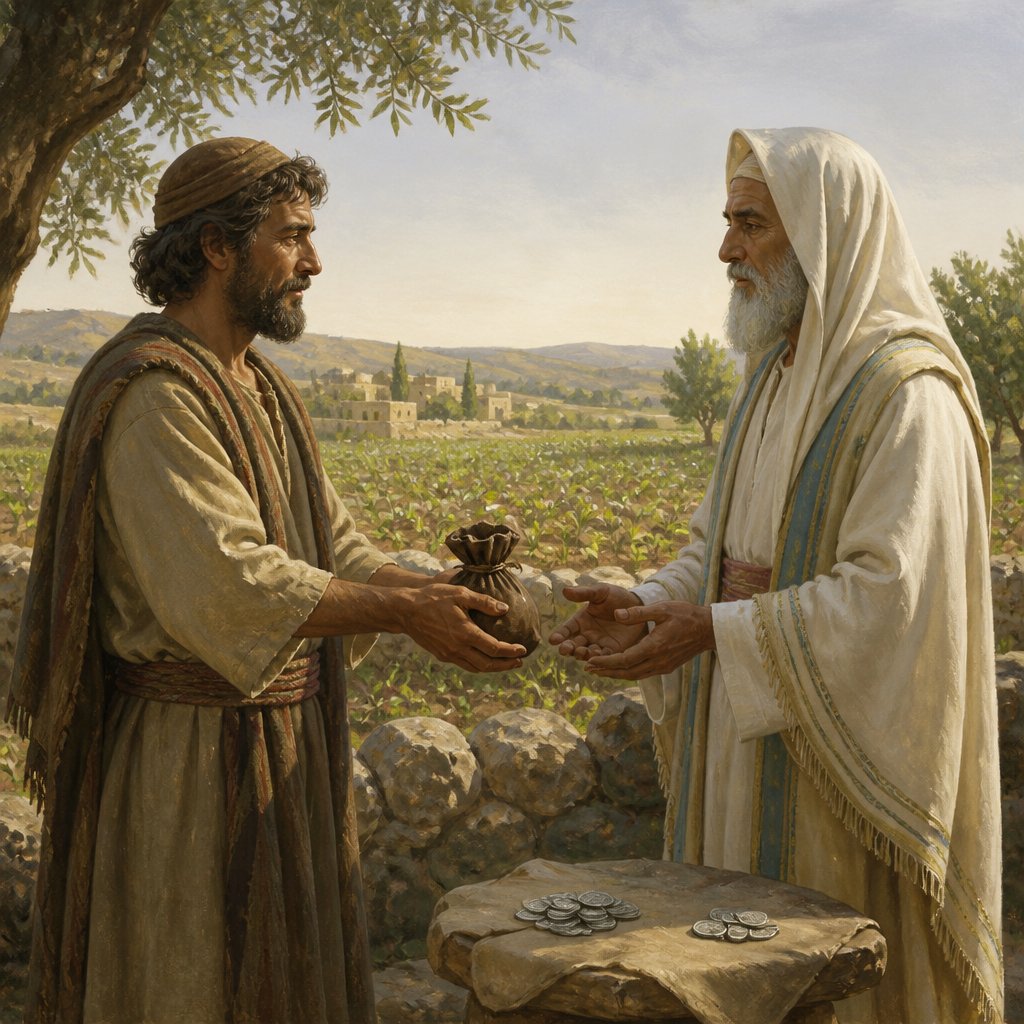
Leviticus 27:19 in the King James Version of the Bible states: "And if he that sanctified the field will in any wise redeem it, then he shall add the fifth part of the money of thy estimation unto it, and it shall be assured to him."
This verse is part of the laws and regulations given to the Israelites by God through Moses. The Book of Leviticus is primarily concerned with outlining the rituals, moral guidelines, and laws governing the Israelite community, and Leviticus 27 is specifically focused on the laws concerning the dedication of property to the Lord.
In Leviticus 27:19, the verse discusses the scenario where the owner of a dedicated field wants to redeem it. The process of redemption involves the owner repurchasing the field that was originally dedicated to God. The verse states that in order to redeem the field, the owner must pay the specified value for the redemption, plus an additional fifth of the value as a redemption price. This additional fifth serves as a form of compensation for the time and potential increase in value of the field while it was dedicated to the Lord.
This verse carries several important themes and teachings that are relevant for understanding its significance:
1. Sanctification and Redemption: The concept of sanctification refers to the act of setting something apart for a holy purpose. In this context, the field is sanctified or dedicated to God, indicating that it has been set apart for His purposes. The act of redemption allows for the return of the dedicated property to its original owner, emphasizing the idea of restoration and reclaiming what belongs to the owner.
2. Honoring Commitments: The verse underscores the importance of honoring commitments and vows made to the Lord. When a field is dedicated to God, it is set apart for His use and should be treated as such. However, if the owner wishes to reclaim the field, they must do so by following the prescribed process of redemption, which includes paying the additional fifth of the value. This requirement emphasizes the seriousness of dedicating something to the Lord and the importance of fulfilling one's commitments.
3. Fairness and Justice: The additional fifth that is required for redemption serves as a form of compensation and ensures fairness in the process. It prevents the owner from benefiting unjustly from the redemption and maintains the integrity of the dedication process. This reflects the underlying principle of justice and fairness in God's laws and regulations.
4. Stewardship and Ownership: The verse highlights the concept of stewardship and ownership. While the field belongs to the owner, the act of dedication acknowledges that ultimately all possessions belong to God. The process of redemption acknowledges the owner's right to reclaim what is rightfully theirs, while also recognizing God's ownership and authority over all things.
The context of Leviticus 27:19 within the broader Book of Leviticus is significant for understanding its deeper meaning. Leviticus is part of the Torah, the first five books of the Old Testament, and it focuses on the laws and regulations given to the Israelites as they journeyed through the wilderness and established themselves as a community. The laws outlined in Leviticus cover a wide range of topics, including religious rituals, moral codes, and regulations for personal conduct, hygiene, and social justice.
In the specific context of Leviticus 27, the chapter deals with laws related to dedications and vows to the Lord. It covers the valuation of people, animals, and property that are dedicated to the Lord, and outlines the procedures for redeeming dedicated items.
The symbolism in Leviticus 27:19 can be understood in a few different ways. On one level, the act of dedicating a field to the Lord symbolizes an acknowledgment of God's ownership and authority over all aspects of life. It reinforces the idea of stewardship and the responsibility of managing resources in a way that honors God. The process of redemption symbolizes the restoration and renewal of the owner's relationship with the dedicated property, reflecting the theme of reconciliation and redemption.
Overall, Leviticus 27:19 carries important lessons about honoring commitments, stewardship, fairness, and justice. It reflects the principles of sanctification and redemption, and emphasizes the importance of recognizing God's ownership and authority in all aspects of life. These timeless principles remain relevant for believers today, serving as a reminder of the importance of faithfulness, integrity, and honoring our commitments to the Lord.
Get our apps


Artwork for Leviticus 27:19

Leviticus 27:19 - "And if he that sanctified the field will in any wise redeem it, then he shall add the fifth part of the money of thy estimation unto it, and it shall be assured to him."

"And if he that sanctified the field will in any wise redeem it, then he shall add the fifth part of the money of thy estimation unto it, and it shall be assured to him." - Leviticus 27:19

Leviticus 19:27 - "Ye shall not round the corners of your heads, neither shalt thou mar the corners of thy beard."

Leviticus 27

Leviticus 27

Leviticus 27

"Ye shall not round the corners of your heads, neither shalt thou mar the corners of thy beard." - Leviticus 19:27

Leviticus 27:1 - "And the LORD spake unto Moses, saying,"

Leviticus 27:4 - "And if it be a female, then thy estimation shall be thirty shekels."

Leviticus 21:19 - "Or a man that is brokenfooted, or brokenhanded,"

Leviticus 27:27 - "And if it be of an unclean beast, then he shall redeem it according to thine estimation, and shall add a fifth part of it thereto: or if it be not redeemed, then it shall be sold according to thy estimation."

Leviticus 26:27 - "And if ye will not for all this hearken unto me, but walk contrary unto me;"

Leviticus 27:34 - "These are the commandments, which the LORD commanded Moses for the children of Israel in mount Sinai."

Genesis 19-27

Leviticus 6:19 - "¶ And the LORD spake unto Moses, saying,"

Leviticus 19:1 - "And the LORD spake unto Moses, saying,"

Exodus 27:19-20

Genesis 27:18-19

John 19:25-27

Leviticus 27:25 - "And all thy estimations shall be according to the shekel of the sanctuary: twenty gerahs shall be the shekel."

Leviticus 11:19 - "And the stork, the heron after her kind, and the lapwing, and the bat."

Leviticus 19:7 - "And if it be eaten at all on the third day, it is abominable; it shall not be accepted."

John 19:25-27

John 19:26-27

Exodus 27:19-21

Leviticus 27:13 - "But if he will at all redeem it, then he shall add a fifth part thereof unto thy estimation."

Leviticus 27:30 - "And all the tithe of the land, whether of the seed of the land, or of the fruit of the tree, is the LORD'S: it is holy unto the LORD."

Leviticus 27:17 - "If he sanctify his field from the year of jubile, according to thy estimation it shall stand."

Leviticus 18:27 - "(For all these abominations have the men of the land done, which were before you, and the land is defiled;)"

"And the LORD spake unto Moses, saying," - Leviticus 27:1