What does Leviticus 3:4 mean?
“And the two kidneys, and the fat that is on them, which is by the flanks, and the caul above the liver, with the kidneys, it shall he take away.” — Leviticus 3:4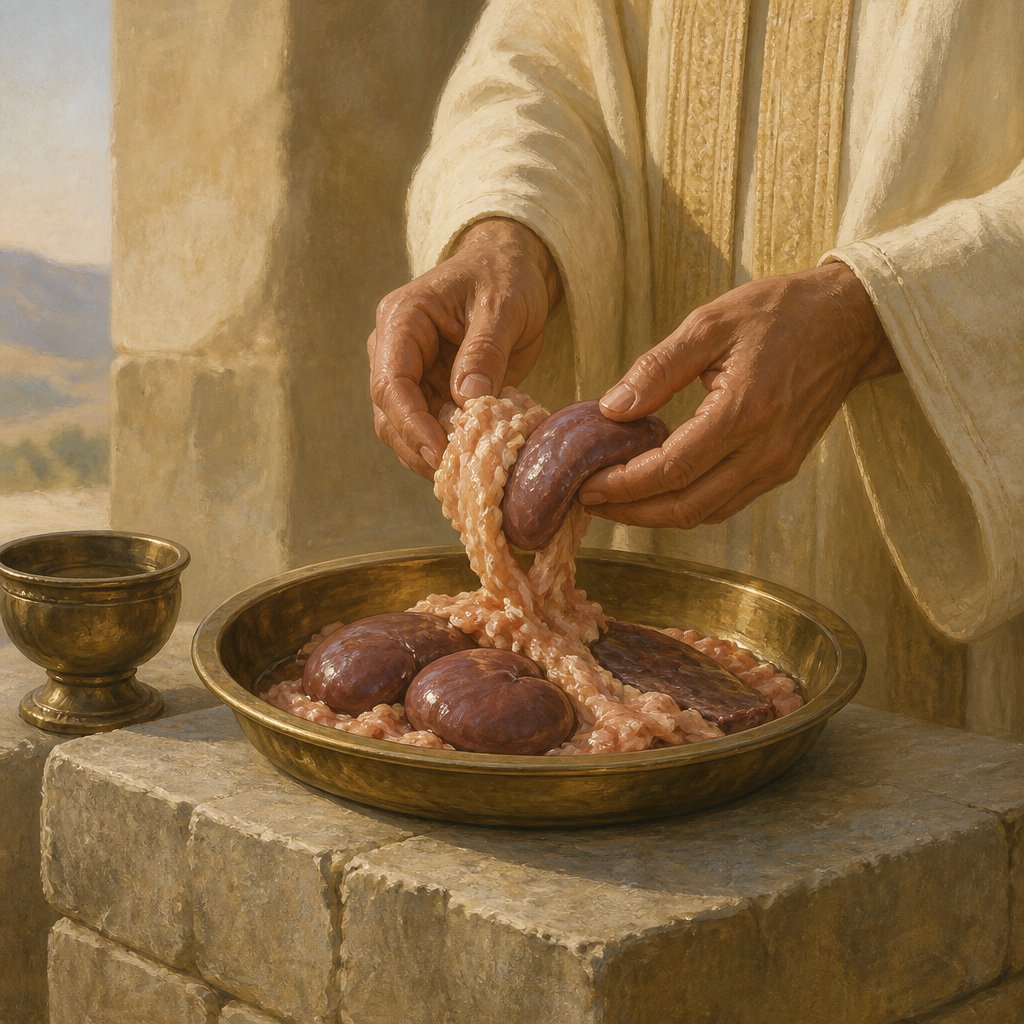
Leviticus 3:4 (KJV) states: "And the two kidneys, and the fat that is on them, which is by the flanks, and the caul above the liver, with the kidneys, it shall he take away."
The book of Leviticus is the third book of the Old Testament in the Bible and it primarily deals with the laws and regulations for the Israelites set forth by God. Leviticus 3:4 specifically deals with the offering of a peace offering to the Lord. The peace offering was a voluntary offering given to God as a token of gratitude, thankfulness, or a vow. This offering was different from the sin offering or the burnt offering as it was not given as a way to atone for sins, but rather as a way to show love and devotion to God.
In Leviticus 3:4, the verse outlines the specific parts of the animal that should be offered in the peace offering. It mentions the two kidneys, the fat that surrounds them, and the caul above the liver. These parts of the animal were considered the choicest and most valuable. The kidneys were seen as the source of a living creature's vitality, while the fat was seen as the richest and most savory part of the animal. The caul above the liver was considered a delicacy and was highly prized.
From a symbolic standpoint, the offering of these particular parts of the animal carries significant meaning. The kidneys were believed to be the seat of the emotions, thoughts, and desires, and the fat was a symbol of richness and abundance. By offering these prized parts to God, the giver is showing their willingness to give up what is most precious to them, as an expression of their thankfulness and dedication to God. The peace offering, therefore, becomes a symbolic act of consecration and surrender to God.
The context of Leviticus 3:4 within the book of Leviticus is important to understand the significance of this verse. The book of Leviticus was written at a time when the Israelites had just been delivered from slavery in Egypt and were being established as a nation. It was a critical period of transition and the Israelites were given these laws and regulations as a means of establishing their covenant relationship with God. Through these offerings and sacrifices, the Israelites were taught the importance of obedience, reverence, and the concept of holiness.
The theme of the peace offering and the specific instructions in Leviticus 3:4 also echo throughout the Bible. The idea of offering the finest and most valuable possessions to God is mirrored in the story of Cain and Abel in Genesis, where Abel's offering of the best of his flock is favored by God over Cain's offering of fruit from the ground.
In the New Testament, the concept of sacrificial offering is also seen in the life of Jesus Christ. His sacrifice on the cross is seen as the ultimate peace offering, as he offered himself as a perfect and unblemished sacrifice to reconcile humanity with God.
In conclusion, Leviticus 3:4 provides a detailed and specific instruction regarding the components of a peace offering to the Lord. The offering of the kidneys, the surrounding fat, and the caul above the liver symbolizes the Israelites willing to surrender the most precious and valuable parts of the animal to express their gratitude and devotion to God. This act serves as a model for the Israelites on how to approach God with reverence and to acknowledge his sovereignty and goodness. It also points towards the ultimate sacrifice of Jesus Christ as the perfect peace offering for the redemption of humanity.
Get our apps


Artwork for Leviticus 3:4

Leviticus 3:4 - "And the two kidneys, and the fat that is on them, which is by the flanks, and the caul above the liver, with the kidneys, it shall he take away."
"And the two kidneys, and the fat that is on them, which is by the flanks, and the caul above the liver, with the kidneys, it shall he take away." - Leviticus 3:4
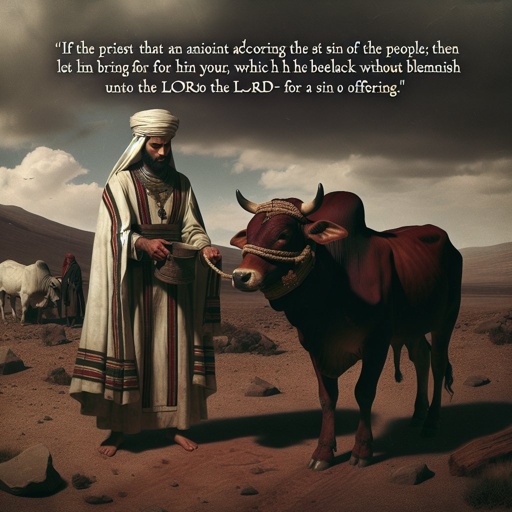
Leviticus 4:3 - "If the priest that is anointed do sin according to the sin of the people; then let him bring for his sin, which he hath sinned, a young bullock without blemish unto the LORD for a sin offering."

Leviticus 26: 4-6

Leviticus 26: 4-6

Leviticus 26: 4-6

Leviticus 4:1 - "And the LORD spake unto Moses, saying,"

Leviticus 27:4 - "And if it be a female, then thy estimation shall be thirty shekels."

Leviticus 12:3 - "And in the eighth day the flesh of his foreskin shall be circumcised."

Leviticus 4:16 - "And the priest that is anointed shall bring of the bullock's blood to the tabernacle of the congregation:"

Leviticus 3:12 - "¶ And if his offering be a goat, then he shall offer it before the LORD."

Leviticus 8:3 - "And gather thou all the congregation together unto the door of the tabernacle of the congregation."

Leviticus 26:3 - "¶ If ye walk in my statutes, and keep my commandments, and do them;"
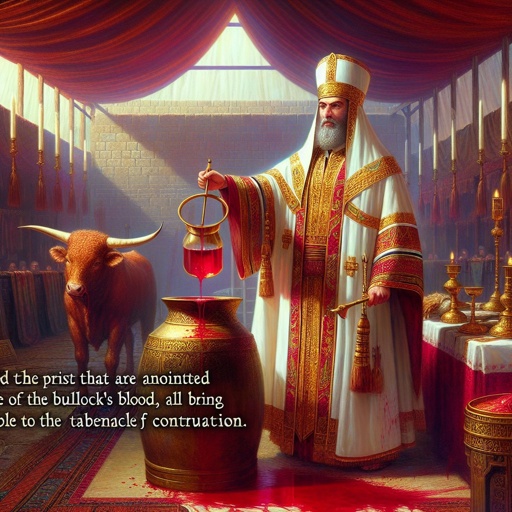
Leviticus 4:5 - "And the priest that is anointed shall take of the bullock's blood, and bring it to the tabernacle of the congregation:"

Leviticus 3:7 - "If he offer a lamb for his offering, then shall he offer it before the LORD."

Leviticus 7:3 - "And he shall offer of it all the fat thereof; the rump, and the fat that covereth the inwards,"

Leviticus 3:3 - "And he shall offer of the sacrifice of the peace offering an offering made by fire unto the LORD; the fat that covereth the inwards, and all the fat that is upon the inwards,"

Leviticus 24:4 - "He shall order the lamps upon the pure candlestick before the LORD continually."

Leviticus 23:4 - "¶ These are the feasts of the LORD, even holy convocations, which ye shall proclaim in their seasons."

Leviticus 3:11 - "And the priest shall burn it upon the altar: it is the food of the offering made by fire unto the LORD."

Leviticus 4:4 - "And he shall bring the bullock unto the door of the tabernacle of the congregation before the LORD; and shall lay his hand upon the bullock's head, and kill the bullock before the LORD."

Leviticus 4:32 - "And if he bring a lamb for a sin offering, he shall bring it a female without blemish."

Leviticus 4:19 - "And he shall take all his fat from him, and burn it upon the altar."

Leviticus 11:3 - "Whatsoever parteth the hoof, and is clovenfooted, and cheweth the cud, among the beasts, that shall ye eat."

Leviticus 21:4 - "But he shall not defile himself, being a chief man among his people, to profane himself."
"And the LORD spake unto Moses, saying," - Leviticus 4:1

Leviticus 8:4 - "And Moses did as the LORD commanded him; and the assembly was gathered together unto the door of the tabernacle of the congregation."

Leviticus 17:3 - "What man soever there be of the house of Israel, that killeth an ox, or lamb, or goat, in the camp, or that killeth it out of the camp,"

Leviticus 16:3 - "Thus shall Aaron come into the holy place: with a young bullock for a sin offering, and a ram for a burnt offering."

Leviticus 4:11 - "And the skin of the bullock, and all his flesh, with his head, and with his legs, and his inwards, and his dung,"