What does Leviticus 5:3 mean?
“Or if he touch the uncleanness of man, whatsoever uncleanness it be that a man shall be defiled withal, and it be hid from him; when he knoweth of it, then he shall be guilty.” — Leviticus 5:3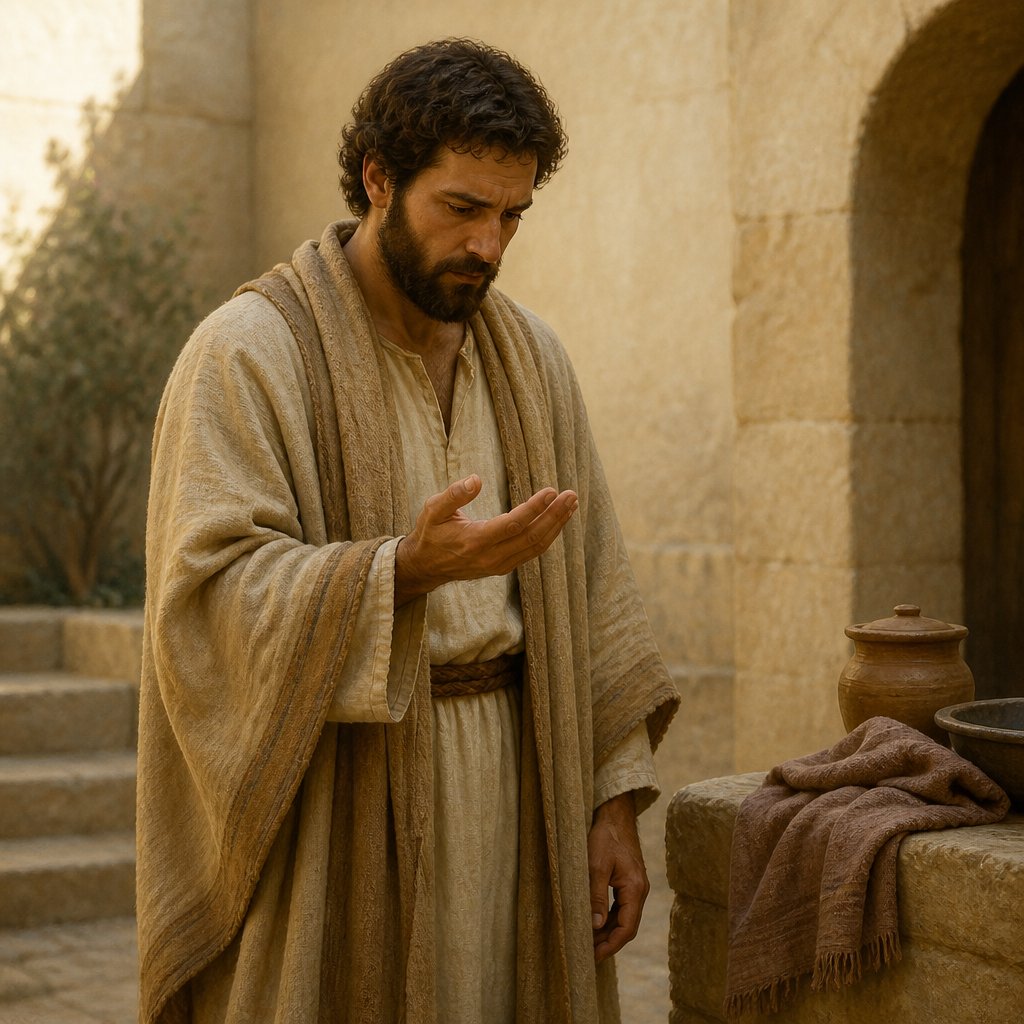
Leviticus 5:3 in the King James Version of the Bible reads, "Or if he touch the uncleanness of man, whatsoever uncleanness it be that a man shall be defiled withal, and it be hid from him; when he knoweth of it, then he shall be guilty."
This verse is part of the laws and regulations set forth in the book of Leviticus, which is the third book of the Hebrew Bible and the Old Testament. Leviticus is concerned primarily with the religious rituals and moral conduct of the Israelites, and it contains a detailed code of conduct for the priests and the people. Leviticus 5:3 specifically addresses the issue of uncleanness and defilement, and outlines the consequences for failing to follow the prescribed laws.
The context of this verse is important to understand, as it is part of a larger system of regulations designed to maintain the purity and holiness of the Israelite community. The concept of uncleanness in the Hebrew Bible is closely linked to ritual purity and the ability to worship and approach God. Uncleanness could be caused by a variety of factors, including contact with certain bodily fluids, skin diseases, or engaging in prohibited activities. In this verse, the focus is on the uncleanness of man, which likely refers to a person who has become ritually impure through contact with another person who is unclean.
The theme of guilt and responsibility is central to Leviticus 5:3. The verse states that if a person unknowingly becomes defiled by the uncleanness of another individual, they are still considered guilty once they become aware of the situation. This emphasizes the importance of self-awareness and the obligation to rectify any transgressions, even if they were unknowingly committed. The underlying message is that individuals are accountable for their own purity and must make amends if they become tainted by impurity.
Symbolism in this verse can be interpreted on several levels. On a literal level, the uncleanness of man represents physical impurity and the need for cleanliness in the sight of God. This reflects the broader symbolic theme of spiritual purity and the constant striving for moral and ethical integrity. The idea of hidden uncleanness also suggests the potential for concealed sins or impurities within the individual, which must be acknowledged and addressed.
Furthermore, the requirement for the guilty individual to take responsibility for their impurity and make amends aligns with the broader theological theme of repentance and atonement. The act of acknowledging guilt and seeking forgiveness is a fundamental part of the Israelite religion, and this verse underscores the importance of personal accountability before God.
In a broader theological context, Leviticus 5:3 can also be seen as foreshadowing the need for a more comprehensive solution to the problem of human sin and impurity. In Christian theology, the sacrificial system outlined in Leviticus is understood as a precursor to the ultimate atonement provided by Jesus Christ on the cross. While the rituals and regulations of Leviticus served to maintain the purity of the Israelite community, they also pointed to the need for a perfect and complete sacrifice to fully address the problem of sin and uncleanness.
In conclusion, Leviticus 5:3 addresses the issue of uncleanness and guilt within the Israelite community, emphasizing the importance of personal accountability and the need to address impurity. The verse reflects the broader themes of ritual purity, moral responsibility, and the theological foreshadowing of the ultimate atonement provided by Jesus Christ. This verse serves as a reminder of the ongoing need for personal repentance and the pursuit of spiritual purity in the sight of God.
Get our apps


Artwork for Leviticus 5:3

Leviticus 5:3 - "Or if he touch the uncleanness of man, whatsoever uncleanness it be that a man shall be defiled withal, and it be hid from him; when he knoweth of it, then he shall be guilty."
"Or if he touch the uncleanness of man, whatsoever uncleanness it be that a man shall be defiled withal, and it be hid from him; when he knoweth of it, then he shall be guilty." - Leviticus 5:3

Leviticus 3:5 - "And Aaron's sons shall burn it on the altar upon the burnt sacrifice, which is upon the wood that is on the fire: it is an offering made by fire, of a sweet savour unto the LORD."

Leviticus 5:14 - "¶ And the LORD spake unto Moses, saying,"

Leviticus 5:5 - "And it shall be, when he shall be guilty in one of these things, that he shall confess that he hath sinned in that thing:"

Leviticus 23:5 - "In the fourteenth day of the first month at even is the LORD'S passover."

Leviticus 5:19 - "It is a trespass offering: he hath certainly trespassed against the LORD."

Leviticus 12:3 - "And in the eighth day the flesh of his foreskin shall be circumcised."

Leviticus 8:5 - "And Moses said unto the congregation, This is the thing which the LORD commanded to be done."

Leviticus 4:5 - "And the priest that is anointed shall take of the bullock's blood, and bring it to the tabernacle of the congregation:"

Leviticus 3:12 - "¶ And if his offering be a goat, then he shall offer it before the LORD."

Leviticus 8:3 - "And gather thou all the congregation together unto the door of the tabernacle of the congregation."

Leviticus 26:3 - "¶ If ye walk in my statutes, and keep my commandments, and do them;"

Leviticus 10:5 - "So they went near, and carried them in their coats out of the camp; as Moses had said."

Leviticus 14:5 - "And the priest shall command that one of the birds be killed in an earthen vessel over running water:"

Leviticus 11:5 - "And the coney, because he cheweth the cud, but divideth not the hoof; he is unclean unto you."

Leviticus 3:7 - "If he offer a lamb for his offering, then shall he offer it before the LORD."

Leviticus 7:3 - "And he shall offer of it all the fat thereof; the rump, and the fat that covereth the inwards,"

Leviticus 3:3 - "And he shall offer of the sacrifice of the peace offering an offering made by fire unto the LORD; the fat that covereth the inwards, and all the fat that is upon the inwards,"
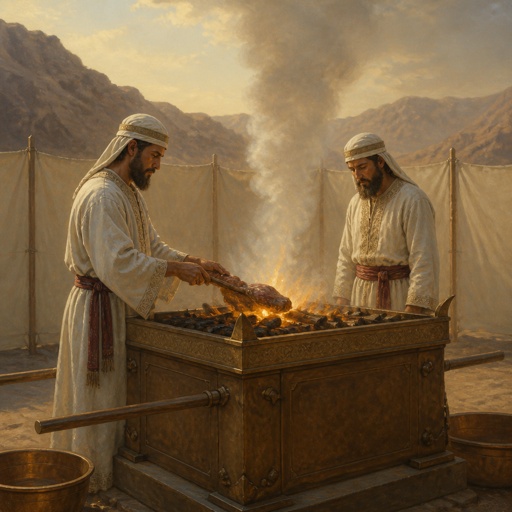
"And Aaron's sons shall burn it on the altar upon the burnt sacrifice, which is upon the wood that is on the fire: it is an offering made by fire, of a sweet savour unto the LORD." - Leviticus 3:5

Leviticus 19:5 - "¶ And if ye offer a sacrifice of peace offerings unto the LORD, ye shall offer it at your own will."

"¶ And the LORD spake unto Moses, saying," - Leviticus 5:14
Leviticus 2:5 - "¶ And if thy oblation be a meat offering baken in a pan, it shall be of fine flour unleavened, mingled with oil."

Leviticus 3:11 - "And the priest shall burn it upon the altar: it is the food of the offering made by fire unto the LORD."

Leviticus 7:5 - "And the priest shall burn them upon the altar for an offering made by fire unto the LORD: it is a trespass offering."

Leviticus 11:3 - "Whatsoever parteth the hoof, and is clovenfooted, and cheweth the cud, among the beasts, that shall ye eat."

Leviticus 9:5 - "¶ And they brought that which Moses commanded before the tabernacle of the congregation: and all the congregation drew near and stood before the LORD."

Leviticus 15:5 - "And whosoever toucheth his bed shall wash his clothes, and bathe himself in water, and be unclean until the even."

Leviticus 17:3 - "What man soever there be of the house of Israel, that killeth an ox, or lamb, or goat, in the camp, or that killeth it out of the camp,"

Leviticus 16:3 - "Thus shall Aaron come into the holy place: with a young bullock for a sin offering, and a ram for a burnt offering."