What does Leviticus 7:33 mean?
“He among the sons of Aaron, that offereth the blood of the peace offerings, and the fat, shall have the right shoulder for his part.” — Leviticus 7:33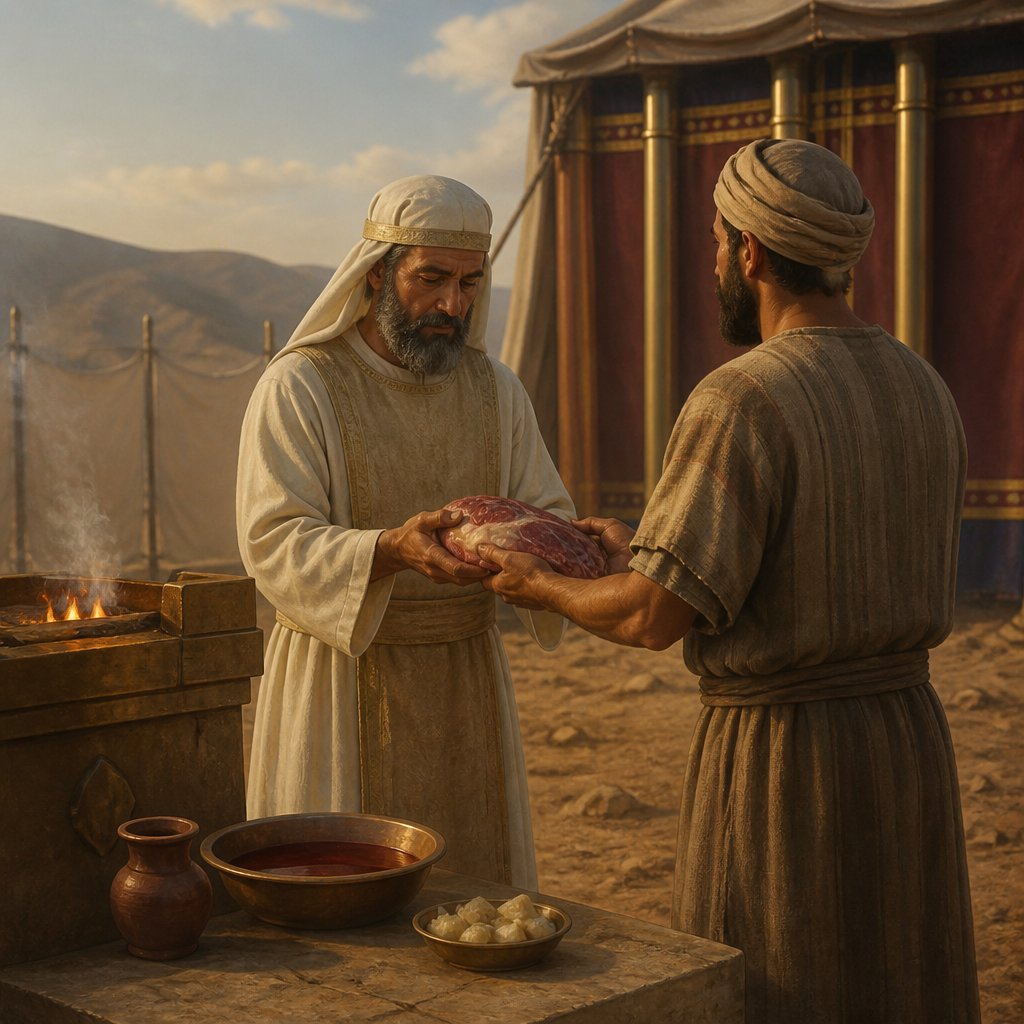
Leviticus 7:33 from the King James Version (KJV) of the Bible, states: “He among the sons of Aaron that offereth the blood of the peace offerings, and the fat, shall have the right shoulder for his part.”
Leviticus is the third book of the Hebrew Bible, and it primarily deals with laws and regulations regarding sacrifice, purification, and proper conduct for the ancient Israelites. The verse refers to the allocation of certain portions of the sacrificial offerings to the priests, specifically the sons of Aaron, who were the designated priests in the Israelite religion.
In this particular verse, the reference to the “right shoulder” as the portion designated for the priest is significant. In many ancient Near Eastern cultures, including the Israelites, the right side was often associated with strength, power, and favor. By designating the right shoulder as the portion for the priests, it symbolizes the idea that they are receiving the best and most valuable part of the offering. This reflects the importance and honor that was ascribed to the role of the priests in the religious and social hierarchy of ancient Israel.
The broader context of Leviticus 7:33 is within the framework of the sacrificial system outlined in the book of Leviticus. The peace offering, also known as the fellowship offering, was a voluntary offering where the worshiper would bring an animal to the tabernacle or temple as an expression of thanksgiving, communion, and fellowship with God. The offering would be shared between the worshiper, the priests, and in some cases, the community as a whole. The portion of the offering designated for the priests was meant to sustain them and provide for their needs as they carried out their duties in the tabernacle or temple.
The theme of this verse revolves around the concept of provision and sustenance for those who serve in the religious community. The allocation of the offering to the priests was not just a matter of logistics, but it was also a way to ensure that those who were devoted to the service of God were provided for. This echoes the broader biblical principle of taking care of those who are dedicated to the work of the Lord, as seen in other passages where provision is made for the priests and Levites from the offerings and tithes of the people.
Furthermore, the symbolism of the blood and the fat in the verse is worth noting. In ancient Israelite sacrificial practices, the blood and the fat were considered the most valuable parts of the offering and were reserved for God and the priests. The blood represented the life of the animal, and by offering it to God, the worshiper acknowledged God as the giver and sustainer of life. The fat, on the other hand, was considered the choicest part of the animal and was associated with richness and abundance. By giving the fat to the priests, it symbolized the idea of sharing God’s abundance and blessing with those who were serving in the sacred role of priesthood.
In conclusion, Leviticus 7:33 from the King James Version of the Bible carries a deep symbolic and practical significance within the context of ancient Israelite religious practices. It reflects the care and provision for those who served in the priesthood, as well as the symbolism of sharing the best and most valuable parts of the offering with those who were devoted to the service of God. The verse also underscores the broader biblical theme of honoring and providing for those who are dedicated to the work of the Lord.
Get our apps


Artwork for Leviticus 7:33

Leviticus 7:33 - "He among the sons of Aaron, that offereth the blood of the peace offerings, and the fat, shall have the right shoulder for his part."
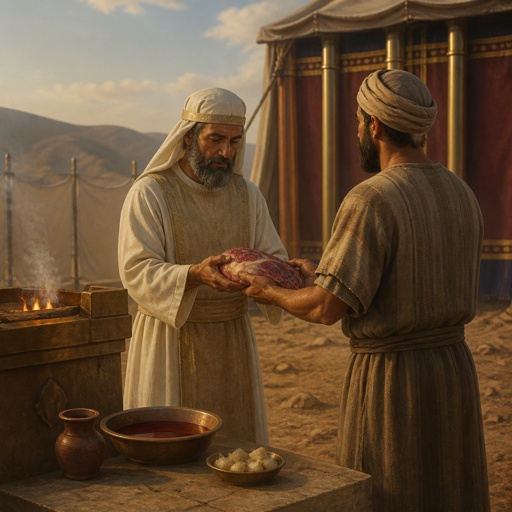
"He among the sons of Aaron, that offereth the blood of the peace offerings, and the fat, shall have the right shoulder for his part." - Leviticus 7:33

Leviticus 23:33 - "¶ And the LORD spake unto Moses, saying,"

Leviticus 14:33 - "¶ And the LORD spake unto Moses and unto Aaron, saying,"

Leviticus 19:33 - "¶ And if a stranger sojourn with thee in your land, ye shall not vex him."

Leviticus 22:33 - "That brought you out of the land of Egypt, to be your God: I am the LORD."

"¶ And the LORD spake unto Moses, saying," - Leviticus 23:33

Leviticus 11:33 - "And every earthen vessel, whereinto any of them falleth, whatsoever is in it shall be unclean; and ye shall break it."

Luke 7:33

Leviticus 15:33 - "And of her that is sick of her flowers, and of him that hath an issue, of the man, and of the woman, and of him that lieth with her that is unclean."

Leviticus 17:7

Leviticus 26:33 - "And I will scatter you among the heathen, and will draw out a sword after you: and your land shall be desolate, and your cities waste."

"¶ And the LORD spake unto Moses and unto Aaron, saying," - Leviticus 14:33

Leviticus 4:33 - "And he shall lay his hand upon the head of the sin offering, and slay it for a sin offering in the place where they kill the burnt offering."

Leviticus 13:33 - "He shall be shaven, but the scall shall he not shave; and the priest shall shut up him that hath the scall seven days more:"

Nehemiah 7:33 - "The men of the other Nebo, fifty and two."

leviticus 16:7-10

Leviticus 27:33 - "He shall not search whether it be good or bad, neither shall he change it: and if he change it at all, then both it and the change thereof shall be holy; it shall not be redeemed."

"¶ And if a stranger sojourn with thee in your land, ye shall not vex him." - Leviticus 19:33

Leviticus 16:33 - "And he shall make an atonement for the holy sanctuary, and he shall make an atonement for the tabernacle of the congregation, and for the altar, and he shall make an atonement for the priests, and for all the people of the congregation."

Leviticus 8:33 - "And ye shall not go out of the door of the tabernacle of the congregation in seven days, until the days of your consecration be at an end: for seven days shall he consecrate you."

Leviticus 25:33 - "And if a man purchase of the Levites, then the house that was sold, and the city of his possession, shall go out in the year of jubile: for the houses of the cities of the Levites are their possession among the children of Israel."

1 Chronicles 7:33 - "And the sons of Japhlet; Pasach, and Bimhal, and Ashvath. These are the children of Japhlet."

Leviticus 7:22 - "¶ And the LORD spake unto Moses, saying,"

Leviticus 7:28 - "¶ And the LORD spake unto Moses, saying,"
"That brought you out of the land of Egypt, to be your God: I am the LORD." - Leviticus 22:33

Leviticus 7:1 - "Likewise this is the law of the trespass offering: it is most holy."

Leviticus 7:7 - "As the sin offering is, so is the trespass offering: there is one law for them: the priest that maketh atonement therewith shall have it."

Leviticus 19:7 - "And if it be eaten at all on the third day, it is abominable; it shall not be accepted."

Jeremiah 33:7 - "And I will cause the captivity of Judah and the captivity of Israel to return, and will build them, as at the first."