What does Leviticus 7:4 mean?
“And the two kidneys, and the fat that is on them, which is by the flanks, and the caul that is above the liver, with the kidneys, it shall he take away:” — Leviticus 7:4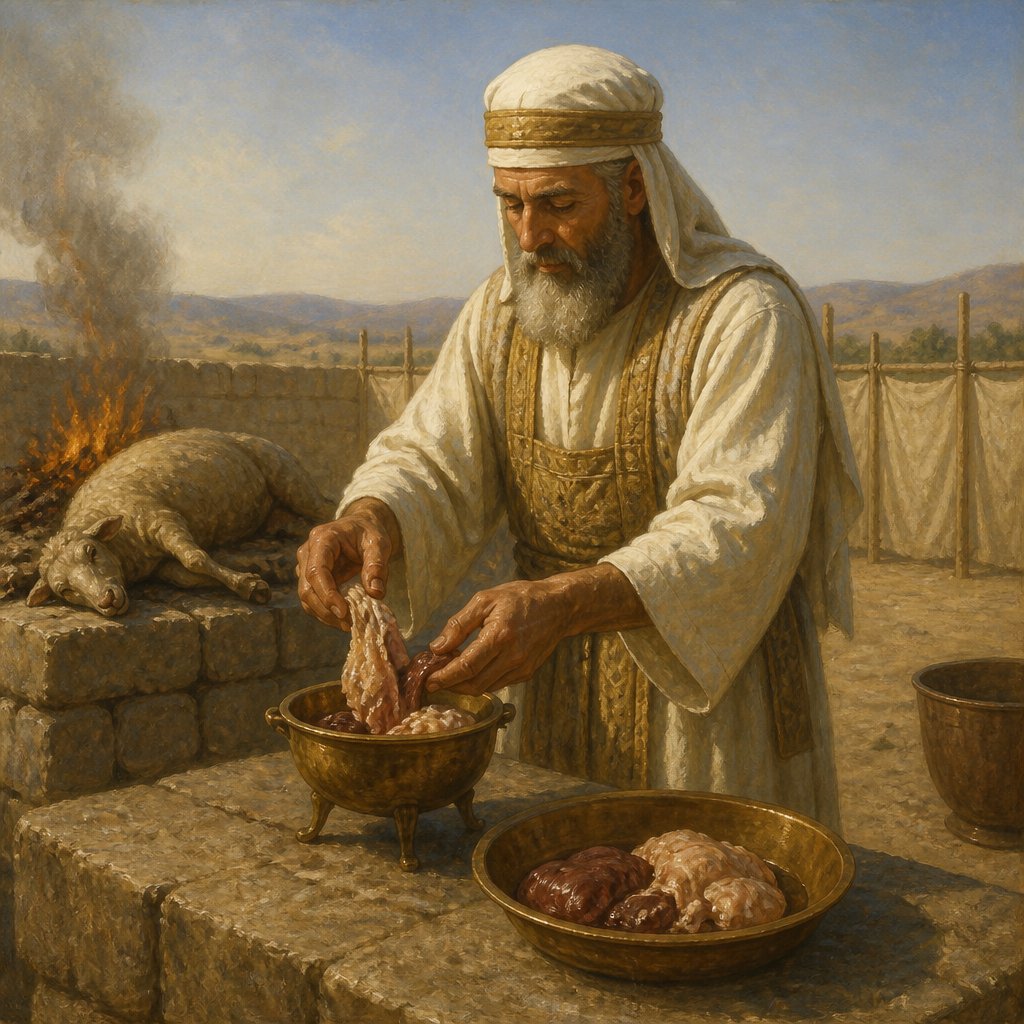
Leviticus 7:4 (KJV) states, "And the two kidneys, and the fat that is upon them, which is by the flanks, and the caul above the liver, with the kidneys, it shall he take away."
This verse is part of the detailed instructions given to the Israelites concerning the offering of sacrifices to the Lord. In this particular verse, the focus is on the specific portions of the animal that are to be offered as a sacrifice. The kidneys, the fat surrounding the kidneys, and the caul above the liver are to be removed and offered to the Lord. This requirement demonstrates the attention to detail and specificity that characterized the sacrificial system in ancient Israel.
The book of Leviticus is the third book of the Bible and is part of the Torah, which is the first five books of the Old Testament. It was written by Moses and serves as a guide for the Israelites regarding their worship, moral conduct, and daily life. The sacrificial system outlined in Leviticus was central to the Israelites' religious practices and was intended to provide a means of atonement for sin and to maintain a right relationship with God. The specific instructions regarding the different types of offerings, including the portions to be offered, reveal the meticulous nature of the Israelites' worship.
In a broader context, the sacrificial system in Leviticus is a foreshadowing of the ultimate sacrifice of Jesus Christ, who is often referred to as the "Lamb of God" in the New Testament. The book of Hebrews in the New Testament draws parallels between the Levitical sacrifices and the sacrifice of Jesus, emphasizing that Jesus' sacrifice was once and for all, and it was perfect and complete. Therefore, while the sacrificial system outlined in Leviticus may seem archaic and foreign to modern readers, it is essential to understand its significance in foreshadowing the redemptive work of Jesus Christ.
The removal of the kidneys, fat, and caul above the liver as part of the sacrificial offering holds symbolic significance. In ancient Jewish thought, the kidneys were associated with the seat of individual emotion and conscience. The fat was considered the choicest part of the animal and was symbolic of the best that one had to offer. The caul, or omentum, covering the liver, was significant in early Jewish thought as the part of the body where the will and desires resided. Therefore, the offering of these specific parts of the animal was a representation of the Israelites' surrender of their innermost thoughts, desires, and emotions to the Lord.
Another interpretation of this verse within the context of the ancient Israelite sacrificial system is the idea of sacrifice as a form of worship and obedience to God. God, through His instructions to the Israelites, was teaching them the importance of giving their best to Him, both in material offerings and in their innermost thoughts and desires. By requiring the offering of specific body parts, God was teaching the Israelites to give their whole selves to Him in worship and obedience. This concept is echoed in the New Testament, where believers are called to offer themselves as "living sacrifices" to God, presenting their bodies as instruments of righteousness (Romans 12:1).
In conclusion, Leviticus 7:4 provides a detailed glimpse into the sacrificial system of ancient Israel, emphasizing the meticulous nature of the offerings and the symbolic significance of the parts to be offered. It also serves as a reminder of the redemptive work of Jesus Christ, as the ultimate sacrifice that fulfilled and surpassed the requirements of the Levitical sacrificial system. Additionally, the verse teaches the importance of giving our best to God and offering our whole selves in worship and obedience.
Get our apps


Artwork for Leviticus 7:4

Leviticus 7:4 - "And the two kidneys, and the fat that is on them, which is by the flanks, and the caul that is above the liver, with the kidneys, it shall he take away:"
"And the two kidneys, and the fat that is on them, which is by the flanks, and the caul that is above the liver, with the kidneys, it shall he take away:" - Leviticus 7:4

Leviticus 17:7
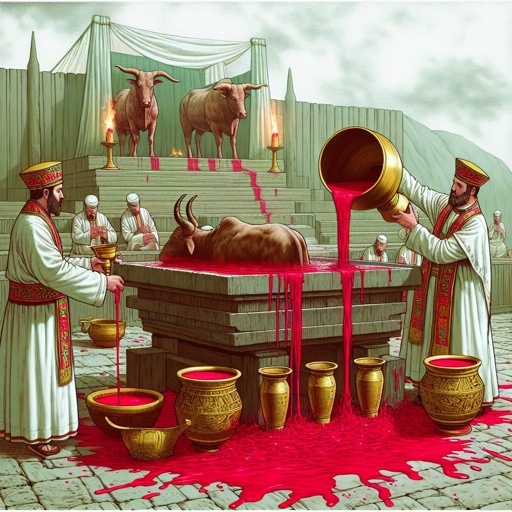
Leviticus 4:7 - "And the priest shall put some of the blood upon the horns of the altar of sweet incense before the LORD, which is in the tabernacle of the congregation; and shall pour all the blood of the bullock at the bottom of the altar of the burnt offering, which is at the door of the tabernacle of the congregation."

leviticus 16:7-10

Leviticus 26: 4-6

Leviticus 7:22 - "¶ And the LORD spake unto Moses, saying,"

Leviticus 7:28 - "¶ And the LORD spake unto Moses, saying,"
Leviticus 26: 4-6

Leviticus 26: 4-6

Leviticus 7:1 - "Likewise this is the law of the trespass offering: it is most holy."

Leviticus 7:7 - "As the sin offering is, so is the trespass offering: there is one law for them: the priest that maketh atonement therewith shall have it."

Leviticus 4:1 - "And the LORD spake unto Moses, saying,"

Leviticus 19:7 - "And if it be eaten at all on the third day, it is abominable; it shall not be accepted."

Leviticus 7:17 - "But the remainder of the flesh of the sacrifice on the third day shall be burnt with fire."

Leviticus 27:4 - "And if it be a female, then thy estimation shall be thirty shekels."

Leviticus 3:7 - "If he offer a lamb for his offering, then shall he offer it before the LORD."

Leviticus 7:3 - "And he shall offer of it all the fat thereof; the rump, and the fat that covereth the inwards,"

Leviticus 26:7 - "And ye shall chase your enemies, and they shall fall before you by the sword."
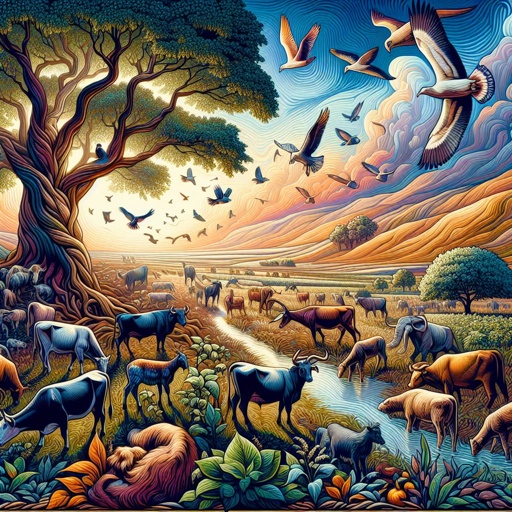
Leviticus 25:7 - "And for thy cattle, and for the beast that are in thy land, shall all the increase thereof be meat."

Leviticus 7:11 - "And this is the law of the sacrifice of peace offerings, which he shall offer unto the LORD."

Leviticus 4:16 - "And the priest that is anointed shall bring of the bullock's blood to the tabernacle of the congregation:"

Leviticus 20:7 - "¶ Sanctify yourselves therefore, and be ye holy: for I am the LORD your God."
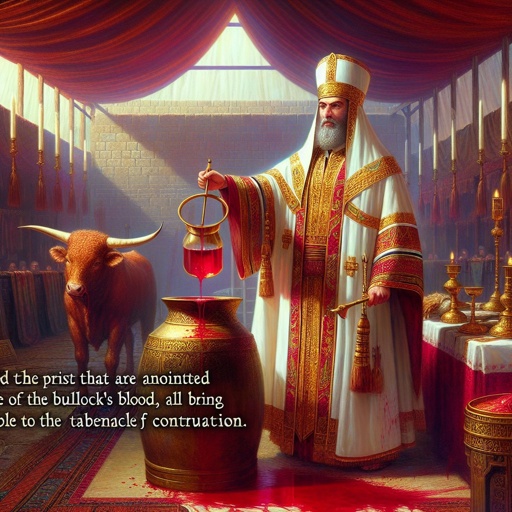
Leviticus 4:5 - "And the priest that is anointed shall take of the bullock's blood, and bring it to the tabernacle of the congregation:"

Leviticus 2:7 - "¶ And if thy oblation be a meat offering baken in the fryingpan, it shall be made of fine flour with oil."

Leviticus 7:31 - "And the priest shall burn the fat upon the altar: but the breast shall be Aaron's and his sons'."

Leviticus 7:9 - "And all the meat offering that is baken in the oven, and all that is dressed in the fryingpan, and in the pan, shall be the priest's that offereth it."

Cycle of sabbath rest year. Leviticus 25:1-7

"¶ And the LORD spake unto Moses, saying," - Leviticus 7:22

"¶ And the LORD spake unto Moses, saying," - Leviticus 7:28