What does Leviticus 8:14 mean?
“And he brought the bullock for the sin offering: and Aaron and his sons laid their hands upon the head of the bullock for the sin offering.” — Leviticus 8:14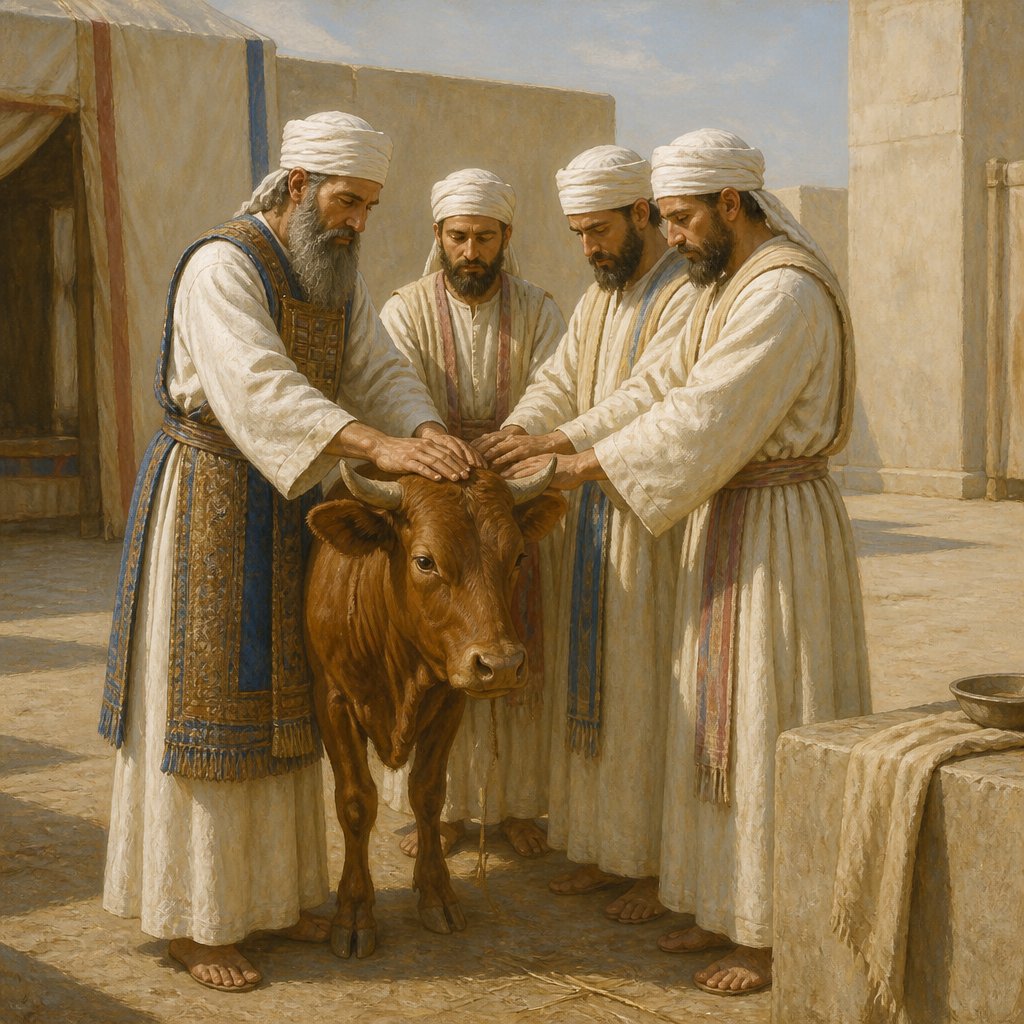
Leviticus 8:14 in the King James Version of the Bible reads: "And he brought the bullock for the sin offering: and Aaron and his sons laid their hands upon the head of the bullock for the sin offering."
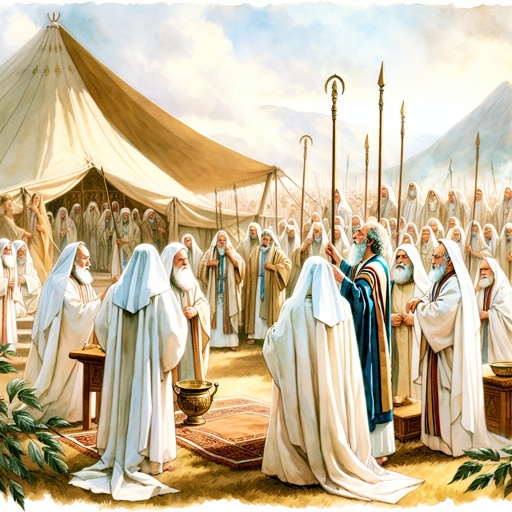
This verse is part of the larger context of the consecration of Aaron and his sons as priests in the tabernacle, as described in Leviticus 8. The book of Leviticus is primarily concerned with the laws and rituals governing the religious and moral life of the Israelites, and it stands as a central text in the Pentateuch, or the first five books of the Bible. In this specific instance, the consecration of Aaron as high priest is a significant event in the establishment of the Israelite priesthood and the religious practices of the Israelite community.
The verse speaks to the ritual of the sin offering, which was a central part of the Israelite sacrificial system. The sin offering was a way for the people to atone for their sins and seek forgiveness and reconciliation with God. In this ritual, the person making the offering would lay their hands on the head of the animal, symbolically transferring their sins onto the animal, which would then be sacrificed as a substitute for the sinner. In this case, Aaron and his sons are performing this ritual with a bullock, a type of cattle, as the sin offering.
The act of laying hands on the head of the sacrificial animal carries deep symbolic significance. It represents a transfer of guilt and liability from the sinner to the innocent animal, which will then bear the punishment for the sin. This act also serves as a tangible expression of repentance and a willingness to be purified from sin. Furthermore, it signifies a recognition of the seriousness of sin and the need for atonement and reconciliation with God.
The consecration of Aaron and his sons as priests and the performance of the sin offering ritual also symbolize the mediation between God and the people. The priests acted as intermediaries, representing the people before God and offering sacrifices on their behalf. The sin offering served as a means of restoring the relationship between God and the community, as it provided a way for the people to seek God's forgiveness and to be restored to a state of purity and holiness.
From a broader theological perspective, the sin offering rituals in Leviticus point forward to the ultimate sacrificial atonement made by Jesus Christ in the New Testament. The laying on of hands and the transfer of sin onto the sacrificial animal foreshadow the concept of vicarious atonement, where Jesus, as the innocent and blameless Lamb of God, took upon himself the sins of humanity and offered himself as a sacrifice to reconcile humanity with God. The sin offering rituals in Leviticus thus serve as a powerful typology for the redemptive work of Christ.
In conclusion, Leviticus 8:14 and the surrounding context of the consecration of Aaron and his sons as priests and the performance of the sin offering ritual are rich in symbolic and theological significance. The verse underscores the importance of atonement, reconciliation, and the need for mediation between God and humanity. Moreover, it points forward to the fulfillment of these concepts in the person and work of Jesus Christ.
Get our apps


Artwork for Leviticus 8:14

Leviticus 8:14 - "And he brought the bullock for the sin offering: and Aaron and his sons laid their hands upon the head of the bullock for the sin offering."
"And he brought the bullock for the sin offering: and Aaron and his sons laid their hands upon the head of the bullock for the sin offering." - Leviticus 8:14

Leviticus 14:51
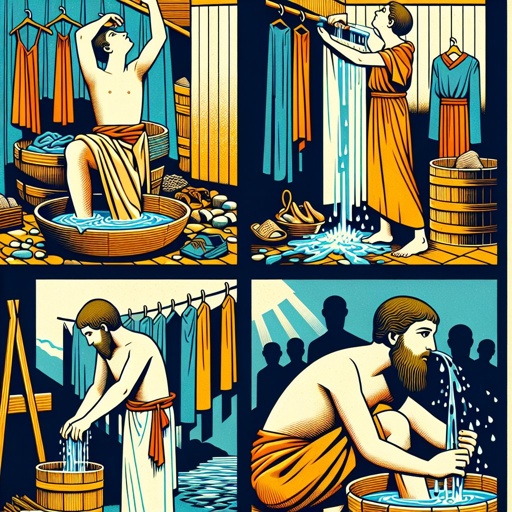
Leviticus 14:8 - "And he that is to be cleansed shall wash his clothes, and shave off all his hair, and wash himself in water, that he may be clean: and after that he shall come into the camp, and shall tarry abroad out of his tent seven days."

Leviticus 16:8

Leviticus 14:55 - "And for the leprosy of a garment, and of a house,"

Leviticus 8:30

Leviticus 14:56 - "And for a rising, and for a scab, and for a bright spot:"

Leviticus 14:1 - "And the LORD spake unto Moses, saying,"

Leviticus 11:14 - "And the vulture, and the kite after his kind;"
Leviticus 5:14 - "¶ And the LORD spake unto Moses, saying,"
Leviticus 8:1-12

Leviticus 8:8 - "And he put the breastplate upon him: also he put in the breastplate the Urim and the Thummim."

Leviticus 14:54 - "This is the law for all manner of plague of leprosy, and scall,"

Leviticus 6:8 - "¶ And the LORD spake unto Moses, saying,"

Leviticus 10:8 - "¶ And the LORD spake unto Aaron, saying,"

Leviticus 26:14 - "¶ But if ye will not hearken unto me, and will not do all these commandments;"

Leviticus 14:33 - "¶ And the LORD spake unto Moses and unto Aaron, saying,"

Leviticus 8:1 - "And the LORD spake unto Moses, saying,"

Leviticus 14:57 - "To teach when it is unclean, and when it is clean: this is the law of leprosy."

"And for the leprosy of a garment, and of a house," - Leviticus 14:55

Leviticus 13:14 - "But when raw flesh appeareth in him, he shall be unclean."

Leviticus 14:26 - "And the priest shall pour of the oil into the palm of his own left hand:"

Leviticus 8:32 - "And that which remaineth of the flesh and of the bread shall ye burn with fire."

Leviticus 14:30 - "And he shall offer the one of the turtledoves, or of the young pigeons, such as he can get;"

"And for a rising, and for a scab, and for a bright spot:" - Leviticus 14:56

Leviticus 8:6 - "And Moses brought Aaron and his sons, and washed them with water."

Leviticus 8:19 - "And he killed it; and Moses sprinkled the blood upon the altar round about."

Leviticus 8:3 - "And gather thou all the congregation together unto the door of the tabernacle of the congregation."

Leviticus 8:5 - "And Moses said unto the congregation, This is the thing which the LORD commanded to be done."