What does Leviticus 9:7 mean?
“And Moses said unto Aaron, Go unto the altar, and offer thy sin offering, and thy burnt offering, and make an atonement for thyself, and for the people: and offer the offering of the people, and make an atonement for them; as the LORD commanded.” — Leviticus 9:7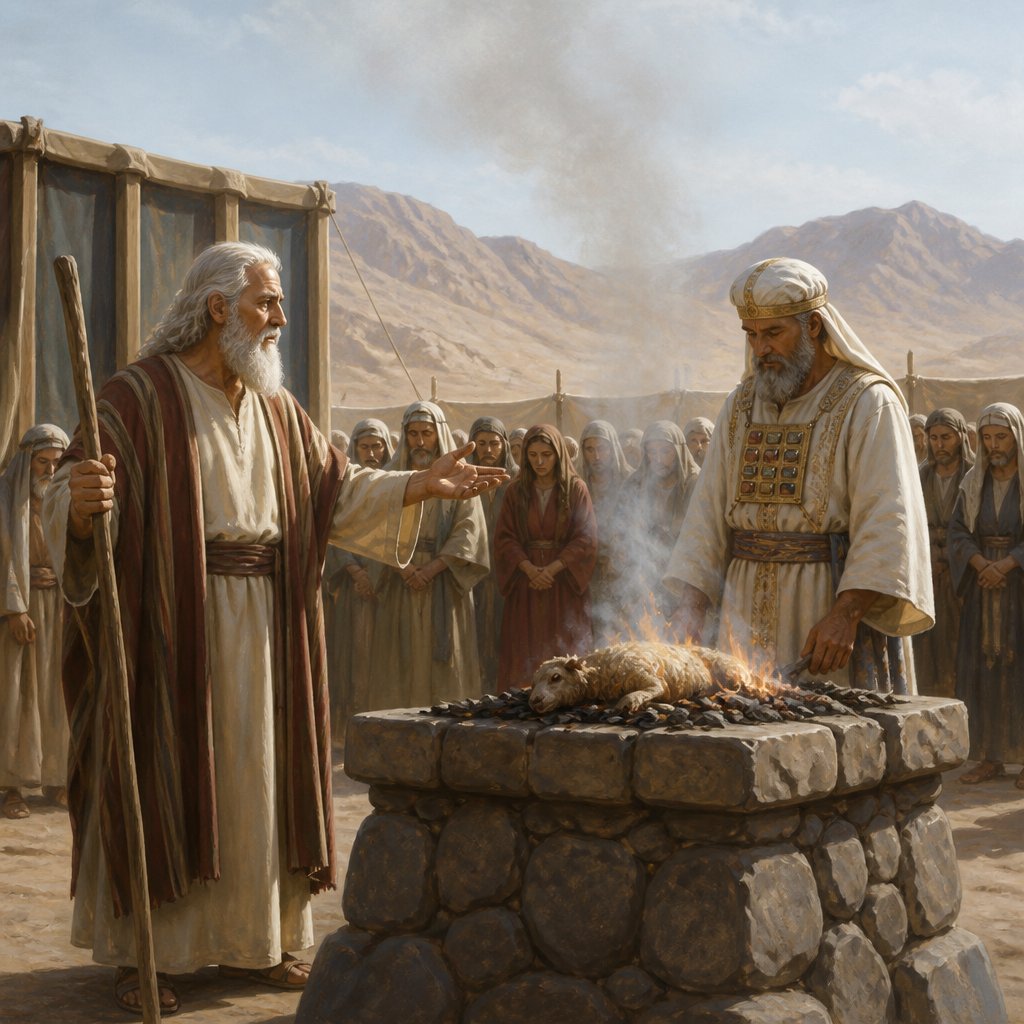
Leviticus 9:7 (KJV) states, "And Moses said unto Aaron, Go unto the altar, and offer thy sin offering, and thy burnt offering, and make an atonement for thyself, and for the people: and offer the offering of the people, and make an atonement for them; as the Lord commanded."
Leviticus is the third book of the Hebrew Bible, and it is a crucial component of the Torah, which is the first five books of the Bible and is foundational to Judaism. The book of Leviticus is primarily concerned with detailing the rituals, regulations, and laws that the ancient Israelites were to follow in order to maintain their relationship with God. The verse in question is a specific instruction from Moses to his brother Aaron, who was the first high priest of the Israelites, about the sacrificial offerings that were to be made in order to atone for the sins of the people.
The themes present in this verse include atonement, sacrifice, and the role of the priesthood in facilitating the relationship between God and His people. The context of the verse is the consecration of the tabernacle and the ordination of Aaron and his sons as priests. This consecration process was crucial to the establishment of the priesthood and the purification of the people of Israel in preparation for their journey to the promised land.
The verse begins with Moses instructing Aaron to go to the altar and make offerings for himself and the people. This emphasizes the importance of the high priest's role in mediating between the people and God. The sin offering and burnt offering were foundational components of the sacrificial system in ancient Israel. The sin offering was meant to atone for the sins of the people, while the burnt offering was a way to express devotion and worship to God.
The concept of atonement is central to the verse, as it represents the process of reconciliation and restoration of the relationship between God and His people. The word "atonement" comes from the Hebrew word "kippur", meaning "to cover". It signifies the covering of sin through the shedding of blood. In the New Testament, Jesus Christ is often seen as the ultimate atonement for the sins of humanity through his sacrificial death on the cross.
The verse also highlights the importance of obedience to God's commands. The phrase "as the Lord commanded" emphasizes the divine authority behind the instructions given to Aaron. This obedience was an integral part of the Israelites' covenant relationship with God, as their faithfulness to God's commands was meant to set them apart as His chosen people.
Symbolism plays a significant role in this verse as well. The altar is a symbol of the presence of God, and the offerings made on it were meant to represent the people's desire to draw near to Him. The act of offering represents submission, repentance, and surrender to God's will. The burnt offering, in particular, symbolizes complete dedication and surrender to God.
In conclusion, Leviticus 9:7 is a verse that holds great significance in the context of the ancient Israelite sacrificial system and the establishment of the priesthood. It emphasizes the themes of atonement, obedience, and the role of the high priest in mediating between God and His people. The verse also holds deep symbolic meaning, as it represents the desire of the people to draw near to God through the act of offering sacrifices. Ultimately, it points to the central importance of maintaining a right relationship with God through repentance, obedience, and worship.
Get our apps


Artwork for Leviticus 9:7

Leviticus 9:7 - "And Moses said unto Aaron, Go unto the altar, and offer thy sin offering, and thy burnt offering, and make an atonement for thyself, and for the people: and offer the offering of the people, and make an atonement for them; as the LORD commanded."
"And Moses said unto Aaron, Go unto the altar, and offer thy sin offering, and thy burnt offering, and make an atonement for thyself, and for the people: and offer the offering of the people, and make an atonement for them; as the LORD commanded." - Leviticus 9:7

Leviticus 7:9 - "And all the meat offering that is baken in the oven, and all that is dressed in the fryingpan, and in the pan, shall be the priest's that offereth it."
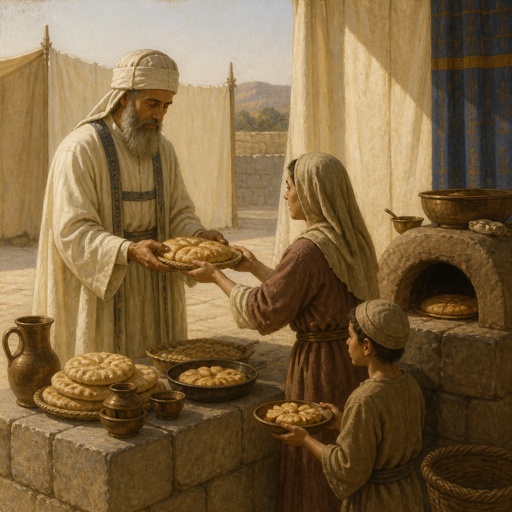
"And all the meat offering that is baken in the oven, and all that is dressed in the fryingpan, and in the pan, shall be the priest's that offereth it." - Leviticus 7:9

Leviticus 17:7

leviticus 16:7-10

Leviticus 23:9 - "¶ And the LORD spake unto Moses, saying,"

Leviticus 7:22 - "¶ And the LORD spake unto Moses, saying,"

Leviticus 7:28 - "¶ And the LORD spake unto Moses, saying,"

Leviticus 9:16 - "And he brought the burnt offering, and offered it according to the manner."

Leviticus 7:1 - "Likewise this is the law of the trespass offering: it is most holy."

Leviticus 9:11 - "And the flesh and the hide he burnt with fire without the camp."

Leviticus 7:7 - "As the sin offering is, so is the trespass offering: there is one law for them: the priest that maketh atonement therewith shall have it."

Leviticus 19:7 - "And if it be eaten at all on the third day, it is abominable; it shall not be accepted."

Leviticus 7:17 - "But the remainder of the flesh of the sacrifice on the third day shall be burnt with fire."

Leviticus 13:9 - "¶ When the plague of leprosy is in a man, then he shall be brought unto the priest;"

Leviticus 9:20 - "And they put the fat upon the breasts, and he burnt the fat upon the altar:"

Leviticus 9:9 - "And the sons of Aaron brought the blood unto him: and he dipped his finger in the blood, and put it upon the horns of the altar, and poured out the blood at the bottom of the altar:"

Leviticus 15:9 - "And what saddle soever he rideth upon that hath the issue shall be unclean."

Leviticus 9:14 - "And he did wash the inwards and the legs, and burnt them upon the burnt offering on the altar."

Leviticus 9:8 - "¶ Aaron therefore went unto the altar, and slew the calf of the sin offering, which was for himself."

Leviticus 9:1 - "And it came to pass on the eighth day, that Moses called Aaron and his sons, and the elders of Israel;"

Leviticus 3:7 - "If he offer a lamb for his offering, then shall he offer it before the LORD."

Leviticus 7:3 - "And he shall offer of it all the fat thereof; the rump, and the fat that covereth the inwards,"

Leviticus 26:7 - "And ye shall chase your enemies, and they shall fall before you by the sword."

Leviticus 25:7 - "And for thy cattle, and for the beast that are in thy land, shall all the increase thereof be meat."

Leviticus 7:11 - "And this is the law of the sacrifice of peace offerings, which he shall offer unto the LORD."

Leviticus 9:19 - "And the fat of the bullock and of the ram, the rump, and that which covereth the inwards, and the kidneys, and the caul above the liver:"

Leviticus 9:21 - "And the breasts and the right shoulder Aaron waved for a wave offering before the LORD; as Moses commanded."

Leviticus 20:7 - "¶ Sanctify yourselves therefore, and be ye holy: for I am the LORD your God."