What does Luke 1:11 mean?
“And there appeared unto him an angel of the Lord standing on the right side of the altar of incense.” — Luke 1:11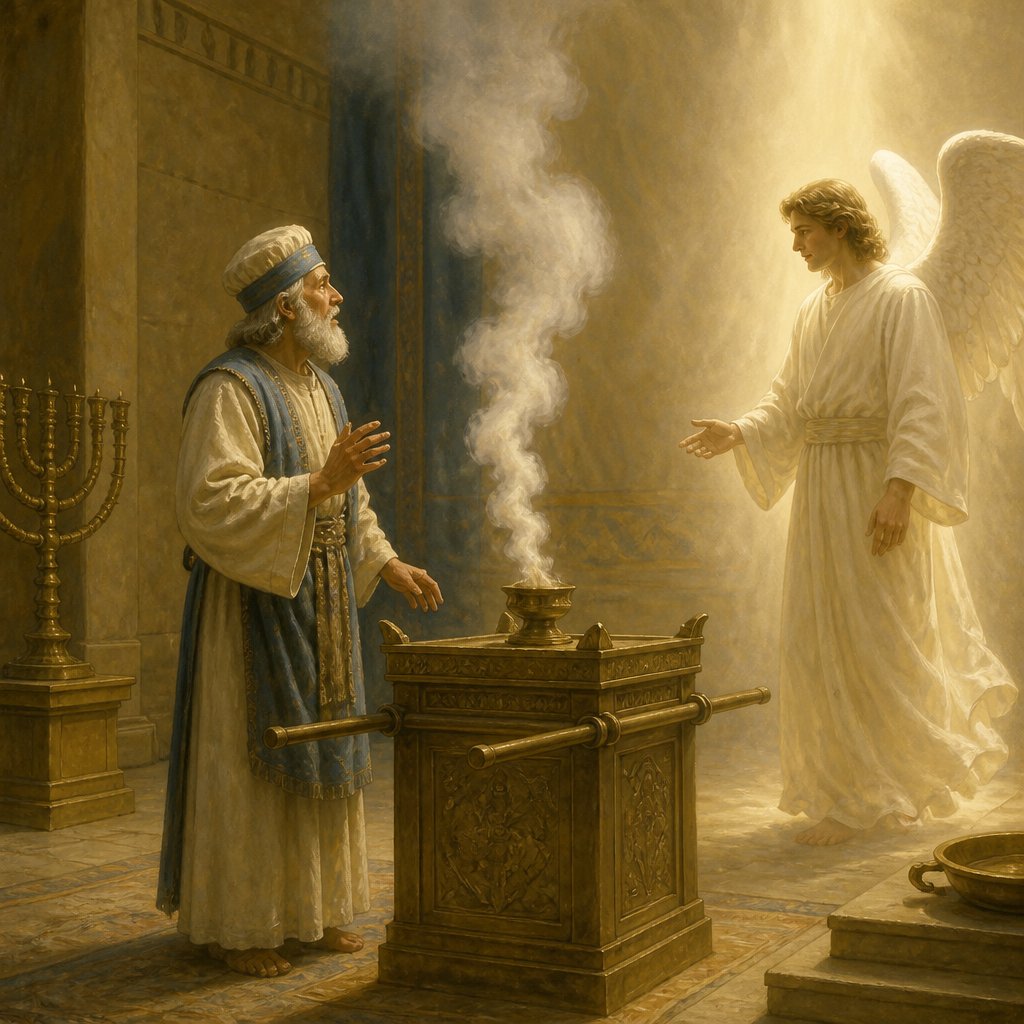
The verse Luke 1:11 from the King James Version of the Bible reads, "And there appeared unto him an angel of the Lord standing on the right side of the altar of incense." This passage is part of the narrative of the birth of John the Baptist, which is found in the first chapter of the Gospel of Luke.
In this verse, the angel of the Lord appears to Zechariah, who was a priest of the division of Abijah, and was serving in the temple. Zechariah and his wife Elizabeth were both righteous before God, walking blamelessly in all the commandments and statutes of the Lord. However, they were both advanced in years and had no children, as Elizabeth was barren.
The appearance of the angel of the Lord to Zechariah occurs at a significant moment in the temple, as Zechariah is performing the prescribed duty of burning incense. This was a sacred and solemn act of worship that took place within the holy place of the temple, and it was a symbol of the prayers of the people rising before the Lord. The fact that the angel appeared at the right side of the altar of incense is noteworthy, as the right side is often associated with favor, blessing, and honor.
The context of this verse is important to understand its full significance. The Jewish people were eagerly awaiting the coming of the Messiah, and the birth of John the Baptist was a critical part of the fulfillment of Old Testament prophecies concerning the arrival of the Messiah. The appearance of the angel of the Lord to Zechariah signaled the beginning of the fulfillment of these prophecies and the coming of the long-awaited Savior.
The symbolism in this verse is rich and profound. The appearance of the angel of the Lord signifies the divine intervention in human affairs. This divine intervention is a recurring theme throughout the Bible, as God often sends messengers or angels to deliver his messages, bring about change, or accomplish his purposes. The fact that the angel appears at the altar of incense highlights the significance of the moment and underscores the sacred nature of the events that are about to unfold.
Furthermore, the appearance of the angel to Zechariah carries a message of hope and fulfillment. The barrenness of Zechariah and Elizabeth was not just a personal tragedy, but it also reflected the spiritual barrenness and longing of the people of Israel. The birth of John the Baptist and the subsequent birth of Jesus brought an end to this barrenness and signaled the beginning of a new era of salvation and fulfillment of God's promises.
The themes of faith and obedience are also present in this verse. Despite their advanced age and the long-standing barrenness of his wife, Zechariah continued to faithfully serve as a priest in the temple. The appearance of the angel to Zechariah serves as a reminder that God is faithful to his promises and works in his own timing. It also serves as a challenge to the reader to remain faithful and obedient to God, even in the face of seemingly insurmountable obstacles.
In conclusion, the verse Luke 1:11 from the King James Version of the Bible holds great significance within the larger narrative of the birth of John the Baptist and the arrival of the Messiah. The appearance of the angel of the Lord to Zechariah at the altar of incense carries profound symbolism and conveys themes of divine intervention, hope, faith, and obedience. It serves as a reminder of God's faithfulness and his sovereignty over human affairs. This verse is a powerful reminder of God's ability to bring about fulfillment and hope in the midst of seemingly impossible circumstances.
Get our apps


Artwork for Luke 1:11

Luke 1:11-12

Luke 1:11-12

Luke 1:11-12

Luke 1:11-12

Luke 1:11 - "And there appeared unto him an angel of the Lord standing on the right side of the altar of incense."
"And there appeared unto him an angel of the Lord standing on the right side of the altar of incense." - Luke 1:11

luke 11:23

Luke 11:1-14

Luke 11:14-15

Luke 11:1-14

Luke 5:1-11

Luke 5:1-11

Luke 1:1

Acts 1:1-11

Acts 1:1-11

luke 1:29

luke 1:26

Luke 1:13

Luke 1:31

Luke 1:26

luke 1:26

luke 1:27

Revelation 1:11

Isaiah 11:1

Revelation 1:11

Nehemiah 11:1-19
Luke 11:9

luke 11:23

luke 11:23

luke 11:23