What does Luke 1:39 mean?
“And Mary arose in those days, and went into the hill country with haste, into a city of Juda;” — Luke 1:39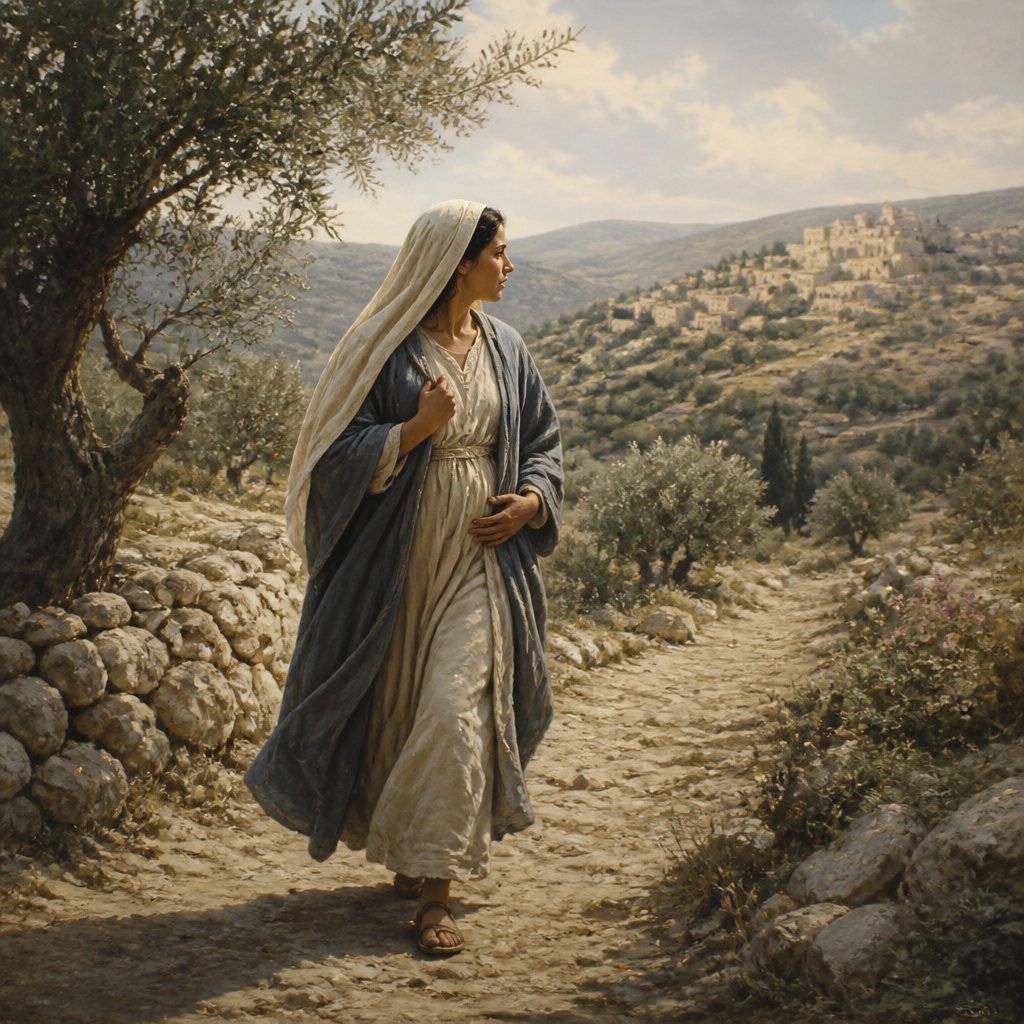
Luke 1:39 (KJV) states, "And Mary arose in those days, and went into the hill country with haste, into a city of Juda." This verse marks the beginning of the journey of Mary, the mother of Jesus, to visit her cousin Elizabeth, who was also miraculously pregnant with John the Baptist. This event takes place shortly after Mary's encounter with the angel Gabriel, who announced to her that she would conceive and bear the Son of God, Jesus Christ.
The verse signifies a pivotal moment in the Gospel narrative as it sets the stage for the meeting between these two extraordinary women who play significant roles in the fulfillment of God's plan for the salvation of humanity. The themes of faith, obedience, and the sovereign work of God are prominent in this verse and throughout the entire passage.
One of the key themes in this verse is the power of faith and obedience. Despite the uncertainty and potential risks involved in her pregnancy, Mary shows unwavering faith in God's plan and immediately sets out to visit Elizabeth. This demonstrates her obedience to God's will and her willingness to trust in His timing and guidance. Mary's haste to visit her cousin also reflects her deep desire to share in Elizabeth's experience and witness the fulfillment of God's promises in their lives.
The meeting of Mary and Elizabeth also highlights the theme of divine intervention and the fulfillment of prophecy. Both women had been chosen by God to play integral roles in the coming of the Messiah, and their meeting symbolizes the convergence of the Old Testament prophecies with the unfolding of God's redemptive plan. As Mary enters the city of Judah, she symbolically brings the presence of the Messiah with her, foreshadowing the life-changing impact that Jesus will have on the world.
Furthermore, the geographical and historical context of this verse is significant in understanding its deeper meaning. The "hill country" mentioned in the verse refers to the mountainous region of Judea, a rural and remote area. Mary's journey to this location underscores the humble and unassuming nature of the events leading up to the birth of Jesus. It also emphasizes the contrast between the worldly expectations of a royal birth and the humble circumstances surrounding the arrival of the Messiah.
The meeting between Mary and Elizabeth is also rich in symbolism, as it represents the union of the Old and New Testaments. Mary, as the mother of Jesus, embodies the beginning of the New Covenant, while Elizabeth, as the mother of John the Baptist, represents the fulfillment of the Old Testament promises leading up to the coming of the Messiah. Their encounter foreshadows the convergence of the old and the new, the law and grace, and the continuity of God's redemptive plan throughout history.
In conclusion, Luke 1:39 (KJV) serves as a poignant and pivotal moment in the Gospel narrative, revealing the profound implications of Mary's journey to visit her cousin Elizabeth. This verse encompasses themes of faith, obedience, divine intervention, and the fulfillment of prophecy, all within the broader context of God's redemptive plan for humanity. Mary's journey to the hill country of Judea carries deep significance and symbolism, serving as a precursor to the miraculous events that will soon unfold with the birth of Jesus Christ.
Get our apps


Artwork for Luke 1:39

Luke 1:39

Luke 1:39 - 45

Luke 1:39 - "And Mary arose in those days, and went into the hill country with haste, into a city of Juda;"
"And Mary arose in those days, and went into the hill country with haste, into a city of Juda;" - Luke 1:39

Luke 5:39

Luke 22:39

Luke 22:39

Luke 20:39 - "¶ Then certain of the scribes answering said, Master, thou hast well said."

Luke 19:39 - "And some of the Pharisees from among the multitude said unto him, Master, rebuke thy disciples."

Luke 5:39 - "No man also having drunk old wine straightway desireth new: for he saith, The old is better."

Luke 10:39 - "And she had a sister called Mary, which also sat at Jesus' feet, and heard his word."

Luke 23:39 - "¶ And one of the malefactors which were hanged railed on him, saying, If thou be Christ, save thyself and us."

Luke 6:39 - "And he spake a parable unto them, Can the blind lead the blind? shall they not both fall into the ditch?"

Luke 22:39 - "¶ And he came out, and went, as he was wont, to the mount of Olives; and his disciples also followed him."

Luke 2:39 - "And when they had performed all things according to the law of the Lord, they returned into Galilee, to their own city Nazareth."

Luke 4:39 - "And he stood over her, and rebuked the fever; and it left her: and immediately she arose and ministered unto them."

Luke 24:39 - "Behold my hands and my feet, that it is I myself: handle me, and see; for a spirit hath not flesh and bones, as ye see me have."

Luke 9:39 - "And, lo, a spirit taketh him, and he suddenly crieth out; and it teareth him that he foameth again, and bruising him hardly departeth from him."

Luke 11:39 - "And the Lord said unto him, Now do ye Pharisees make clean the outside of the cup and the platter; but your inward part is full of ravening and wickedness."

1 Corinthians 14:39-40

Luke 12:39 - "And this know, that if the goodman of the house had known what hour the thief would come, he would have watched, and not have suffered his house to be broken through."

Luke 8:39 (KJVA) 39 Return to thine own house, and shew how great things God hath done unto thee. And he went his way, and published throughout the whole city how great things Jesus had done unto him.

1 Chronicles 1:39 - "And the sons of Lotan; Hori, and Homam: and Timna was Lotan's sister."

"¶ Then certain of the scribes answering said, Master, thou hast well said." - Luke 20:39

Luke 18:39 - "And they which went before rebuked him, that he should hold his peace: but he cried so much the more, Thou Son of David, have mercy on me."

1 Chronicles 7:39 - "And the sons of Ulla; Arah, and Haniel, and Rezia."

1 Kings 11:39 - "And I will for this afflict the seed of David, but not for ever."

1 Chronicles 2:39 - "And Azariah begat Helez, and Helez begat Eleasah,"

1 Corinthians 14:39 - "Wherefore, brethren, covet to prophesy, and forbid not to speak with tongues."

Scene from book of numbers 14:39-45