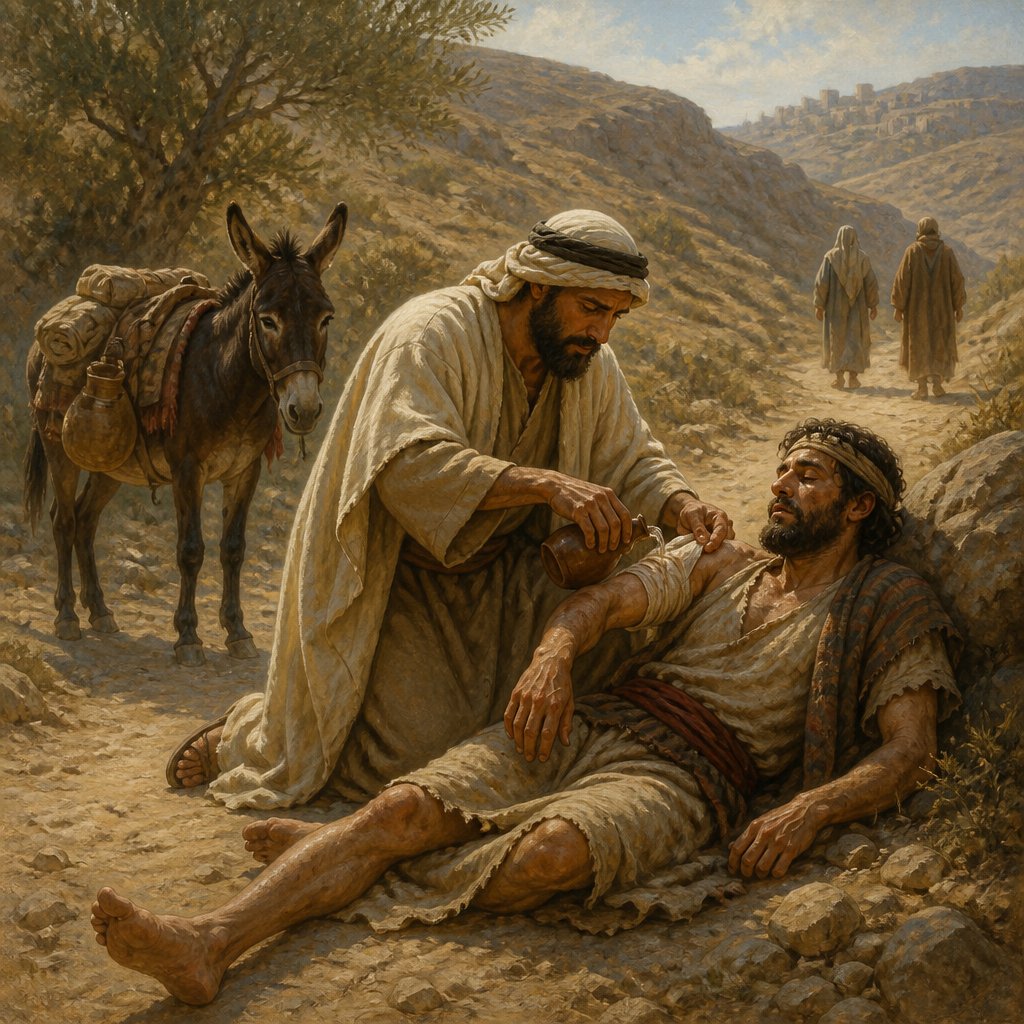
The Parable of the Good Samaritan is found in the New Testament of the Bible in the book of Luke, chapter 10, verses 30-37. The passage goes as follows:
"And Jesus answering said, A certain man went down from Jerusalem to Jericho, and fell among thieves, which stripped him of his raiment, and wounded him, and departed, leaving him half dead. And by chance there came down a certain priest that way: and when he saw him, he passed by on the other side. And likewise a Levite, when he was at the place, came and looked on him, and passed by on the other side. But a certain Samaritan, as he journeyed, came where he was: and when he saw him, he had compassion on him, and went to him, and bound up his wounds, pouring in oil and wine, and set him on his own beast, and brought him to an inn, and took care of him. And on the morrow when he departed, he took out two pence, and gave them to the host, and said unto him, Take care of him; and whatsoever thou spendest more, when I come again, I will repay thee. Which now of these three, thinkest thou, was neighbour unto him that fell among the thieves? And he said, He that shewed mercy on him. Then said Jesus unto him, Go, and do thou likewise."
This parable is used by Jesus in response to a question from an expert in the law who was testing him. The expert had asked Jesus what he needed to do to inherit eternal life, to which Jesus replied by asking what the law said. The expert then quoted the law, saying that he must love God with all his heart and love his neighbor as himself. Jesus affirmed the expert’s answer, but the expert, seeking to justify himself, asked Jesus who his neighbor was. In response, Jesus told the Parable of the Good Samaritan.
The parable begins with a man who is traveling from Jerusalem to Jericho and falls victim to thieves who rob and beat him, leaving him half dead. A priest and a Levite subsequently pass by the man, but both ignore him and continue on their way. However, a Samaritan, who was traditionally seen as an enemy of the Jews, stops and shows great compassion for the wounded man, tending to his wounds, taking him to an inn, and ensuring that he receives proper care.
The themes in this parable are numerous, and they reveal important truths about compassion, mercy, and the true meaning of love and neighborliness. One of the key themes in this parable is the idea of compassion and mercy. The Samaritan's actions demonstrate a deep sense of compassion and mercy as he helps a complete stranger in need with no thought of reward or recognition. This challenges the traditional understanding of who our neighbors are and the expectations of how we are to care for them.
Furthermore, the parable challenges the prejudices and biases of the time, as the Samaritan is the one who ultimately behaves as a true neighbor by showing love and kindness to the wounded man. It reminds us that true love and mercy transcend social and cultural barriers.
There is also an important element of self-sacrifice and generosity in the parable. The Samaritan not only tends to the wounded man but also pays for his care at the inn, sacrificing his time and resources for the benefit of another person. This illustrates the principle of loving one's neighbor as oneself and shows the importance of selflessness in our relationships with others.
The context of this parable is crucial to understanding its full impact. At the time Jesus told this story, there was great animosity between the Jews and the Samaritans. The Jews looked down on the Samaritans and considered them unclean and unworthy. By using a Samaritan as the hero of the story, Jesus challenges his listeners to rethink their attitudes toward those they considered outsiders or enemies.
The symbolic significance of the Parable of the Good Samaritan is also profound. The wounded man can be seen as representing all of humanity in need of a savior. The priest and the Levite, who walked by without helping, can be understood as a commentary on the failings of religious leaders and institutions. The Samaritan, in contrast, represents Christ himself, who came to earth to show mercy and compassion to all, regardless of their social status or background.
In conclusion, the Parable of the Good Samaritan is a powerful lesson on love, compassion, and mercy. It challenges our preconceived notions about who our neighbors are and calls us to have a radical love for others, including those we may consider outsiders or enemies. This timeless parable continues to inspire and convict readers to this day, reminding us of the profound importance of showing love and mercy to all those around us.
Get our apps


Artwork for Luke 10:30-37

Luke 10:30-37 - "Jesus replied, "A man was going down from Jerusalem to Jericho, when he was attacked by robbers. They stripped him of his clothes, beat him and went away, leaving him half dead. A priest happened to be going down the same road, and when he saw the man, he passed by on the other side. So too, a Levite, when he came to the place and saw him, passed by on the other side. But a Samaritan, as he traveled, came where the man was; and when he saw him, he took pity on him. He went to him and bandaged his wounds, pouring on oil and wine. Then he put the man on his own donkey, brought him to an inn and took care of him. The next day he took out two denarii and gave them to the innkeeper. 'Look after him,' he said, 'and when I return, I will reimburse you for any extra expense you may have.' Which of these three do you think was a neighbor to the man who fell into the hands of robbers?" The expert in the law replied, "The one who had mercy on him." Jesus told him, "Go and do likewise.""
"Jesus replied, "A man was going down from Jerusalem to Jericho, when he was attacked by robbers. They stripped him of his clothes, beat him and went away, leaving him half dead. A priest happened to be going down the same road, and when he saw the man, he passed by on the other side. So too, a Levite, when he came to the place and saw him, passed by on the other side. But a Samaritan, as he traveled, came where the man was; and when he saw him, he took pity on him. He went to him and bandaged his wounds, pouring on oil and wine. Then he put the man on his own donkey, brought him to an inn and took care of him. The next day he took out two denarii and gave them to the innkeeper. 'Look after him,' he said, 'and when I return, I will reimburse you for any extra expense you may have.' Which of these three do you think was a neighbor to the man who fell into the hands of robbers?" The expert in the law replied, "The one who had mercy on him." Jesus told him, "Go and do likewise."" - Luke 10:30-37

african american luke 10:30

Luke 10:37 - "And he said, He that shewed mercy on him. Then said Jesus unto him, Go, and do thou likewise."

Luke 10:30 - "And Jesus answering said, A certain man went down from Jerusalem to Jericho, and fell among thieves, which stripped him of his raiment, and wounded him, and departed, leaving him half dead."

Luke 2:37

Luke 2:37

Luke 2:37

Luke 2:37

Luke 2:37

Luke (1:37) For nothing will be impossible with God.”

Luke (1:37) For nothing will be impossible with God.”

Luke (1:37) For nothing will be impossible with God.”

Luke (1:37) For nothing will be impossible with God.”

Luke (1:37) For nothing will be impossible with God.”

Luke (1:37) For nothing will be impossible with God.”

Luke (1:37) For nothing will be impossible with God.”

Luke (1:37) For nothing will be impossible with God.”

Luke (1:37) For nothing will be impossible with God.”

Luke (1:37) For nothing will be impossible with God.”

Luke (1:37) For nothing will be impossible with God.”

Luke (1:37) For nothing will be impossible with God.”

Luke (1:37) For nothing will be impossible with God.”

Luke (1:37) For nothing will be impossible with God.”

Luke (1:37) For nothing will be impossible with God.”

Luke (1:37) For nothing will be impossible with God.”

Luke (1:37) For nothing will be impossible with God.”

Luke (1:37) For nothing will be impossible with God.”
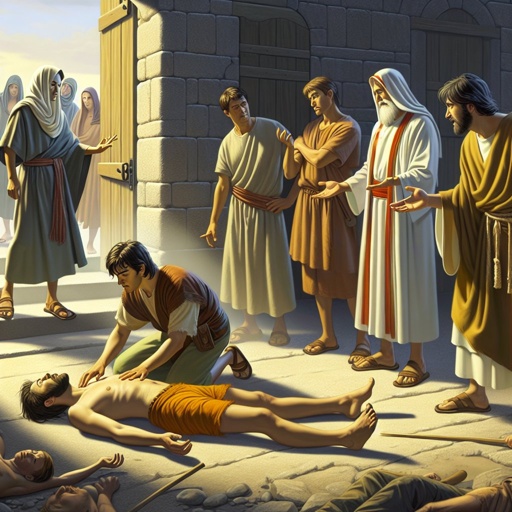
Luke 10:36-37 - "Which of these three, do you think, proved to be a neighbor to the man who fell among the robbers? He said, The one who showed him mercy. And Jesus said to him, You go, and do likewise."

Luke 6:10 30 Give to everyone who asks of you. Whoever takes away what is yours, do not demand it back.