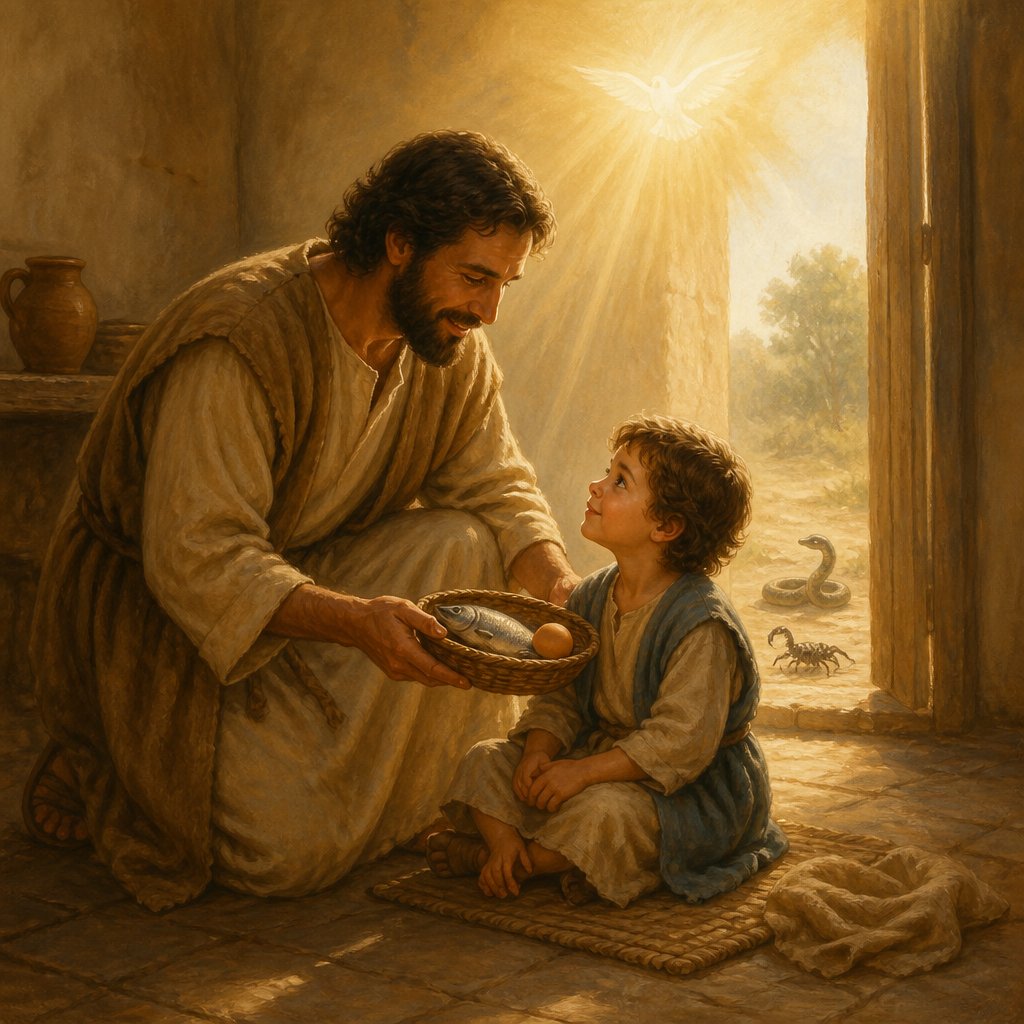
The Bible verse Luke 11:11-13 from the King James Version (KJV) reads as follows:
"11 If a son shall ask bread of any of you that is a father, will he give him a stone? or if he ask a fish, will he for a fish give him a serpent?
12 Or if he shall ask an egg, will he offer him a scorpion?
13 If ye then, being evil, know how to give good gifts unto your children: how much more shall your heavenly Father give the Holy Spirit to them that ask him?"
This passage can be found in the Gospel of Luke, which is the third book of the New Testament. The verse is a part of a larger passage where Jesus is teaching his disciples about prayer. In the verses leading up to this passage, Jesus has just taught them the Lord's Prayer and is now using this analogy to further illustrate the nature of God and His willingness to answer the prayers of His children.
The themes present in this passage are the nature of God as a loving and generous Father, the power of prayer, and the importance of faith. Jesus uses a series of rhetorical questions to illustrate the point that if earthly fathers know how to give good gifts to their children, then how much more will our heavenly Father give the Holy Spirit (the greatest gift of all) to those who ask Him.
The context of this passage is important to understand its full meaning. At the time of Jesus, there was a prevailing belief that objects or things could be used for evil purposes. For example, a stone could be mistaken for a loaf of bread, and a serpent could be mistaken for a fish. Jesus uses this context to make a point about the nature of God. The analogy of asking for bread and being given a stone, or asking for a fish and being given a serpent is meant to show that God will not deceive or mislead His children. He is a loving and generous Father who gives good gifts to those who ask Him.
The symbolism in this passage lies in the imagery of the gifts being asked for and given. Bread, fish, and eggs were staples of the diet in ancient times, and they represent the basic necessities of life. By using these common foods as examples, Jesus is showing that God cares about the everyday needs of His children. Additionally, the Holy Spirit is presented as the ultimate and most valuable gift that God can give. It symbolizes the presence and guidance of God in the lives of believers.
This passage also emphasizes the importance of faith and persistence in prayer. In the verses preceding this passage, Jesus encourages his disciples to ask, seek, and knock in prayer, and they will receive from God. This suggests that God responds to the earnest prayers of his children who come to Him with faith and confidence in His goodness and willingness to give good gifts.
In conclusion, the Bible verse Luke 11:11-13 from the King James Version (KJV) is a powerful and comforting reminder of the nature of God as a loving and generous Father who desires to give good gifts to His children. It teaches us about the power of prayer, the importance of faith, and the willingness of God to provide for our needs. It is a passage that offers hope and reassurance to believers, reminding them that they can always come to their heavenly Father with their needs, trusting that He will hear and respond to their prayers.
Get our apps


Artwork for Luke 11:11-13

Luke 11:11-13 - "Which of you fathers, if your son asks for a fish, will give him a snake instead? Or if he asks for an egg, will give him a scorpion? If you then, though you are evil, know how to give good gifts to your children, how much more will your Father in heaven give the Holy Spirit to those who ask him!"
"Which of you fathers, if your son asks for a fish, will give him a snake instead? Or if he asks for an egg, will give him a scorpion? If you then, though you are evil, know how to give good gifts to your children, how much more will your Father in heaven give the Holy Spirit to those who ask him!" - Luke 11:11-13

Luke 13:11 - "¶ And, behold, there was a woman which had a spirit of infirmity eighteen years, and was bowed together, and could in no wise lift up herself."

luke 11:23
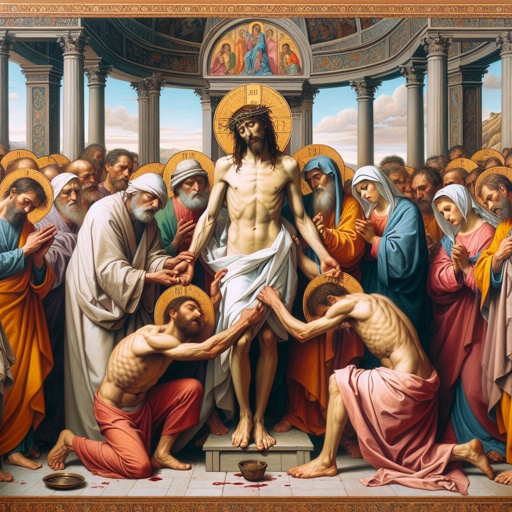
Pain 1:1-3
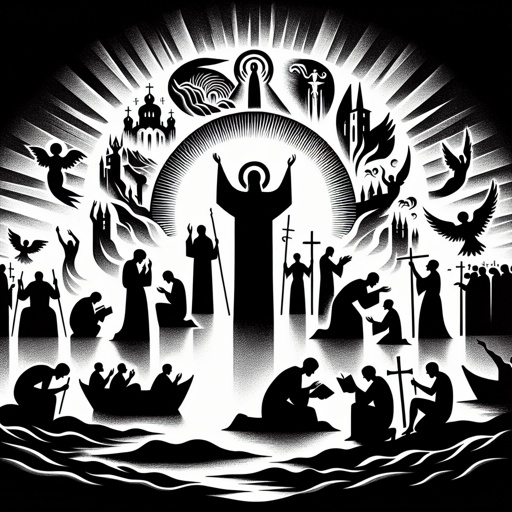
Psalm 1:1-3

Luke 11:14-15

1 Kings 11:11-13

1 kings 11:11-13

1 Kings 11:11-13
Luke 11:9

luke 11:23

luke 11:23

luke 11:23

Luke 8:11

Luke 11:9

Luke 11:13 - "If ye then, being evil, know how to give good gifts unto your children: how much more shall your heavenly Father give the Holy Spirit to them that ask him?"

Jeremiah 29:11-13

Jeremiah 29:11-13

Luke 1:11-12

Luke 11:1-14

Luke 11:9-10

Jeremiah 29:11-13

Jeremiah 29:11-13

Luke 11:1-14

Luke 5:1-11

Luke 15:11-32

Luke 1:11-12

Luke 5:1-11

Luke 1:11-12