What does Luke 14:13 mean?
“But when thou makest a feast, call the poor, the maimed, the lame, the blind:” — Luke 14:13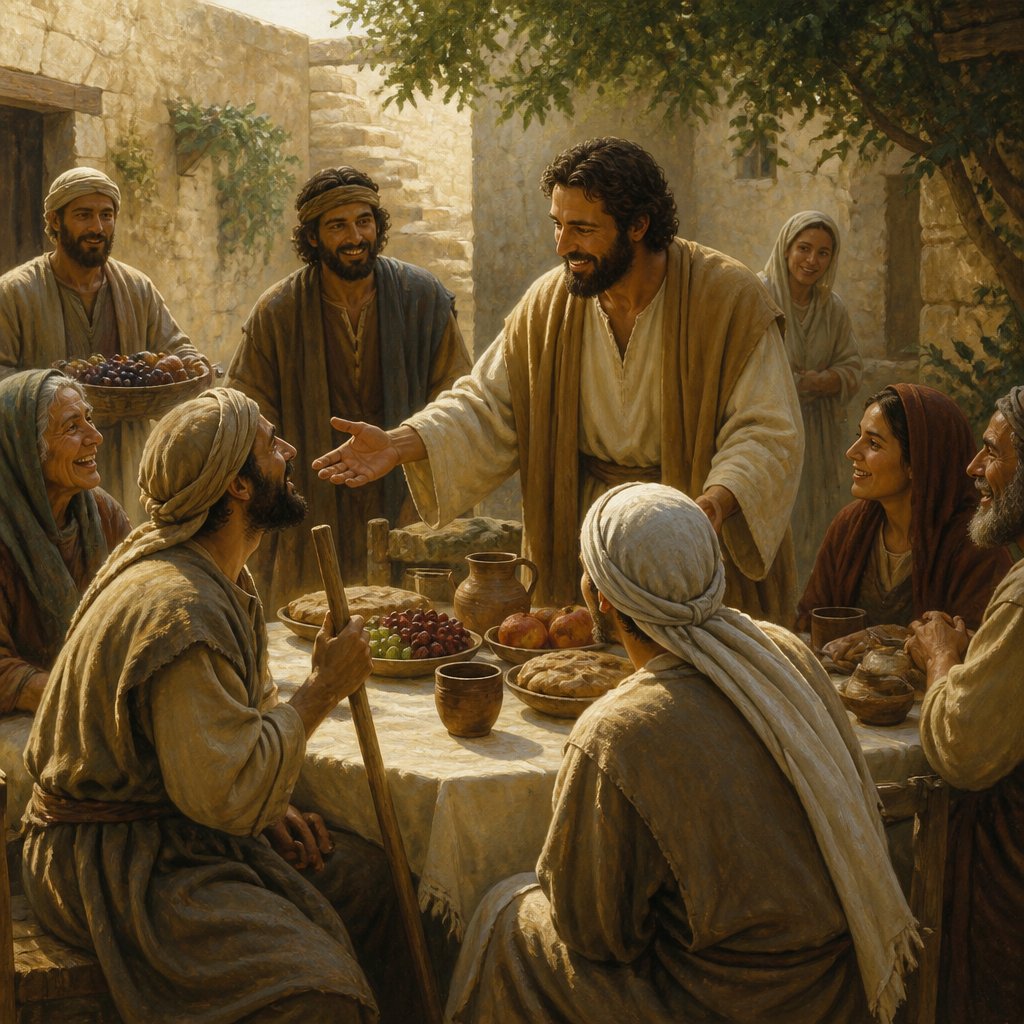
The Bible verse Luke 14:13, as written in the King James Version (KJV), reads: "But when thou makest a feast, call the poor, the maimed, the lame, the blind."
This verse is part of a larger passage in the Gospel of Luke, where Jesus is addressing a crowd at the home of a Pharisee. In this passage, Jesus is using a parable to teach important lessons about humility, generosity, and the kingdom of God. The verse Luke 14:13 is a direct instruction to his followers to show kindness and hospitality to those in need, particularly those who may be less fortunate or marginalized in society.
The context of this verse is important to understand the underlying message. Jesus is seated at a meal with the Pharisee when he notices how the guests are vying for the best seats, trying to elevate their own status and importance. In response, Jesus tells a parable about choosing seats at a wedding feast, using it as a metaphor to teach about humility and the importance of seeking the approval of God rather than the praise of men.
As part of this parable, Jesus gives the command in Luke 14:13 to invite the poor, the maimed, the lame, and the blind to one's feast. This is a radical departure from the social norms of the time, where feasts and banquets were typically reserved for the wealthy and influential. By instructing his followers to invite those who are often overlooked and marginalized in society, Jesus is challenging the prevailing attitudes of pride and exclusivity.
The themes present in this verse are deeply rooted in the teachings of Jesus and the overall message of the Gospel. One of the central themes is the importance of practicing genuine humility and selflessness. Jesus often exhorted his followers to prioritize the needs of others above their own, to serve rather than to be served, and to demonstrate compassion and empathy for those who are suffering. The command to invite the poor and the marginalized to a feast is a tangible expression of this call to humility and care for others.
Another important theme in this verse is social justice and inclusion. By specifically highlighting the poor, the maimed, the lame, and the blind, Jesus is emphasizing the value and dignity of every individual, regardless of their social standing or physical condition. This aligns with the broader message of the Gospel, which consistently speaks to the need for justice, mercy, and compassion towards those who are vulnerable or oppressed.
The symbolism in this verse is also rich and meaningful. The act of making a feast can be seen as a symbol of abundance, celebration, and community. By extending the invitation to those who are often marginalized, Jesus is conveying a powerful message about the inclusive nature of the kingdom of God. In God's kingdom, there is room for everyone, and no one is excluded from experiencing the fullness of God's grace and provision.
Furthermore, the specific categories of individuals mentioned in the verse – the poor, the maimed, the lame, and the blind – can be viewed as representing a broader spectrum of human need and vulnerability. This symbolism reinforces the idea that God's love and hospitality are extended to all, regardless of their circumstances or limitations.
In conclusion, Luke 14:13 from the King James Version of the Bible carries a profound message about humility, hospitality, and social justice. It challenges us to consider how we can show kindness and compassion to those who are often overlooked and marginalized, and it reminds us of the inclusive and generous nature of God's kingdom. As followers of Jesus, we are called to embody these values in our own lives and to extend God's love and grace to all.
Get our apps


Artwork for Luke 14:13

Luke 14:13 - "But when thou makest a feast, call the poor, the maimed, the lame, the blind:"

"But when thou makest a feast, call the poor, the maimed, the lame, the blind:" - Luke 14:13

Luke 2:13-14

Luke 2:13-14

Luke 2:13-14 fine pointillism sytle

Luke 2:13-14 - "And suddenly there was with the angel a multitude of the heavenly host praising God, and saying, Glory to God in the highest, and on earth peace, good will toward men."

Luke 13:14 - "And the ruler of the synagogue answered with indignation, because that Jesus had healed on the sabbath day, and said unto the people, There are six days in which men ought to work: in them therefore come and be healed, and not on the sabbath day."

Luke 13:18-19

Luke 13:20-21

Luke 13:20-21

Luke 13:18-19
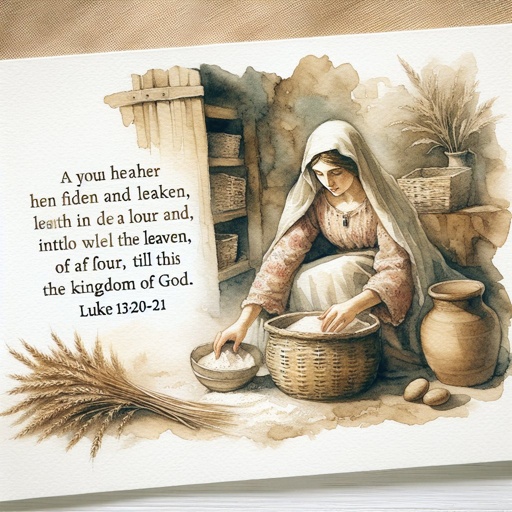
Luke 13:20-21

Luke 13:20-21

Luke 13:20-21

Luke 13:14 But the ruler of the synagogue answered with indignation, because Jesus had healed on the Sabbath; and he said to the crowd, “There are six days on which men ought to work; therefore come and be healed on them, and not on the Sabbath day.”

Luke 1:13

Luke 1:13

Luke 8:13

Luke 13:24

Luke 8:13

Luke 1:13

Luke 1:13

Luke 8:13

Luke 1:13

Luke 2:13

Luke 1:13

Luke 14:14 - "And thou shalt be blessed; for they cannot recompense thee: for thou shalt be recompensed at the resurrection of the just."

1 Samuel 13:13-14

Luke 11:14-15

Luke 18:9-14