What does Luke 14:21 mean?
“So that servant came, and shewed his lord these things. Then the master of the house being angry said to his servant, Go out quickly into the streets and lanes of the city, and bring in hither the poor, and the maimed, and the halt, and the blind.” — Luke 14:21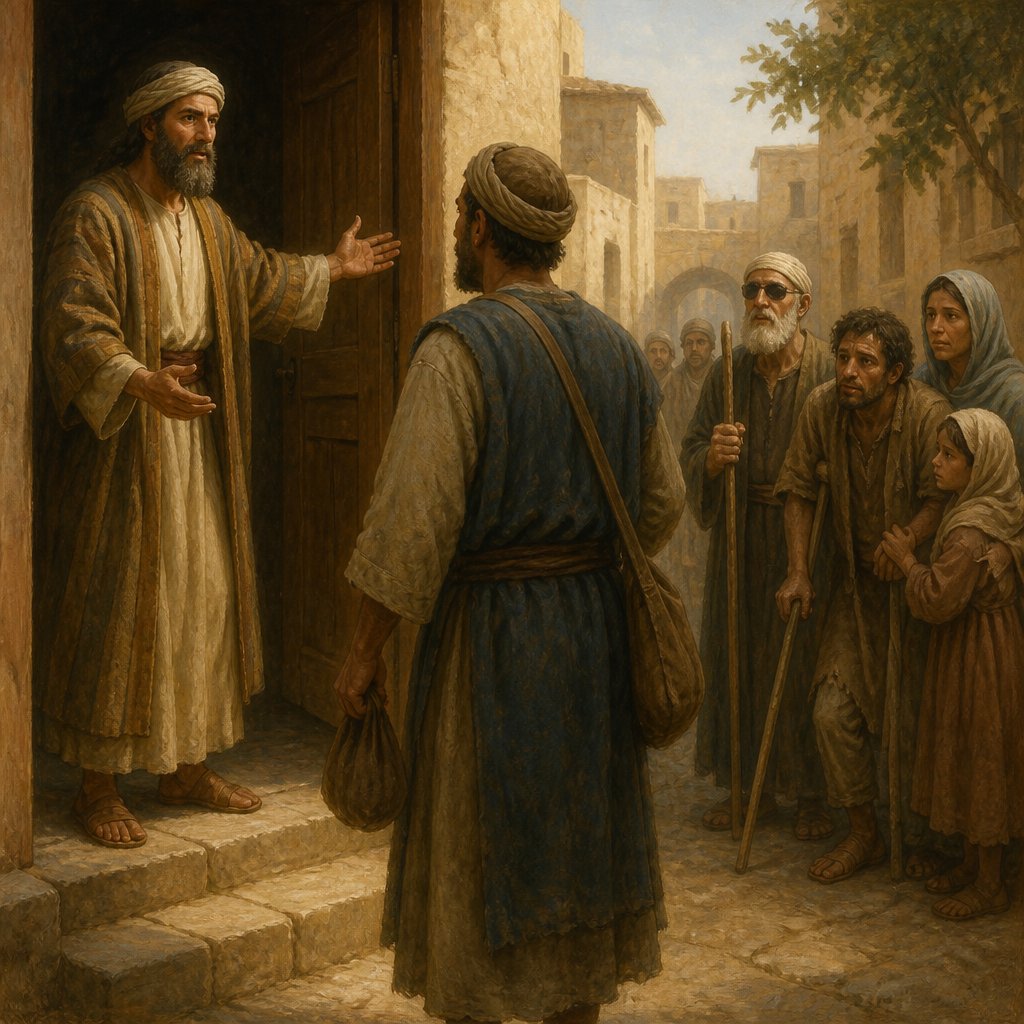
In the King James Version (KJV) of the Bible, Luke 14:21 reads:
"So that servant came, and shewed his lord these things. Then the master of the house being angry said to his servant, Go out quickly into the streets and lanes of the city, and bring in hither the poor, and the maimed, and the halt, and the blind."
This verse comes from a parable told by Jesus during a dinner he was attending at the home of a prominent Pharisee. In the parable, a man invites many guests to a great feast, but one by one they all make excuses and decline the invitation. The man then sends his servant out to invite the poor, crippled, lame, and blind to the feast, as the originally invited guests had declined.
The parable of the great banquet in Luke 14:15-24 is one of the many teachings of Jesus that addresses the Kingdom of God. The parable is a metaphor for the invitation of salvation and the rejection of those who were originally offered it. The refusal of the invited guests and the inclusion of the marginalized and outcast carries a powerful message about the nature of God's kingdom.
The context of this verse is important for understanding its significance. At the time Jesus was telling this parable, the Pharisees and religious leaders were often exclusive in their attitudes, believing that salvation was only for the righteous and the elite. However, in this parable, Jesus challenges this notion by showing that God's grace and salvation are for all, especially for those who are overlooked and marginalized by society.
The "master of the house" in the parable can be seen as a representation of God. Despite the rejection from the original guests, the master still desires to fill his house with guests who will accept his invitation. This reflects God's unconditional love and grace for all people, regardless of their social status or personal circumstances. The invitation to the banquet is open to everyone, and the master's command to bring in the poor, maimed, halt, and blind emphasizes the inclusive nature of the Kingdom of God.
The specific groups mentioned in the verse - the poor, maimed, halt, and blind - also carry significance. These were the people who were often overlooked and marginalized in society during Jesus' time. By including them in the invitation to the feast, Jesus is signaling that the Kingdom of God is for everyone, especially those who are considered the least in society. This parallels other teachings of Jesus where he emphasizes the importance of caring for the marginalized and downtrodden.
In broader theological terms, this verse highlights the principle of humility and the reversal of social norms in the Kingdom of God. The original guests, who were likely of higher social status, are replaced by those who are in need. This teaches that in God's kingdom, the first shall be last and the last shall be first (Matthew 20:16). It emphasizes the importance of humility and the lifting up of the lowly, which are consistent themes in Jesus' teachings.
Overall, Luke 14:21 serves as a powerful reminder of the inclusive and gracious nature of God's Kingdom. It challenges the exclusivity and elitism that were prevalent in the religious attitudes of the time and emphasizes the importance of humility and care for the marginalized. It invites readers to reflect on their own attitudes towards others and to consider the broad and inclusive scope of God's love and grace.
Get our apps


Artwork for Luke 14:21

Luke 14:21 - "So that servant came, and shewed his lord these things. Then the master of the house being angry said to his servant, Go out quickly into the streets and lanes of the city, and bring in hither the poor, and the maimed, and the halt, and the blind."
"So that servant came, and shewed his lord these things. Then the master of the house being angry said to his servant, Go out quickly into the streets and lanes of the city, and bring in hither the poor, and the maimed, and the halt, and the blind." - Luke 14:21

Luke 21:14 - "Settle it therefore in your hearts, not to meditate before what ye shall answer:"

Luke 21:14-15 - "But make up your mind not to worry beforehand how you will defend yourselves. For I will give you words and wisdom that none of your adversaries will be able to resist or contradict."
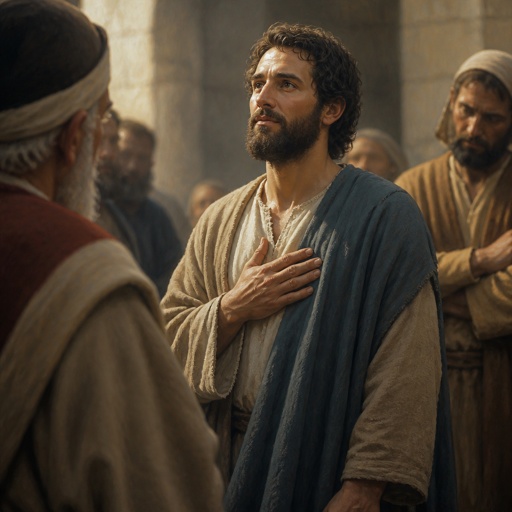
"Settle it therefore in your hearts, not to meditate before what ye shall answer:" - Luke 21:14

Luke 13:20-21

Luke 13:20-21
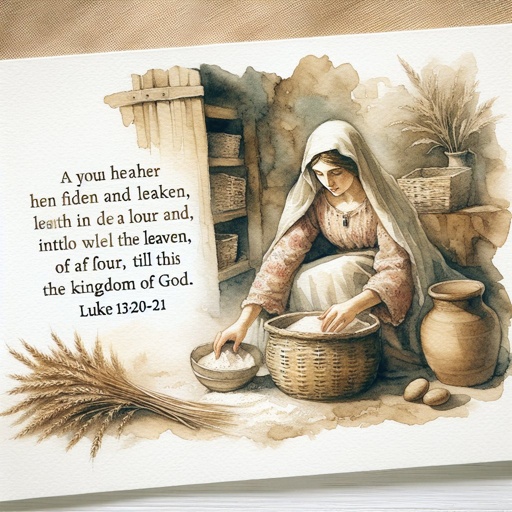
Luke 13:20-21

Luke 13:20-21

Luke 13:20-21

Luke 15:21

Luke 21:24

Luke 15:21

Luke 6:21-26

luke 21:5-19

Luke 6:21-26

Luke 21:15-19

Luke 2:16 - 21

Luke 21:13 - "And it shall turn to you for a testimony."

Luke 21:18 - "But there shall not an hair of your head perish."

Exodus 14: 21

Genesis 21:14

Exodus 14: 21

Luke 21:19 - "In your patience possess ye your souls."

Luke 23:21 - "But they cried, saying, Crucify him, crucify him."

Luke 14:14 - "And thou shalt be blessed; for they cannot recompense thee: for thou shalt be recompensed at the resurrection of the just."

Luke 11:14-15

Luke 18:9-14

Luke 11:1-14

Luke 14:25 - 33