What does Luke 14:35 mean?
“It is neither fit for the land, nor yet for the dunghill; but men cast it out. He that hath ears to hear, let him hear.” — Luke 14:35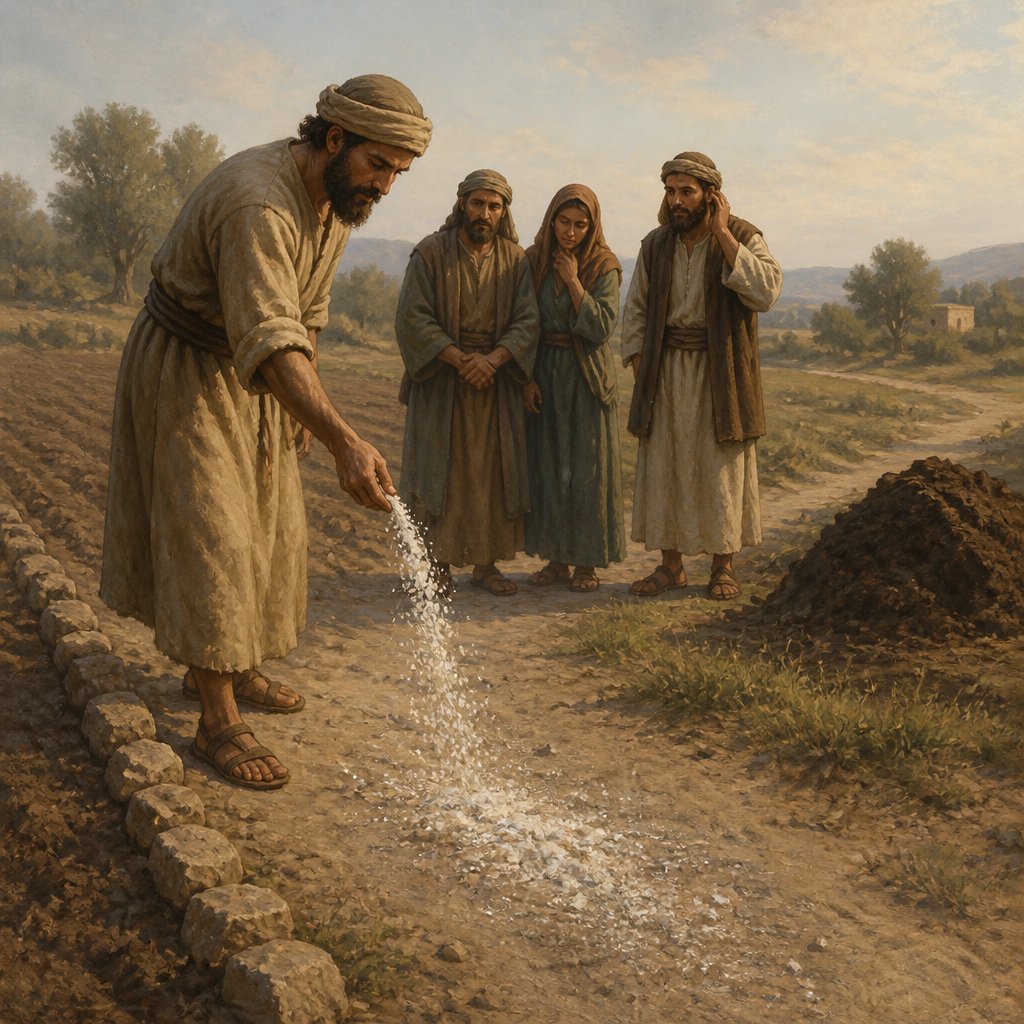
The Bible verse Luke 14:35, from the King James Version (KJV), states: "It is neither fit for the land, nor yet for the dunghill; but men cast it out. He that hath ears to hear, let him hear."
This verse appears at the end of the 14th chapter of the Gospel of Luke, and it is part of a larger passage in which Jesus is teaching about the costs of discipleship. In the preceding verses, Jesus uses parables to illustrate the importance of counting the cost before becoming his disciple. He urges his followers to forsake all their possessions and take up their cross in order to become his disciples. This verse can be seen as a conclusion to this teaching, reminding those listening to Jesus's words to heed the cost and make the commitment to follow him wholeheartedly.
The verse employs vivid imagery to convey its message. The phrase "It is neither fit for the land, nor yet for the dunghill" refers to salt that has lost its flavor. In ancient times, salt was a valuable commodity used for flavoring and preserving food. However, if the salt lost its flavor, it became worthless and was thrown out. This image would have been particularly poignant to Jesus's audience, most of whom would have been familiar with the importance of salt and its uses.
The verse concludes with the statement, "He that hath ears to hear, let him hear." This phrase is a common motif in the Gospels, used by Jesus to emphasize the importance of understanding and internalizing his teachings. It is a call to pay attention, to listen carefully, and to comprehend the deeper spiritual truths being presented.
The theme of the verse is the concept of worthiness and effectiveness. Jesus uses the illustration of salt losing its flavor to emphasize the importance of being effective and purposeful in our lives as followers of Christ. The verse serves as a warning about the consequences of losing one's effectiveness as a disciple, just as salt loses its value when it loses its flavor. It underscores the need for authenticity and commitment in the Christian life.
The context of this verse is important for understanding its significance. The chapter in which it appears contains several parables and teachings by Jesus regarding the cost of discipleship. In the verses preceding this one, Jesus speaks of the necessity of forsaking all material possessions and even one's own life in order to follow him. He also emphasizes the importance of counting the cost before making a commitment to discipleship. In this context, the verse serves as a reminder of the seriousness of this commitment and the consequences of not being truly committed to following Jesus.
The symbolism of salt in this verse is significant. In the Bible, salt is often used as a symbol of purity, incorruptibility, and preservation. Salt was also used in the Old Testament as a symbol of the covenant between God and His people. Jesus's use of salt as a metaphor for the value and effectiveness of his disciples underscores the vital role they play in preserving and flavoring the world through their witness and influence.
In conclusion, Luke 14:35 from the King James Version of the Bible delivers a powerful message about the necessity of authenticity and commitment in the Christian life. It serves as a warning about the consequences of losing one's effectiveness as a disciple of Christ and the need to count the cost before making a commitment to follow him. The vivid imagery and symbolism of salt used in this verse underscore its significance and the gravity of Jesus's teachings on discipleship. It is a call to all believers to be true and effective followers of Christ, upholding the values and teachings of the Gospel with authenticity and commitment.
Get our apps


Artwork for Luke 14:35

Luke 14:35 - "It is neither fit for the land, nor yet for the dunghill; but men cast it out. He that hath ears to hear, let him hear."
"It is neither fit for the land, nor yet for the dunghill; but men cast it out. He that hath ears to hear, let him hear." - Luke 14:35

luke 9:35

luke 9:35

Luke 24:35

Luke 24:13-35

Luke 7:35 - "But wisdom is justified of all her children."

Luke 11:35 - "Take heed therefore that the light which is in thee be not darkness."

Luke 12:35 - "Let your loins be girded about, and your lights burning;"

Luke 21:35 - "For as a snare shall it come on all them that dwell on the face of the whole earth."

Luke 19:35 - "And they brought him to Jesus: and they cast their garments upon the colt, and they set Jesus thereon."

Luke 17:35 - "Two women shall be grinding together; the one shall be taken, and the other left."

Luke 9:35 - "And there came a voice out of the cloud, saying, This is my beloved Son: hear him."

Luke 24:35 - "And they told what things were done in the way, and how he was known of them in breaking of bread."

"But wisdom is justified of all her children." - Luke 7:35

Luke 5:35 - "But the days will come, when the bridegroom shall be taken away from them, and then shall they fast in those days."

Exodus 35:14 - "The candlestick also for the light, and his furniture, and his lamps, with the oil for the light,"

Luke 2:35 - "(Yea, a sword shall pierce through thy own soul also,) that the thoughts of many hearts may be revealed."

Luke 18:35 - "¶ And it came to pass, that as he was come nigh unto Jericho, a certain blind man sat by the way side begging:"

Luke 20:35 - "But they which shall be accounted worthy to obtain that world, and the resurrection from the dead, neither marry, nor are given in marriage:"

Luke 3:35 - "Which was the son of Saruch, which was the son of Ragau, which was the son of Phalec, which was the son of Heber, which was the son of Sala,"

Proverbs 14:35 - "The king's favour is toward a wise servant: but his wrath is against him that causeth shame."

Ezekiel 35:14 - "Thus saith the Lord GOD; When the whole earth rejoiceth, I will make thee desolate."

"Take heed therefore that the light which is in thee be not darkness." - Luke 11:35

1 Corinthians 14:35 - "And if they will learn any thing, let them ask their husbands at home: for it is a shame for women to speak in the church."

Leviticus 14:35 - "And he that owneth the house shall come and tell the priest, saying, It seemeth to me there is as it were a plague in the house:"

1 Samuel 14:35 - "And Saul built an altar unto the LORD: the same was the first altar that he built unto the LORD."

Luke 22:35 - "And he said unto them, When I sent you without purse, and scrip, and shoes, lacked ye any thing? And they said, Nothing."

Luke 17:35 Two women will be grinding grain together; one will be taken and the other left.

"Let your loins be girded about, and your lights burning;" - Luke 12:35