What does Luke 14:1 mean?
“And it came to pass, as he went into the house of one of the chief Pharisees to eat bread on the sabbath day, that they watched him.” — Luke 14:1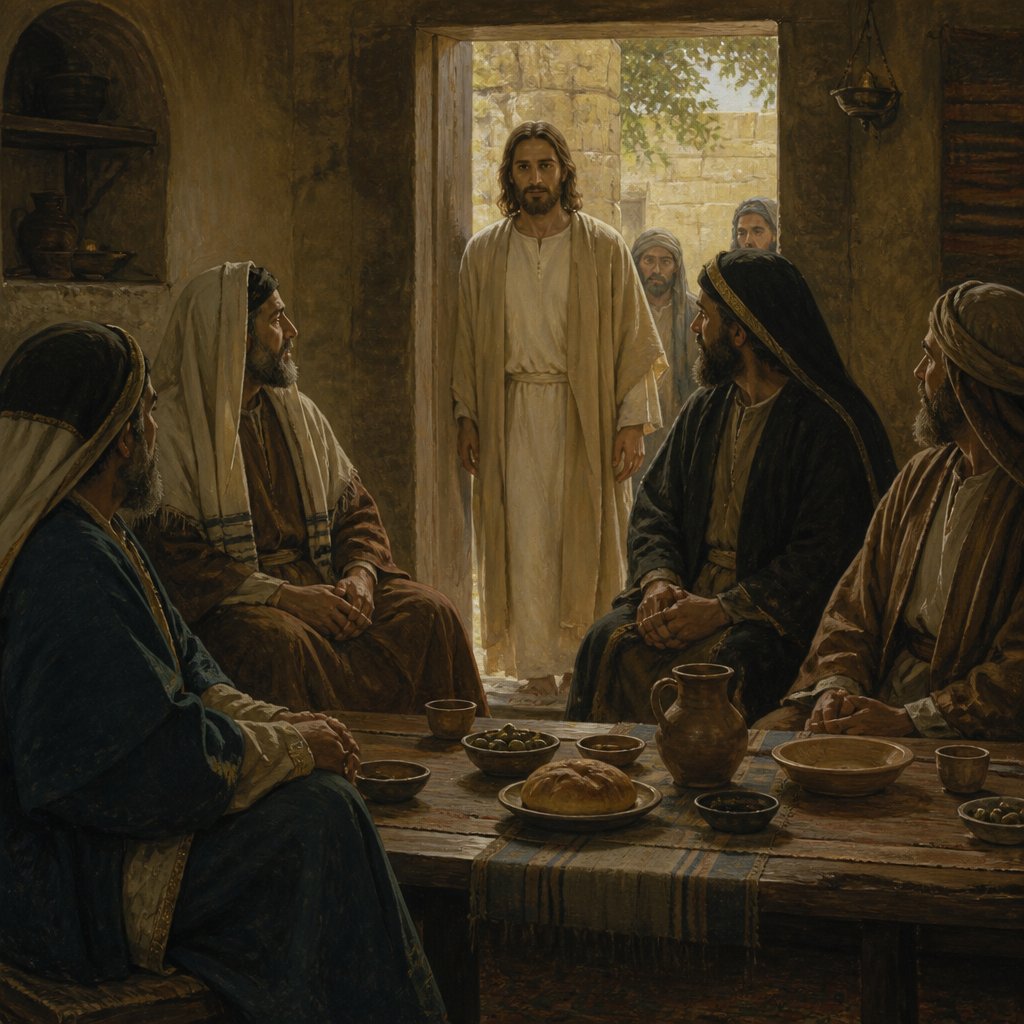
The Bible verse Luke 14:1 in the King James Version (KJV) reads: "And it came to pass, as he went into the house of one of the chief Pharisees to eat bread on the sabbath day, that they watched him." This verse is part of the larger narrative of Jesus' interactions with the Pharisees and his teachings on humility, hospitality, and the kingdom of God.
In this particular verse, Jesus is depicted as going into the house of one of the chief Pharisees to eat bread on the Sabbath day. The fact that Jesus was invited into the home of a Pharisee, despite the Pharisees often being at odds with Jesus and his teachings, is significant. It shows that Jesus was willing to engage with those who may have opposed or misunderstood him, and it demonstrates his commitment to reaching out to all people, regardless of their social status or religious background.
The fact that the Pharisees "watched him" as he entered their home is also noteworthy. It highlights the tension and scrutiny that Jesus faced from the religious leaders of his time. The Pharisees were often looking for reasons to criticize or challenge Jesus, and their watchful eye in this verse symbolizes their suspicion and hostility towards him.
The larger context of this verse is important for understanding its significance within the Gospel of Luke. Throughout the Gospel, Jesus is portrayed as challenging the religious authorities of his time and advocating for a more inclusive and compassionate understanding of God's kingdom. Jesus' actions and teachings often ran counter to the legalistic and exclusive practices of the Pharisees, and his interactions with them serve as a contrast between his message of grace and their adherence to religious laws and traditions.
One of the themes that can be derived from this verse is the theme of hospitality. The act of Jesus being invited into the home of a Pharisee for a meal speaks to the importance of hospitality in the Christian tradition. It also reflects Jesus' own practice of welcoming and eating with outcasts, sinners, and those on the margins of society. Jesus' willingness to share a meal with those who were perceived as his enemies challenges us to extend hospitality and grace to all, even those with whom we may have differences or conflicts.
Additionally, this verse can be seen as a commentary on the observance of the Sabbath. The fact that Jesus was dining in the home of a Pharisee on the Sabbath day would have been a point of contention, as the Pharisees were known for their strict interpretation and enforcement of Sabbath laws. Jesus' actions here can be viewed as a demonstration of his authority over traditional religious practices and his emphasis on the spirit of the law over its letter.
Symbolically, Jesus' presence in the home of a Pharisee represents the invitation of God's kingdom to all people, including those who may initially oppose or misunderstand Jesus' message. It also serves as a reminder that Jesus came to fulfill the law and to offer a new way of understanding and living out God's purposes.
In conclusion, Luke 14:1 in the King James Version encapsulates the tension and complexity of Jesus' interactions with the religious leaders of his time. It highlights themes of hospitality, the observance of the Sabbath, and the inclusive nature of God's kingdom. It also serves as a poignant reminder of Jesus' willingness to engage with those who may have opposed him, and his message of grace and reconciliation for all people.
Get our apps


Artwork for Luke 14:1

Luke 14:1 - "And it came to pass, as he went into the house of one of the chief Pharisees to eat bread on the sabbath day, that they watched him."
"And it came to pass, as he went into the house of one of the chief Pharisees to eat bread on the sabbath day, that they watched him." - Luke 14:1

Luke 11:1-14

Luke 11:1-14

Luke 11:14-15

Luke 18:9-14

Luke 18: 9-14

Luke 1:14 - "And thou shalt have joy and gladness; and many shall rejoice at his birth."

Luke 14:14 - "And thou shalt be blessed; for they cannot recompense thee: for thou shalt be recompensed at the resurrection of the just."

"And thou shalt have joy and gladness; and many shall rejoice at his birth." - Luke 1:14

Luke 14:25 - 33

Luke 2:13-14

Luke 2:13-14

Luke 14:6 - "And they could not answer him again to these things."

Colossians 4:14 - "Luke, the beloved physician, and Demas, greet you."

Luke 14:30 - "Saying, This man began to build, and was not able to finish."

Luke 24:14 - "And they talked together of all these things which had happened."

Luke 10:14 - "But it shall be more tolerable for Tyre and Sidon at the judgment, than for you."

Luke 14:2 - "And, behold, there was a certain man before him which had the dropsy."

Luke 2:14 - "Glory to God in the highest, and on earth peace, good will toward men."

Luke 14:22 - "And the servant said, Lord, it is done as thou hast commanded, and yet there is room."

Luke 14:13 - "But when thou makest a feast, call the poor, the maimed, the lame, the blind:"

Luke 14:25 - "¶ And there went great multitudes with him: and he turned, and said unto them,"

Luke 22:14 - "And when the hour was come, he sat down, and the twelve apostles with him."

Luke 2:13-14 fine pointillism sytle
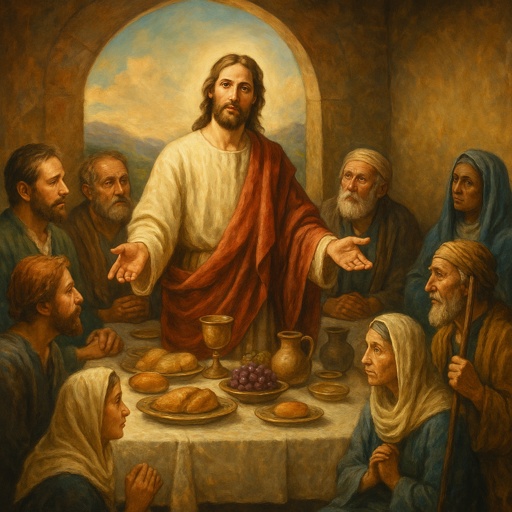
"And he put forth a parable to those which were bidden, when he marked how they chose out the chief rooms; saying unto them, When thou art bidden of any man to a wedding, sit not down in the highest room; lest a more honourable man than thou be bidden of him; And he that bade thee and him come and say to thee, Give this man place; and thou begin with shame to take the lowest room. But when thou art bidden, go and sit down in the lowest room; that when he that bade thee cometh, he may say unto thee, Friend, go up higher: then shalt thou have worship in the presence of them that sit at meat with thee. For whosoever exalteth himself shall be abased; and he that humbleth himself shall be exalted. Then said he also to him that bade him, When thou makest a feast, call the poor, the maimed, the lame, the blind: And thou shalt be blessed; for they cannot recompense thee: for thou shalt be recompensed at the resurrection of the just." - Luke 14:7-14

Luke 14:4 - "And they held their peace. And he took him, and healed him, and let him go;"

Luke 21:14 - "Settle it therefore in your hearts, not to meditate before what ye shall answer:"

Luke 14:34 - "¶ Salt is good: but if the salt have lost his savour, wherewith shall it be seasoned?"

Luke 16:14 - "And the Pharisees also, who were covetous, heard all these things: and they derided him."