What does Luke 15:16 mean?
“And he would fain have filled his belly with the husks that the swine did eat: and no man gave unto him.” — Luke 15:16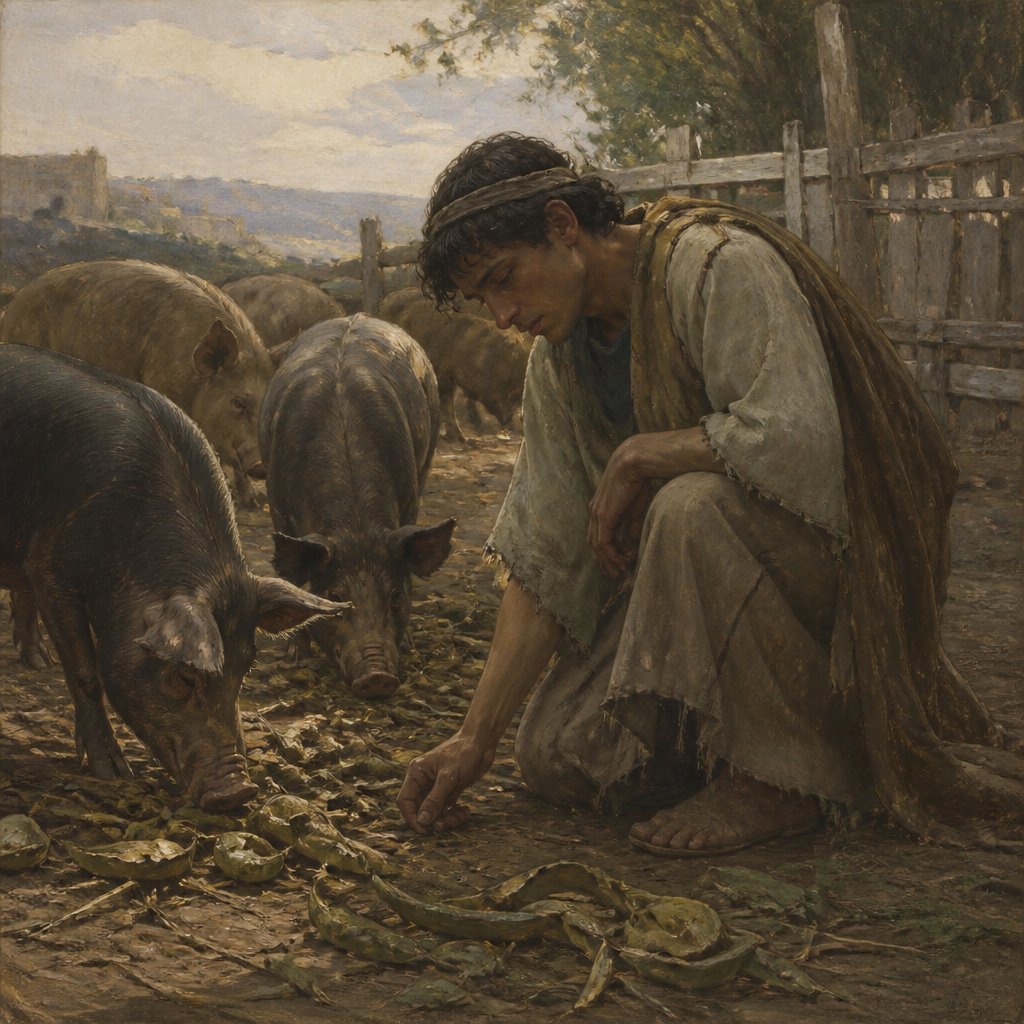
Luke 15:16 (KJV) - "And he would fain have filled his belly with the husks that the swine did eat: and no man gave unto him."
This verse is part of a larger parable told by Jesus, often referred to as the Parable of the Prodigal Son. The parable is found in the Gospel of Luke and is one of the most well-known and beloved stories in the Bible. It is a powerful illustration of God's unconditional love and forgiveness for his children.
In the verses leading up to Luke 15:16, Jesus tells the story of a man who had two sons. The younger son asks for his inheritance early and goes off to a far country, where he squanders his wealth in reckless living. When a famine strikes the land, the son becomes impoverished and is reduced to working in a pigsty, where he longs to eat the food that the pigs eat. This is the context in which Luke 15:16 is found.
The verse paints a vivid picture of the son's desperate and humiliating situation. It shows the depths to which he has fallen and the extent of his hunger and poverty. It also highlights the contrast between the son's former life of luxury and his current state of destitution, serving as a powerful reminder of the consequences of his earlier choices.
The themes present in this verse are central to the overall message of the parable. One of the most significant themes is that of repentance and redemption. The son's actions and subsequent suffering serve as a metaphor for the spiritual journey of those who stray from God's path. His realization of his own sin and unworthiness, as well as his decision to return to his father and seek forgiveness, demonstrate the possibility of reconciliation and restoration for those who have gone astray.
Another important theme in this verse is the transformative power of God's love and abundance. The contrast between the son's desperate state and the abundance available in his father's house serves as a powerful metaphor for the grace and mercy that God offers to those who repent. Despite the son's actions, his father eagerly welcomes him back and celebrates his return, illustrating the unconditional love and forgiveness of God.
The verse also serves as a commentary on the nature of sin and materialism. The son's pursuit of worldly pleasures and subsequent suffering reflect the consequences of living a self-centered and indulgent life. His desperation and longing for the food that the pigs eat highlight the emptiness and futility of a life lived apart from God.
In addition to its thematic significance, Luke 15:16 contains powerful symbolism. The image of the son longing to eat the husks that the swine eat serves as a potent symbol of the spiritual starvation and emptiness that result from a life of sin. It represents the ultimate dissatisfaction and alienation that comes from turning away from God.
Overall, Luke 15:16 is a poignant and evocative verse that captures the essence of the Parable of the Prodigal Son. It serves as a powerful reminder of the transformative power of God's love and forgiveness, as well as a cautionary tale about the consequences of straying from his path. The verse's rich themes, context, and symbolism make it a timeless and deeply resonant part of the Christian faith.
Get our apps


Artwork for Luke 15:16
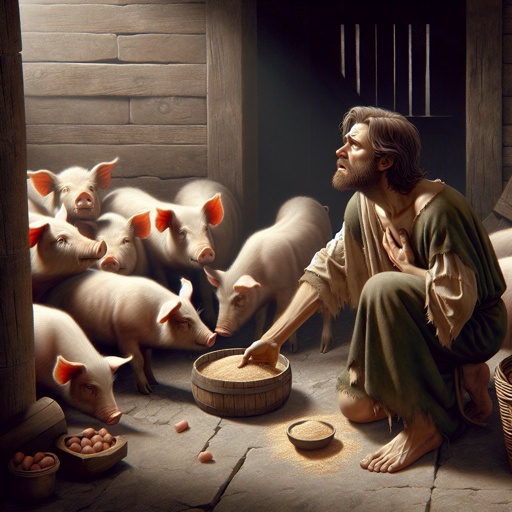
Luke 15:16 - "And he would fain have filled his belly with the husks that the swine did eat: and no man gave unto him."
"And he would fain have filled his belly with the husks that the swine did eat: and no man gave unto him." - Luke 15:16

Luke 16:15 - "And he said unto them, Ye are they which justify yourselves before men; but God knoweth your hearts: for that which is highly esteemed among men is abomination in the sight of God."

Luke 17:15-16 - "And one of them, when he saw that he was healed, turned back, and with a loud voice glorified God, And fell down on his face at his feet, giving him thanks: and he was a Samaritan."

Luke 17:15-16 Then one of them, when he saw that he was healed, turned back, praising God with a loud voice. He prostrated himself at Jesus’ feet and thanked him. And he was a Samaritan.

Luke 17:15-16 Then one of them, when he saw that he was healed, turned back, praising God with a loud voice. He prostrated himself at Jesus’ feet and thanked him. And he was a Samaritan.

Luke 17:15-16 Then one of them, when he saw that he was healed, turned back, praising God with a loud voice. He prostrated himself at Jesus’ feet and thanked him. And he was a Samaritan.
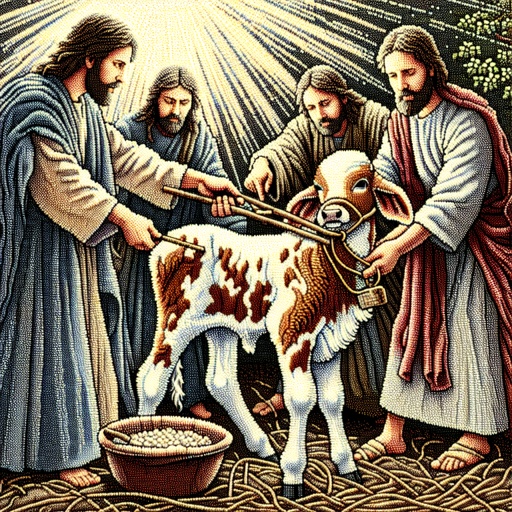
Luke 15:23

Luke 15:10

Luke 8:16

luke 4:16

Luke 15:21

Luke 15:21

Luke 16:1-13

Luke 15: 4-7

Luke 11:14-15

Luke 21:15-19

Luke 16:1-1313

Luke 16:22-26

Luke 16:1-13

Luke 16:1-13

Luke 2:16 - 21

Luke 15:11-32

Luke 16:16 - "The law and the prophets were until John: since that time the kingdom of God is preached, and every man presseth into it."

Luke 2:15-16 - "And it came to pass, as the angels were gone away from them into heaven, the shepherds said one to another, Let us now go even unto Bethlehem, and see this thing which is come to pass, which the Lord hath made known unto us. And they came with haste, and found Mary, and Joseph, and the babe lying in a manger."

Luke 15:15 - "And he went and joined himself to a citizen of that country; and he sent him into his fields to feed swine."

Genesis 15:16

Luke 5:16 - "¶ And he withdrew himself into the wilderness, and prayed."

Genesis 16:15

Luke 24:16 - "But their eyes were holden that they should not know him."