What does Luke 15:17 mean?
“And when he came to himself, he said, How many hired servants of my father’s have bread enough and to spare, and I perish with hunger!” — Luke 15:17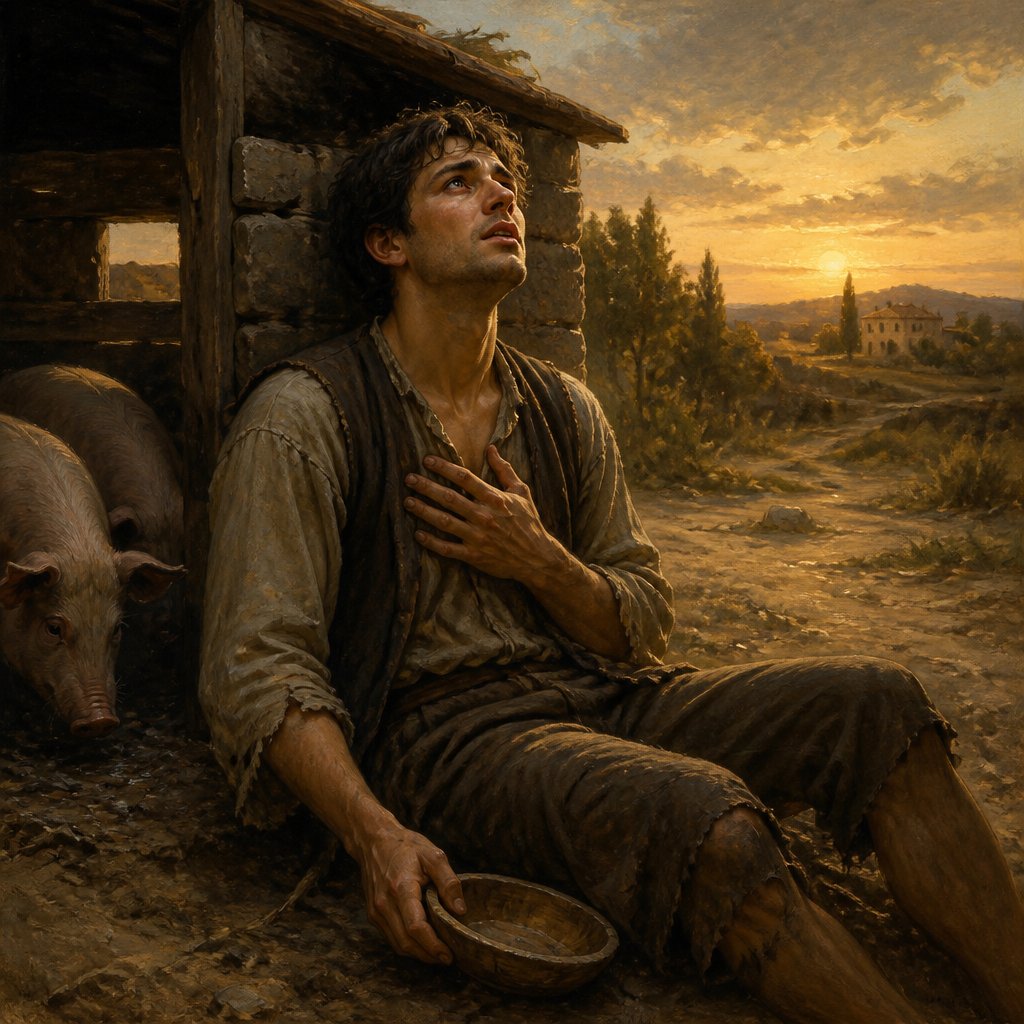
Luke 15:17 (KJV) says, "And when he came to himself, he said, How many hired servants of my father's have bread enough and to spare, and I perish with hunger!"
This verse is part of a parable told by Jesus known as the parable of the Prodigal Son. In this parable, a man has two sons, one of whom asks for his inheritance early and goes off to live a life of pleasure and excess. However, he soon squanders all his wealth and finds himself in a state of poverty and despair. This verse represents a turning point in the story, where the son "comes to himself" and realizes the error of his ways.
The theme of this verse and the parable as a whole centers around repentance, forgiveness, and reconciliation. The son's realization of his desperate situation represents a moment of clarity and self-awareness. He recognizes the foolishness of his actions and the need to return to his father in humility and repentance. This theme speaks to the universal human experience of making mistakes, feeling lost, and ultimately seeking forgiveness and redemption.
The context of this verse within the larger parable is crucial to understanding its significance. The son's recognition of his desperate state marks the beginning of his journey back to his father. It is a pivotal moment of inner transformation, as he acknowledges his need for repentance and decides to take action to amend his errors. This serves as a powerful reminder of the importance of self-awareness and the ability to recognize one's own faults and seek reconciliation.
The symbolism present in this verse is rich and significant. The phrase "came to himself" suggests a moment of awakening and clarity, as if the son had been lost in a fog of ignorance and indulgence, but suddenly sees things as they truly are. This symbolizes the potential for personal growth and redemption, as the son realizes the need for change and begins the journey back to his father.
The contrast between the son's desperation and the abundance of his father's household serves as a powerful symbol of spiritual poverty and abundance. The son, in his state of hunger and need, reflects the spiritual poverty that comes from turning away from God and seeking fulfillment in worldly pleasures. In contrast, the abundance of bread in his father's house represents the spiritual abundance and provision available through a relationship with God.
Furthermore, the mention of "hired servants" highlights the son's realization of his own unworthiness and the humble recognition of his need for forgiveness and restoration. He acknowledges that even the hired servants in his father's house have more than enough bread, emphasizing his recognition of his own poverty and need for grace.
In conclusion, Luke 15:17 from the King James Version of the Bible conveys a powerful message of repentance, self-awareness, and the potential for redemption. The verse and the parable as a whole speak to the universal human experience of making mistakes, feeling lost, and seeking forgiveness and reconciliation. The themes, context, and symbolism of this verse all contribute to its profound message of spiritual transformation and the abundant grace available through a relationship with God.
Get our apps


Artwork for Luke 15:17

Luke 15:17 - "And when he came to himself, he said, How many hired servants of my father's have bread enough and to spare, and I perish with hunger!"
"And when he came to himself, he said, How many hired servants of my father's have bread enough and to spare, and I perish with hunger!" - Luke 15:17

Luke 17:15 - "And one of them, when he saw that he was healed, turned back, and with a loud voice glorified God,"

Luke 17:15-16 - "And one of them, when he saw that he was healed, turned back, and with a loud voice glorified God, And fell down on his face at his feet, giving him thanks: and he was a Samaritan."

"And one of them, when he saw that he was healed, turned back, and with a loud voice glorified God," - Luke 17:15

Luke 10:17-19

Luke 17:15-16 Then one of them, when he saw that he was healed, turned back, praising God with a loud voice. He prostrated himself at Jesus’ feet and thanked him. And he was a Samaritan.

Luke 10:17-19

Luke 17:17 - "And Jesus answering said, Were there not ten cleansed? but where are the nine?"

Luke 17:15-16 Then one of them, when he saw that he was healed, turned back, praising God with a loud voice. He prostrated himself at Jesus’ feet and thanked him. And he was a Samaritan.

Luke 8:17

Luke 17:10

luke 24:17

Luke 17:15-16 Then one of them, when he saw that he was healed, turned back, praising God with a loud voice. He prostrated himself at Jesus’ feet and thanked him. And he was a Samaritan.
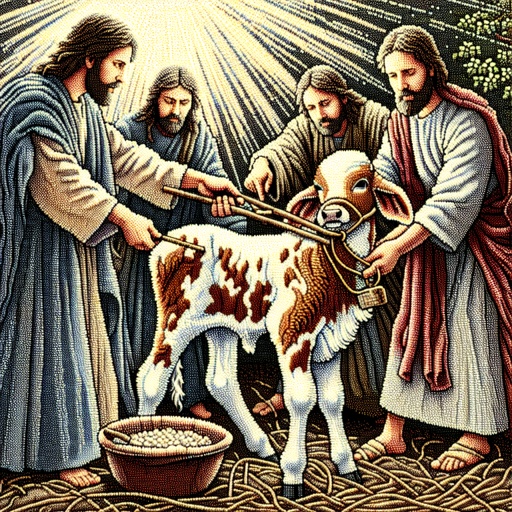
Luke 15:23

Luke 15:10

Luke 15:21

Luke 15:21

Luke 17:32-37

Luke 17:32 - "Remember Lot's wife."

Luke 5:17-26

Genesis 17-15

Provers 15:17

Acts 17:15

Luke 15: 4-7

Luke 11:14-15

Luke 21:15-19

Luke 15:11-32

Genesis 15:17

Luke 15:15 - "And he went and joined himself to a citizen of that country; and he sent him into his fields to feed swine."