What does Luke 15:28 mean?
“And he was angry, and would not go in: therefore came his father out, and intreated him.” — Luke 15:28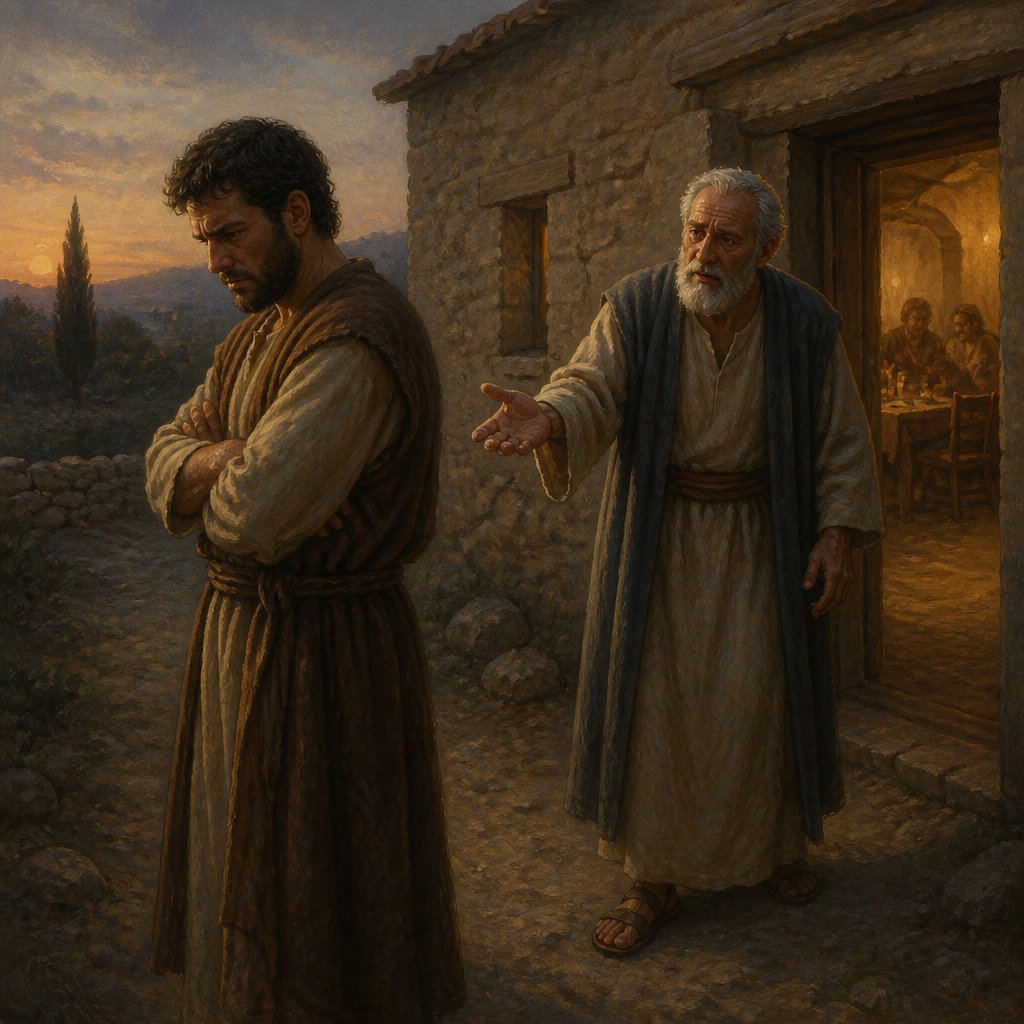
"Luke 15:28 (KJV) - And he was angry and would not go in: therefore came his father out, and intreated him."
This verse is part of the parable of the Prodigal Son, found in the Gospel of Luke. The parable tells the story of a father and his two sons. The younger son asks for his inheritance and then squanders it in a far country, only to repent and return home to his father, who welcomes him with open arms. The older son, who had remained faithful and obedient to his father, is resentful and angry when he hears the celebration for his younger brother. The verse in question focuses on the older son's refusal to join the festivities and the father's response to his anger.
The parable of the Prodigal Son is a powerful story that communicates several important themes. One of the main themes of the parable is forgiveness. The father in the story represents God, who is always willing to forgive those who repent and seek His forgiveness. The younger son's return home symbolizes repentance and the father's unconditional love and forgiveness. The older son's anger and resentment highlight the human struggle with forgiveness and the tendency to hold onto bitterness and judgment. The verse demonstrates the father's loving and compassionate response to his older son's anger, showing God's unfailing love and patience with His children.
Another significant theme in this parable is the concept of grace. The younger son does not deserve his father's forgiveness and acceptance after squandering his inheritance, yet his father welcomes him back with open arms. This illustrates the unmerited grace and mercy of God, who extends His love and forgiveness to all, regardless of their past mistakes and shortcomings. The older son's refusal to join the celebration reflects a lack of understanding of his father's grace and generosity, as well as a failure to appreciate his own blessings.
The parable also addresses the issues of pride and self-righteousness. The older son's attitude reflects a sense of entitlement and pride in his own obedience and dedication to his father. His refusal to join the celebration stems from a place of self-righteousness and judgment towards his younger brother. This aspect of the story serves as a warning against the dangers of pride and self-righteousness, emphasizing the importance of humility and compassion towards others.
In terms of context, the parable of the Prodigal Son is part of a series of parables in Luke 15 that focus on the theme of repentance and God's joy over sinners who turn to Him. The Pharisees and scribes were grumbling about Jesus eating and socializing with sinners, and Jesus responded by telling these parables to illustrate God's heart for the lost and His desire for all to come to repentance.
Symbolically, the parable can be interpreted as representing God's love for all His children, regardless of their past actions. The younger son's rebellion and subsequent return home symbolize the journey of repentance and restoration, while the older son's bitterness and resentment represent the struggle with self-righteousness and judgment. The father in the story embodies God's unconditional love, forgiveness, and grace, reminding us of the depth of His compassion and mercy towards all who seek Him.
In conclusion, Luke 15:28 (KJV) and the parable of the Prodigal Son convey important lessons about forgiveness, grace, humility, and God's unconditional love for His children. The verse serves as a reminder of God's patient and compassionate response to our anger and resentment, and it challenges us to examine our own attitudes towards forgiveness and grace. The parable continues to inspire and teach believers about the transformative power of God's love and the importance of showing mercy and compassion to others.
Get our apps


Artwork for Luke 15:28

Luke 15:28 - "And he was angry, and would not go in: therefore came his father out, and intreated him."
"And he was angry, and would not go in: therefore came his father out, and intreated him." - Luke 15:28

Luke 20:28

Luke 19:28

luke 13:28-37

Luke 13:28-27

Luke 13:28-27

Luke 13:28-27

Luke 9:28-45

luke 13:28-37

Genesis 28-15

Luke 5:28 - "And he left all, rose up, and followed him."

Luke 22:28 - "Ye are they which have continued with me in my temptations."

1 Samuel 28:15

Exodus 28:15-30

Luke 4:28 - "And all they in the synagogue, when they heard these things, were filled with wrath,"
Luke 15:23

Luke 15:10

Joshua 15:28 - "And Hazar-shual, and Beer-sheba, and Bizjothjah,"

Luke 15:21

Luke 15:21

Luke 2:28 - "Then took he him up in his arms, and blessed God, and said,"

Luke 18:28 - "Then Peter said, Lo, we have left all, and followed thee."

Luke 11:28 - "But he said, Yea rather, blessed are they that hear the word of God, and keep it."

1 Samuel 28:15-20

1 Samuel 28:15-19

Luke 6:28 - "Bless them that curse you, and pray for them which despitefully use you."

Mark 15:28 - "And the scripture was fulfilled, which saith, And he was numbered with the transgressors."
![Proverbs 15:28 NIV
[28] The heart of the righteous weighs its answers, but the mouth of the wicked gushes evil.](https://media.bible.art/80457803-46a4-4285-9475-b391d797ab48-thumbnail.jpg)
Proverbs 15:28 NIV [28] The heart of the righteous weighs its answers, but the mouth of the wicked gushes evil.

Luke 15: 4-7