What does Luke 15:31 mean?
“And he said unto him, Son, thou art ever with me, and all that I have is thine.” — Luke 15:31
In Luke 15:31, from the King James Version (KJV) of the Bible, Jesus tells the parable of the Prodigal Son. The verse reads, "And he said unto him, Son, thou art ever with me, and all that I have is thine." This verse is part of a larger parable that Jesus tells to illustrate God's love and forgiveness for sinners.
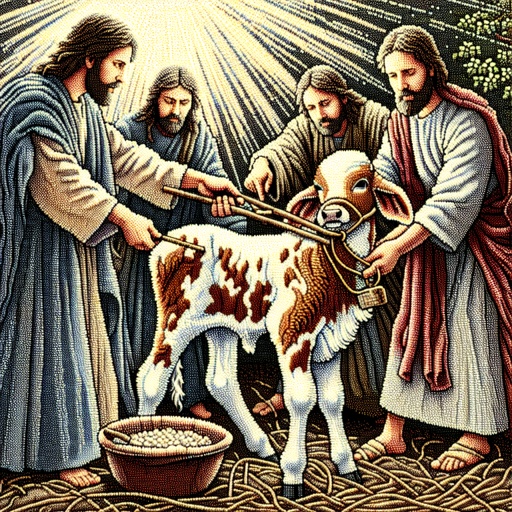
The parable of the Prodigal Son is one of the most well-known and beloved stories in the Bible. It begins with a man who has two sons. The younger son asks for his inheritance early and goes off to squander it on a life of wild living. After his money runs out, he finds himself in a desperate situation and decides to return home and beg for forgiveness from his father. The father, filled with compassion, runs to greet his wayward son and throws a party to celebrate his return.
The older son, who has stayed faithful to his father and worked diligently on the family farm, is jealous and angry when he sees how warmly his father welcomes his younger brother back into the fold. This is when the father speaks the words in Luke 15:31, reassuring his elder son that he is just as beloved and deserving of his father's love as the younger son.
This verse holds several layers of meaning and insight into the nature of God's grace and our human behavior. The father's response to his obedient son's jealousy is a reminder that just as God is gracious and forgiving towards sinners, He also loves and values those who have been faithful and obedient to Him. This speaks to the larger theme of God's unending love and forgiveness for all of His children, irrespective of their actions or choices.
The context of this parable is crucial to understanding its significance. Jesus is addressing a crowd, including tax collectors and sinners, as well as Pharisees and scribes who were critical of him for associating with undesirable people. Jesus uses this parable to challenge the Pharisees' and scribes' perception of righteousness and to demonstrate that God's love and forgiveness extend to all, regardless of their past mistakes.
The symbolism in this verse and the parable as a whole is abundant. The father in the parable represents God, full of compassion and love. The younger son represents the repentant sinner who is welcomed back into God's grace with open arms. The elder son symbolizes those who have remained faithful to God and may struggle with feelings of resentment towards those who have strayed but are then forgiven and welcomed back.
One of the key lessons of this parable is that God's love and forgiveness are freely given to all who seek it, regardless of their past actions or mistakes. The parable also serves as a reminder that we should not harbor resentment or jealousy towards those who have strayed and then find forgiveness, but instead, we should rejoice and celebrate their return to God's grace.
In conclusion, Luke 15:31 from the King James Version of the Bible holds a profound message about the unending love and forgiveness of God, as well as the importance of celebrating the repentance and return of those who have strayed. It serves as a powerful reminder that God's grace is available to all who seek it, and that we should strive to emulate His love and forgiveness in our own lives.
Get our apps


Artwork for Luke 15:31

Luke 15:31 - "And he said unto him, Son, thou art ever with me, and all that I have is thine."

"And he said unto him, Son, thou art ever with me, and all that I have is thine." - Luke 15:31

Hosea 3:1-5

Luke 1:31

Joshua 15:31 - "And Ziklag, and Madmannah, and Sansannah,"

Luke 22:31-32 - "Luke 22:31-32: And the Lord said, Simon, Simon, behold, Satan hath desired to have you, that he may sift you as wheat: But I have prayed for thee, that thy faith fail not: and when thou art converted, strengthen thy brethren."

numbers 31:14-15

Luke 23:31 - "For if they do these things in a green tree, what shall be done in the dry?"

Luke 2:31 - "Which thou hast prepared before the face of all people;"

Luke 24:31 - "And their eyes were opened, and they knew him; and he vanished out of their sight."

Luke 8:31 - "And they besought him that he would not command them to go out into the deep."

Luke 5:31 - "And Jesus answering said unto them, They that are whole need not a physician; but they that are sick."

Luke 4:31 - "And came down to Capernaum, a city of Galilee, and taught them on the sabbath days."

Acts 15:31 - "Which when they had read, they rejoiced for the consolation."

Luke 7:31 - "¶ And the Lord said, Whereunto then shall I liken the men of this generation? and to what are they like?"

Luke 20:31 - "And the third took her; and in like manner the seven also: and they left no children, and died."

Proverbs 15:31 - "The ear that heareth the reproof of life abideth among the wise."

Luke 6:31 - "And as ye would that men should do to you, do ye also to them likewise."

Luke 9:31 - "Who appeared in glory, and spake of his decease which he should accomplish at Jerusalem."

Luke 12:31 - "¶ But rather seek ye the kingdom of God; and all these things shall be added unto you."
Luke 15:23

Luke 15:10

"And Ziklag, and Madmannah, and Sansannah," - Joshua 15:31

Luke 15:21

Luke 15:21

Job 15:31 - "Let not him that is deceived trust in vanity: for vanity shall be his recompence."

Luke 15: 4-7

Luke 11:14-15

Luke 21:15-19

Numbers 31:15 - "And Moses said unto them, Have ye saved all the women alive?"