What does Luke 15:9 mean?
“And when she hath found it, she calleth her friends and her neighbours together, saying, Rejoice with me; for I have found the piece which I had lost.” — Luke 15:9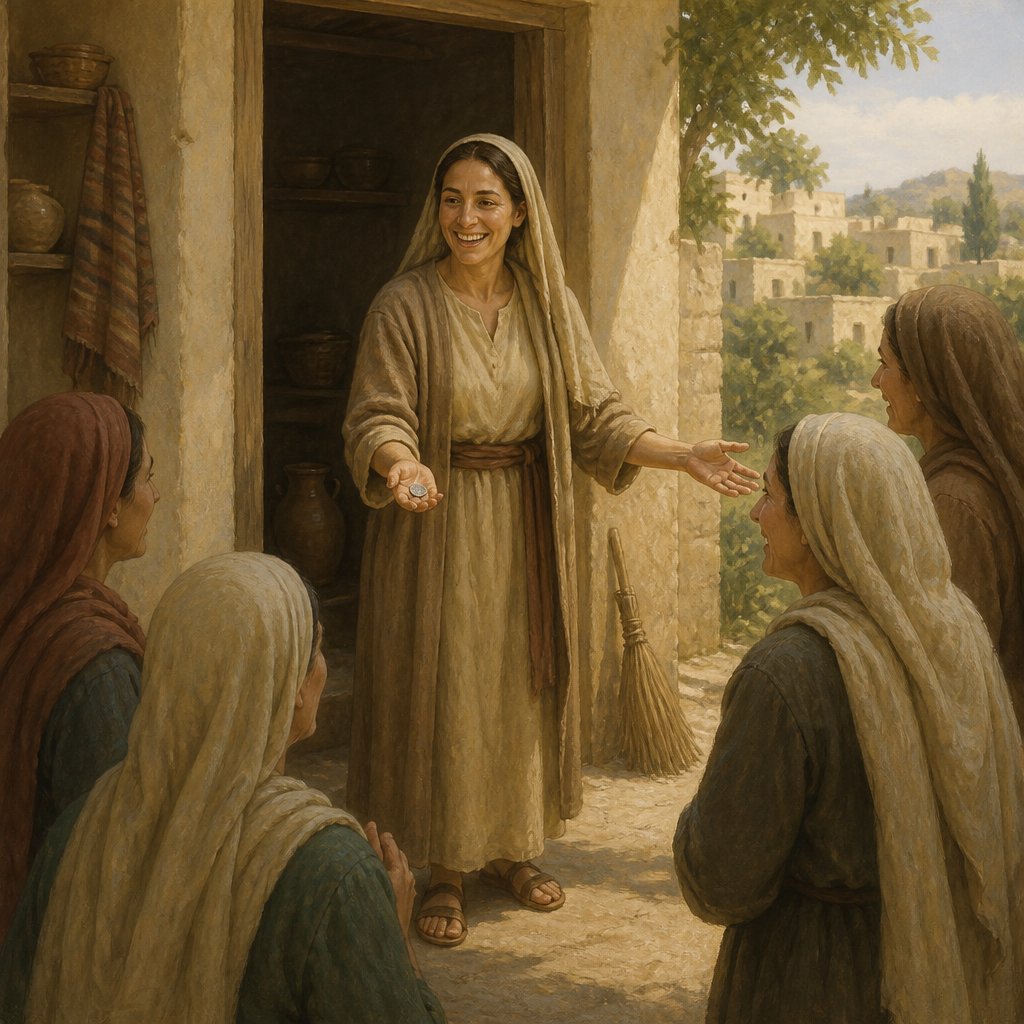
Luke 15:9 from the King James Version of the Bible reads, "And when she hath found it, she calleth her friends and her neighbours together, saying, Rejoice with me; for I have found the piece which I had lost." This verse is from the parable of the lost coin, which is one of the three parables in Luke 15 that Jesus tells to illustrate the value of the lost and the joy of their recovery.
The context of this verse is important for understanding its deeper meaning. In the beginning of Luke 15, we find that the Pharisees and scribes were criticizing Jesus for eating with sinners. In response, Jesus tells three parables: the parable of the lost sheep, the parable of the lost coin, and the parable of the prodigal son. These parables highlight God's love and compassion for those who are lost and in need of redemption.
In the parable of the lost coin, a woman loses one of her ten silver coins and diligently searches for it until she finds it. When she finds it, she calls her friends and neighbors together to rejoice with her. This parable illustrates God's relentless pursuit of those who are lost and His joy when they are found.
One of the themes of this verse is the value of each individual to God. The lost coin may seem insignificant compared to the nine others, but the woman still goes to great lengths to find it. In the same way, every person is valuable to God, and He is willing to go to great lengths to seek and save the lost. This parable teaches us that no one is too far gone for God to pursue and redeem.
Another theme is the joy of redemption. When the woman finds her lost coin, she calls her friends and neighbors to rejoice with her. In the same way, there is great joy in heaven over one sinner who repents (Luke 15:7). This parable reminds us that redemption brings joy to God and to those who are already in His kingdom.
The symbolism in this verse is rich and meaningful. The woman in the parable represents God, who diligently seeks after the lost. The coin represents the sinner who is lost and in need of redemption. The woman's friends and neighbors represent the angels and the saints in heaven who rejoice when a sinner repents and is saved.
In a broader sense, this parable also teaches us about the responsibility of the church and individual believers to seek out the lost and share the good news of redemption. The woman's diligent search for the lost coin serves as a model for the church's mission to seek and save the lost.
Overall, Luke 15:9 from the King James Version of the Bible is a powerful reminder of God's love and relentless pursuit of the lost. It teaches us about the value of each individual to God, the joy of redemption, and the responsibility of the church to seek out the lost. This verse is a source of encouragement and hope for all who are lost and in need of God's redemption.
Get our apps


Artwork for Luke 15:9

Luke 15:9 - "And when she hath found it, she calleth her friends and her neighbours together, saying, Rejoice with me; for I have found the piece which I had lost."
"And when she hath found it, she calleth her friends and her neighbours together, saying, Rejoice with me; for I have found the piece which I had lost." - Luke 15:9

Luke 9:15 - "And they did so, and made them all sit down."

"And they did so, and made them all sit down." - Luke 9:15

Luke 15:23

Luke 15:10

Luke 15:21

Luke 15:21
Luke 11:9

luke 9:30

luke 9:35

luke 9:35

Luke 15: 4-7

Luke 11:14-15

Luke 21:15-19

Luke 9:51

Luke 11:9

Luke 15:11-32

Luke 15:15 - "And he went and joined himself to a citizen of that country; and he sent him into his fields to feed swine."

Luke 9:54-55

Luke 18:9-14

Luke 9:28-45

Luke 11:9-10

Luke 13:6-9

Luke 18: 9-14

luke 9:29- 30

Luke 4:15 - "And he taught in their synagogues, being glorified of all."

Luke 15:3 - "¶ And he spake this parable unto them, saying,"

Rev 9:15

Genesis 15:9