What does Luke 16:20 mean?
“And there was a certain beggar named Lazarus, which was laid at his gate, full of sores,” — Luke 16:20
The Bible verse Luke 16:20 from the King James Version (KJV) depicts a powerful and poignant story that has rich symbolism and deep meaning. The verse reads:
"And there was a certain beggar named Lazarus, which was laid at his gate, full of sores,"
This verse is taken from the parable of the rich man and Lazarus, which is found in the Gospel of Luke in the New Testament. The parable is told by Jesus and serves as a moral lesson about the consequences of living a life of selfishness and greed, as well as the importance of compassion and caring for others.
In this verse, we are introduced to Lazarus, a beggar who is depicted as being in a state of extreme suffering and poverty. The fact that he was "laid at his gate" suggests that he was so destitute that he could not even move himself to a place where he might receive help. Furthermore, the mention of him being "full of sores" highlights the physical pain and hardship that he endured.
The name "Lazarus" is significant as it means "God is my help" or "God has helped". This could indicate a sense of hope and reliance on God, even in the midst of his dire circumstances. The name serves as a reminder that even in the midst of suffering, there is always the potential for divine intervention and aid.
The rich symbolism of this verse is evident in the stark contrast between Lazarus and the rich man, who is introduced in the following verses. The rich man lives in luxury and excess, while Lazarus is in abject poverty. This sharp divide serves to emphasize the message of the parable, which is to warn against the dangers of living a self-indulgent and uncharitable life.
In its context within the larger parable, this verse serves to set the stage for the subsequent events. It lays the foundation for the contrast and dichotomy that will be further highlighted in the parable, as well as the ultimate fates of the two characters.
The themes present in this verse are numerous and profound. One of the central themes is the idea of social justice and the moral obligation to care for the less fortunate. The parable challenges the prevailing societal norms of the time and calls attention to the plight of the marginalized and oppressed. It also serves as a reminder that ultimately, our worldly circumstances are inconsequential in the eyes of God, who sees and judges the heart.
Another significant theme is the concept of divine retribution and justice. The parable constructs a narrative where the roles of the rich man and Lazarus are ultimately reversed in the afterlife. This serves as a warning against the consequences of living a life devoid of compassion and empathy. It emphasizes the notion that earthly wealth and status are transient and ultimately meaningless in a spiritual sense.
Symbolism pervades this verse, as it is rich with imagery that underscores the stark differences between the characters. The gate represents the boundary between the rich man's opulent lifestyle and Lazarus' destitution. The sores symbolize Lazarus' suffering and the depths of his hardship. These symbols serve to emphasize the divide between the two characters and highlight the disparity between their circumstances.
In conclusion, Luke 16:20 from the KJV presents a powerful and thought-provoking portrayal of a beggar named Lazarus, who embodies the suffering and struggles of the marginalized. The verse sets the stage for a parable that serves as a potent moral lesson about the importance of compassion, justice, and the ultimate insignificance of worldly wealth. Through its rich symbolism and profound themes, this verse resonates with timeless truths about the human condition and the divine values that transcend earthly wealth and power.
Get our apps


Artwork for Luke 16:20

Luke 16:20 - "And there was a certain beggar named Lazarus, which was laid at his gate, full of sores,"
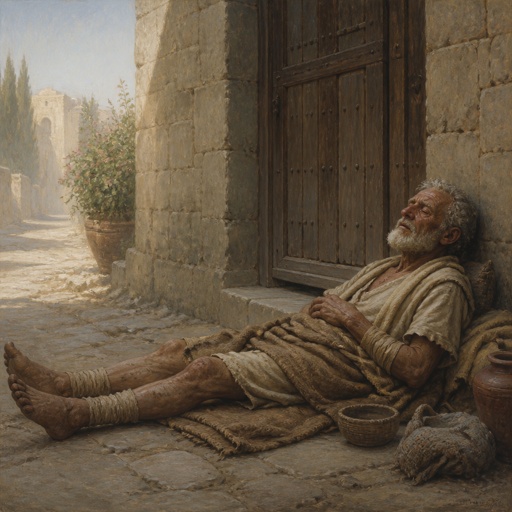
"And there was a certain beggar named Lazarus, which was laid at his gate, full of sores," - Luke 16:20

Luke 20:16 - "He shall come and destroy these husbandmen, and shall give the vineyard to others. And when they heard it, they said, God forbid."

Luke 13:20-21

Luke 13:20-21

Luke 13:20-21

Luke 13:20-21
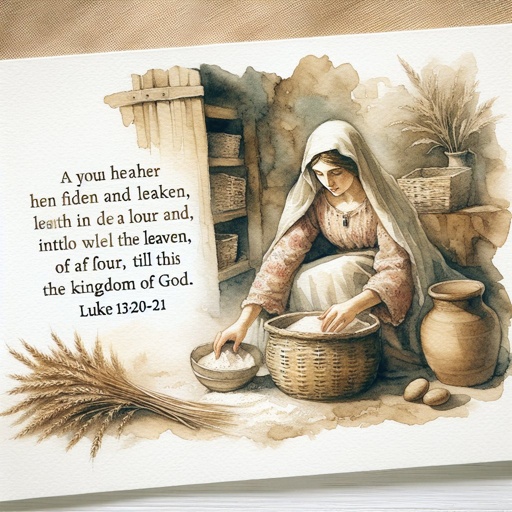
Luke 13:20-21
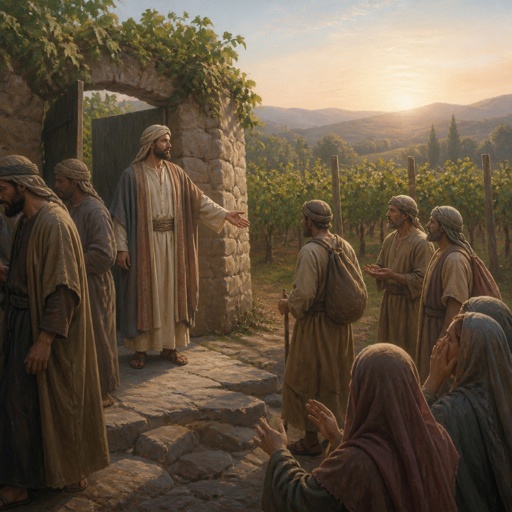
"He shall come and destroy these husbandmen, and shall give the vineyard to others. And when they heard it, they said, God forbid." - Luke 20:16

Luke 20:28

Luke 2:1-20

Luke 8:16

luke 4:16

Luke 20:7 - "And they answered, that they could not tell whence it was."

Mark 16:20
Mark 16:20

Deuteronomy 20:16

Luke 16:1-13

Deuteronomy 20:16

Mark 16:20

Genesis 20-16
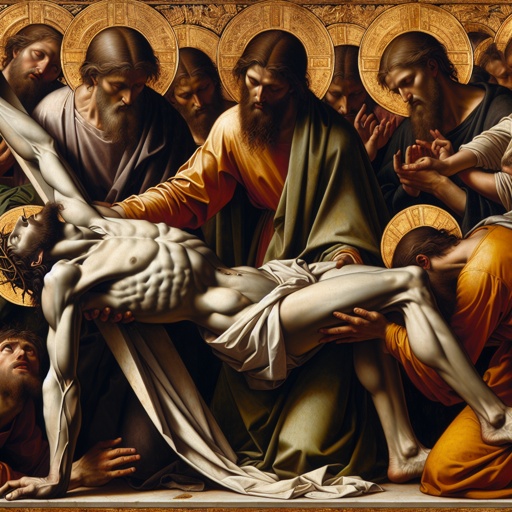
Mark 16:20

Mark 16:20

Deuteronomy 20:16
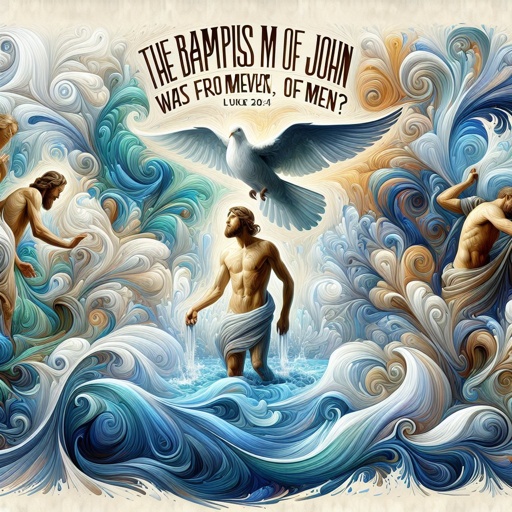
Luke 20:4 - "The baptism of John, was it from heaven, or of men?"

Luke 20:32 - "Last of all the woman died also."

Luke 16:1-1313

Luke 16:22-26

Luke 16:1-13

Luke 16:1-13