What does Luke 18:25 mean?
“For it is easier for a camel to go through a needle’s eye, than for a rich man to enter into the kingdom of God.” — Luke 18:25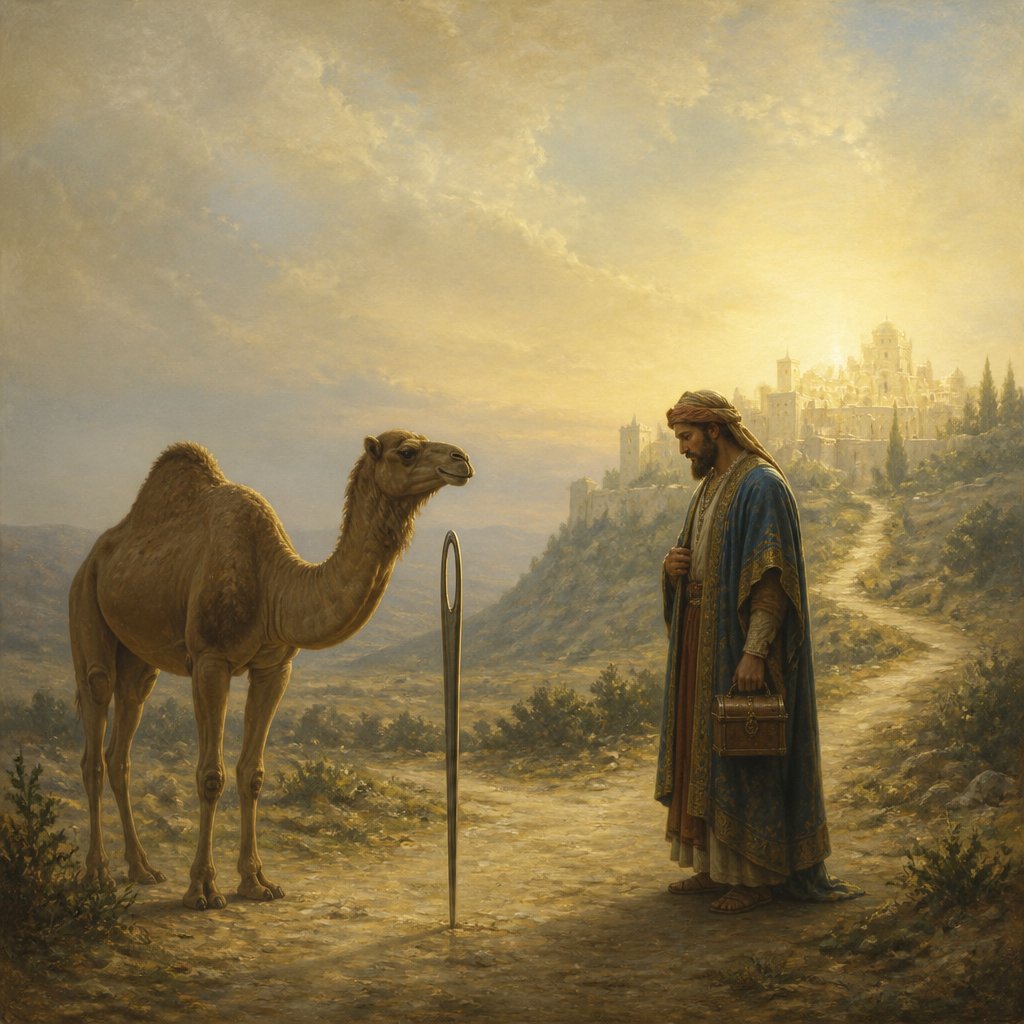
" For it is easier for a camel to go through a needle's eye, than for a rich man to enter into the kingdom of God." - Luke 18:25 (KJV)
This verse from the Gospel of Luke is a powerful statement made by Jesus, and it carries deep meanings that have been debated and interpreted by theologians and scholars for centuries. The context of this verse is Jesus’ encounter with a rich ruler which prompts him to make this profound statement. This interaction with the ruler comes after the ruler asks Jesus what he must do to inherit eternal life. Jesus advises him to sell all of his possessions and give the proceeds to the poor. The ruler finds this difficult to accept, as he is extremely rich and attached to his wealth. This prompts Jesus to make the statement about the difficulty for a rich man to enter the kingdom of God.
The theme of wealth and its spiritual implications is central to this verse. Jesus uses the image of a camel going through the eye of a needle to illustrate the extreme difficulty for a rich person to enter the kingdom of God. The image is vivid and striking, conveying the idea of something impossible. Some interpreters have suggested that the "needle's eye" might refer to a small gate in Jerusalem, through which a camel could only pass by stooping and unburdened. However, most interpreters believe that Jesus is using hyperbole to emphasize the difficulty of the task, regardless of the specific interpretation of "needle's eye."
The verse also touches on the concept of attachment to material possessions and the challenge of letting go of worldly wealth in order to fully devote oneself to God. This challenges the notion that wealth and success are indicators of spiritual favor. It suggests that the pursuit of material wealth can be a hindrance to spiritual growth and enlightenment.
Another important theme in this verse is the idea of humility and surrender. Jesus’ statement highlights the importance of humility, detachment from material possessions, and reliance on God. It suggests that true wealth is found in one's relationship with God, rather than in material wealth.
The symbolism in this verse is powerful and multi-faceted. The image of a camel going through the eye of a needle is a vivid and drastic illustration of the difficulty for a rich person to enter the kingdom of God. The camel, being a large and burdensome animal, represents the weight of worldly possessions and the difficulty of shedding these attachments. The needle's eye symbolizes something impossibly small and constrained, further emphasizing the magnitude of the challenge.
Overall, Luke 18:25 carries profound spiritual and ethical implications. It challenges the traditional notions of wealth and success, and emphasizes the importance of humility, detachment, and reliance on God. It urges individuals to reevaluate their priorities and to consider the spiritual implications of their attachment to material possessions. This verse has been a subject of much contemplation and debate, and it continues to provoke thought and introspection among believers and scholars alike.
Get our apps


Artwork for Luke 18:25

Luke 18:25 - "For it is easier for a camel to go through a needle's eye, than for a rich man to enter into the kingdom of God."
"For it is easier for a camel to go through a needle's eye, than for a rich man to enter into the kingdom of God." - Luke 18:25

Luke 1:25

Luke 1:25

Luke 1:25

Luke 12:25

Luke 1:25
Luke 12:25

Luke 1:25
Luke 12:25-26

Luke 12:25-26

Luke 12:25-26

John 18:25

Genesis 18:25

Genesis 18-25

Luke 12:25-26

Luke 12:25-26

Luke 12:25-26

Luke 12:25-26

Luke 14:25 - 33

Genesis 25-18

Luke 10:18-19

Luke 13:18-19

Luke 10:18-19

Luke 10:18-19

Luke 13:18-19

Luke 10:18-19

Luke 10:18-19

Luke 10:18-19

Joshua 18:25 - "Gibeon, and Ramah, and Beeroth,"