What does Luke 19:39 mean?
“And some of the Pharisees from among the multitude said unto him, Master, rebuke thy disciples.” — Luke 19:39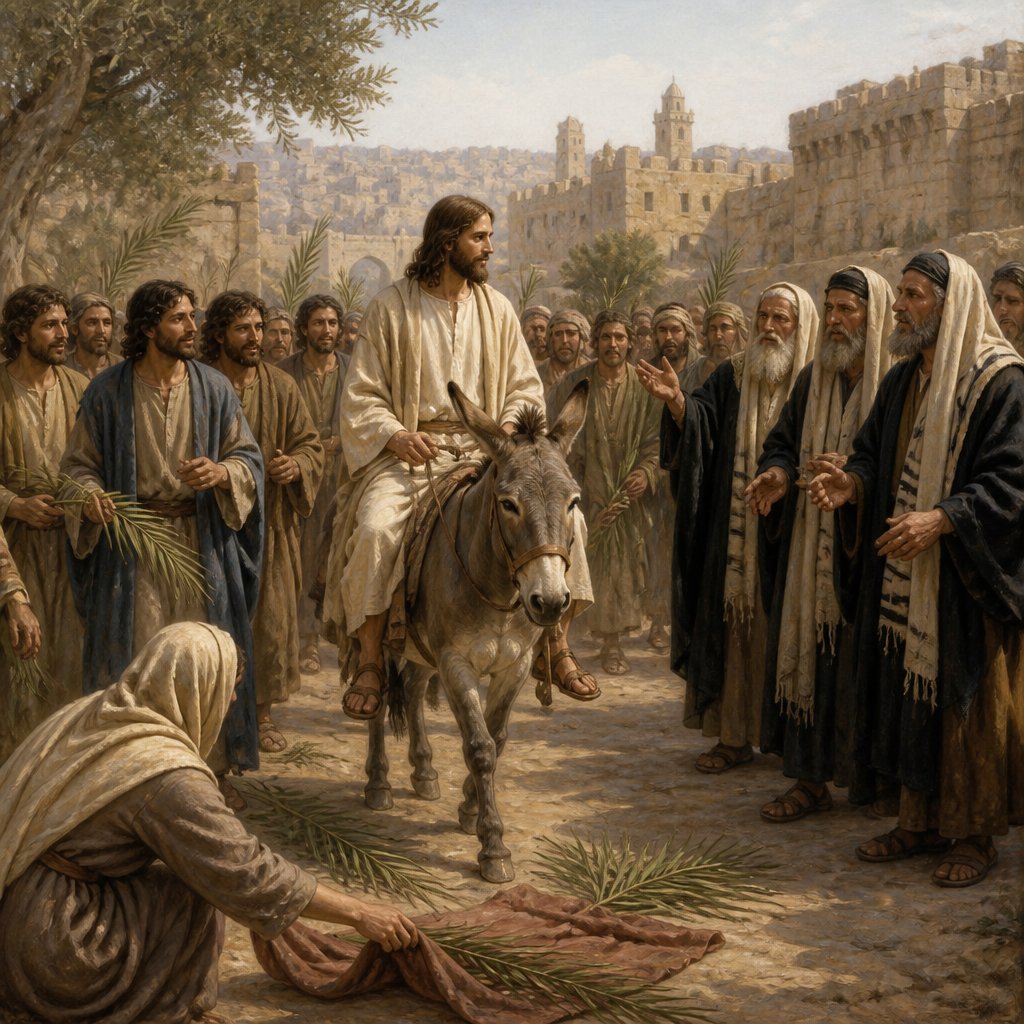
The Bible verse Luke 19:39 from the King James Version reads, "And some of the Pharisees from among the multitude said unto him, Master, rebuke thy disciples." This verse comes from the New Testament and is part of the story of Jesus' triumphal entry into Jerusalem.
In this verse, we see the Pharisees, who were a group of religious leaders in Jesus' time, expressing their disapproval of the way Jesus' disciples were praising him. They ask Jesus to rebuke his disciples, presumably because they were uncomfortable with the level of adoration and attention that Jesus was receiving.
The context of this verse is important to understand its full meaning. Jesus was entering Jerusalem, and a large crowd had gathered to welcome him. The people were spreading their cloaks on the road and waving palm branches, a traditional sign of honor and respect. They were shouting, "Blessed is the King who comes in the name of the Lord!" (Luke 19:38). This display of praise and adoration for Jesus would have been seen as highly symbolic, as it echoed the prophecy from the book of Zechariah about the coming of a righteous king to Jerusalem.
The Pharisees, who were likely feeling threatened by Jesus' growing popularity and authority, felt the need to speak out against the praise being given to Jesus. They wanted Jesus to silence his disciples, possibly out of jealousy or fear that Jesus was gaining too much influence over the people.
The themes present in this verse include the conflict between religious tradition and the radical teachings of Jesus, as well as the concept of true leadership and authority. The Pharisees represented the religious establishment of the time, which clung to traditional interpretations of the law and resisted any challenge to their authority. On the other hand, Jesus represented a new way of thinking and leading, one that prioritized love, compassion, and humility over strict adherence to rules and rituals.
The symbolism in this verse is also rich and significant. The contrast between the Pharisees' fear and the people's celebration highlights the tension between those who were threatened by Jesus and those who saw him as a transformative and liberating figure. The act of spreading cloaks on the road and waving palm branches was a gesture of homage and recognition of Jesus as a king. This gesture, combined with the people's declaration that Jesus was the long-awaited "King who comes in the name of the Lord," emphasized his role as a messianic figure.
In response to the Pharisees' request to silence his disciples, Jesus gives a powerful and poignant reply in the next verse, Luke 19:40. He says, "I tell you, if these were silent, the very stones would cry out." This statement affirms the inevitability and righteousness of the praise that was being given to Jesus. It also serves as a reminder that true authority and leadership cannot be silenced, and that the truth will always find a way to be heard.
Overall, Luke 19:39 is a crucial moment in the story of Jesus' triumphal entry into Jerusalem. It captures the tension between the religious establishment and Jesus' radical message, as well as the symbolic significance of the people's praise and recognition of Jesus as a king. This verse is a powerful reminder of the enduring impact of Jesus' teachings and the transformative effect that his presence had on those who encountered him.
Get our apps


Artwork for Luke 19:39

Luke 19:39 - "And some of the Pharisees from among the multitude said unto him, Master, rebuke thy disciples."
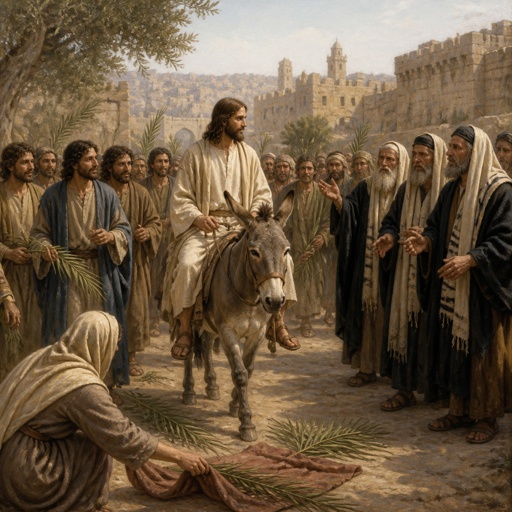
"And some of the Pharisees from among the multitude said unto him, Master, rebuke thy disciples." - Luke 19:39

Luke 5:39

Luke 22:39

Luke 1:39

Luke 22:39

Luke 1:39 - 45

Luke 20:39 - "¶ Then certain of the scribes answering said, Master, thou hast well said."

Joshua 19:39 - "This is the inheritance of the tribe of the children of Naphtali according to their families, the cities and their villages."

Luke 1:39 - "And Mary arose in those days, and went into the hill country with haste, into a city of Juda;"

Luke 5:39 - "No man also having drunk old wine straightway desireth new: for he saith, The old is better."

Luke 10:39 - "And she had a sister called Mary, which also sat at Jesus' feet, and heard his word."

Job 39:19-25 – "Do you give the horse its strength or clothe its neck with a flowing mane?"

Job 39:19 - "Hast thou given the horse strength? hast thou clothed his neck with thunder?"

Acts 19:39 - "But if ye enquire any thing concerning other matters, it shall be determined in a lawful assembly."

Luke 23:39 - "¶ And one of the malefactors which were hanged railed on him, saying, If thou be Christ, save thyself and us."

Luke 6:39 - "And he spake a parable unto them, Can the blind lead the blind? shall they not both fall into the ditch?"

Luke 22:39 - "¶ And he came out, and went, as he was wont, to the mount of Olives; and his disciples also followed him."

Luke 2:39 - "And when they had performed all things according to the law of the Lord, they returned into Galilee, to their own city Nazareth."

Luke 4:39 - "And he stood over her, and rebuked the fever; and it left her: and immediately she arose and ministered unto them."

Job 39:19 KJV (19) Hast thou given the horse strength? hast thou clothed his neck with thunder?

Luke 10:18-19

Luke 13:18-19

Luke 10:18-19

Luke 10:18-19

Luke 10:17-19

Luke 13:18-19

Exodus 39:19 - "And they made two rings of gold, and put them on the two ends of the breastplate, upon the border of it, which was on the side of the ephod inward."

Luke 10:18-19

Luke 10:18-19