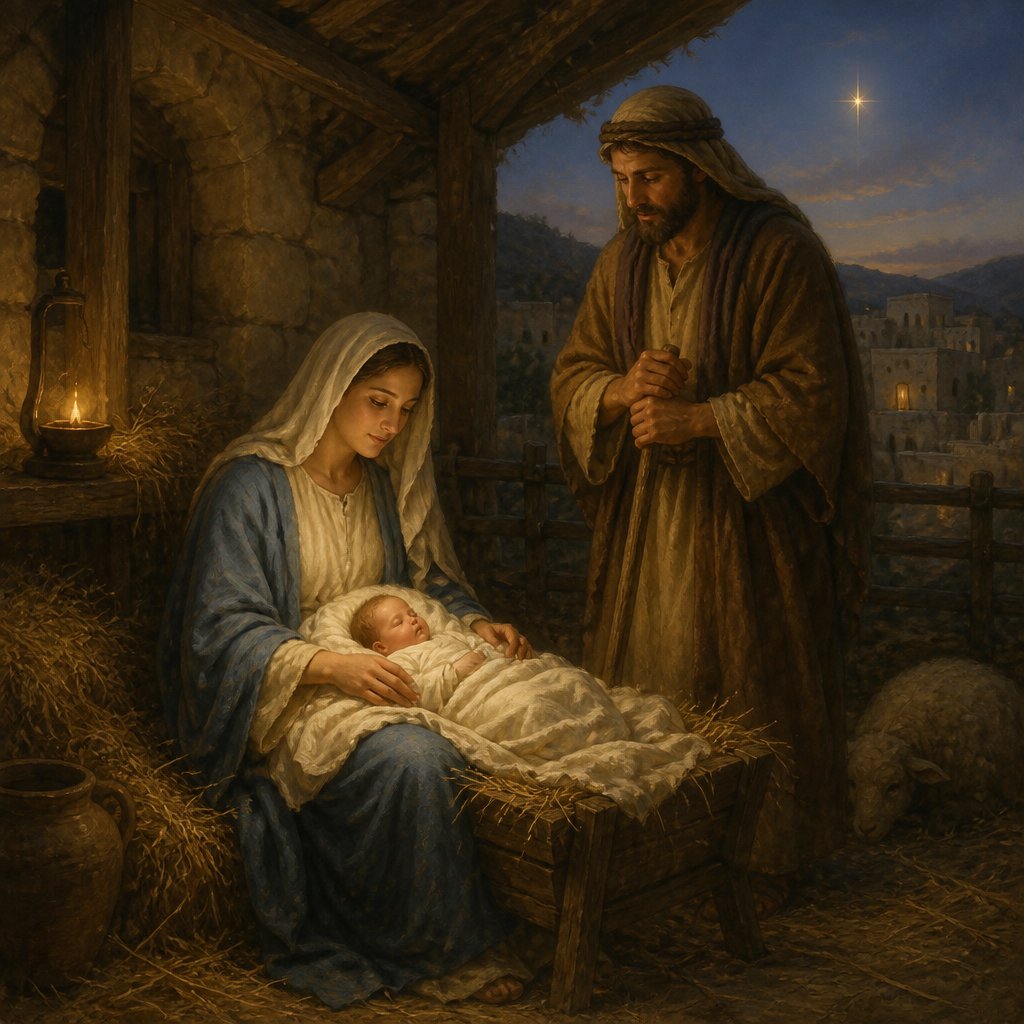
The Bible verse Luke 2:4-7 in the King James Version (KJV) reads:
"And Joseph also went up from Galilee, out of the city of Nazareth, into Judea, unto the city of David, which is called Bethlehem; (because he was of the house and lineage of David:) To be taxed with Mary his espoused wife, being great with child. And so it was, that, while they were there, the days were accomplished that she should be delivered. And she brought forth her firstborn son, and wrapped him in swaddling clothes, and laid him in a manger; because there was no room for them in the inn."
This passage from the Gospel of Luke provides insight into the circumstances surrounding the birth of Jesus Christ, the central figure of the Christian faith. The verses depict the journey of Mary and Joseph to Bethlehem, the birth of Jesus, and the humble conditions in which it occurred. The themes of faith, providence, and humility are prevalent in this passage, and the context and symbolism further contribute to the depth and significance of the story.
The context of this passage is set against the backdrop of a historical event— the decree by Caesar Augustus for a census to be taken in the Roman Empire. As a result, Joseph, who was of the lineage of David, was required to travel to Bethlehem, the city of David, in order to be registered. This context is significant as it fulfills the prophecy that the Messiah would be born in Bethlehem, as foretold in the Old Testament book of Micah (Micah 5:2).
The journey of Joseph and Mary to Bethlehem, as described in the passage, demonstrates their obedience to the law and to the will of God. It also reflects their trust in divine providence, as they make the arduous journey despite Mary being heavily pregnant. This highlights the theme of faith and submission to God's plan, as Joseph and Mary exemplify a steadfast commitment to fulfilling their roles in the unfolding of God's redemptive plan.
The birth of Jesus in Bethlehem, the city of David, further emphasizes the fulfillment of prophecy and the divine orchestration of events. The Messiah, who was to be born of the lineage of David, is born in the very city associated with the Davidic line. This underscores Jesus' royal lineage and his fulfillment of the Messianic expectations of the Jewish people, as the long-awaited Savior and King.
The humble circumstances of Jesus' birth, as depicted in the passage, carry significant symbolism. The fact that Mary gave birth to Jesus and laid him in a manger, a feeding trough for animals, illustrates the humility and simplicity of the incarnation. Jesus, the Son of God, enters the world in a lowly and unassuming manner, devoid of the pomp and grandeur befitting a king. This serves as a powerful symbol of the humility and self-emptying nature of Christ's ministry, as described in the New Testament book of Philippians (Philippians 2:6-8).
The imagery of Jesus being wrapped in swaddling clothes also holds symbolic significance. In the ancient Near East, swaddling clothes were used to tightly bind a newborn infant, providing warmth, security, and protection. This imagery can be seen as a foreshadowing of Jesus' role as the Savior and Protector of humanity, who brings comfort, security, and salvation to all who believe in him.
Furthermore, the fact that there was no room for Joseph and Mary in the inn points to the rejection and lack of hospitality they faced, despite their desperate need. This reflects the theme of alienation and rejection, foreshadowing the rejection that Jesus would ultimately face leading up to his crucifixion. As the apostle John later wrote in his gospel, "He came unto his own, and his own received him not" (John 1:11).
In conclusion, Luke 2:4-7 from the King James Version of the Bible provides a rich and profound account of the birth of Jesus Christ, offering layers of meaning and symbolism that resonate with themes of faith, providence, simplicity, humility, and the fulfillment of divine prophecy. This passage continues to inspire and touch the hearts of believers, reminding them of the extraordinary circumstances surrounding the arrival of the Savior of the world.
Get our apps


Artwork for Luke 2:4-7

Luke 2:4-7 - "So Joseph also went up from the town of Nazareth in Galilee to Judea, to Bethlehem the town of David, because he belonged to the house and line of David. He went there to register with Mary, who was pledged to be married to him and was expecting a child. While they were there, the time came for the baby to be born, and she gave birth to her firstborn, a son. She wrapped him in cloths and placed him in a manger, because there was no guest room available for them."
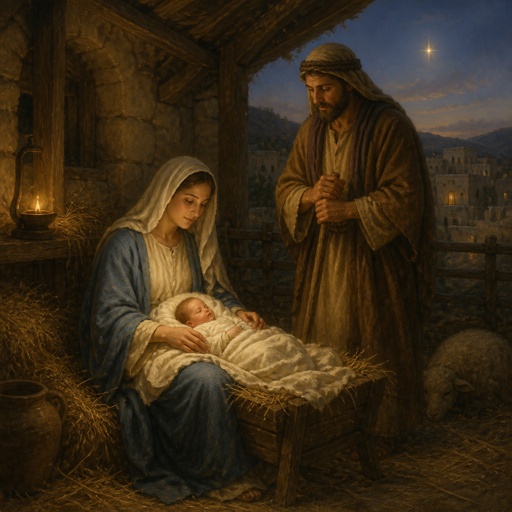
"So Joseph also went up from the town of Nazareth in Galilee to Judea, to Bethlehem the town of David, because he belonged to the house and line of David. He went there to register with Mary, who was pledged to be married to him and was expecting a child. While they were there, the time came for the baby to be born, and she gave birth to her firstborn, a son. She wrapped him in cloths and placed him in a manger, because there was no guest room available for them." - Luke 2:4-7

Luke 15: 4-7

Luke 4:7 - "If thou therefore wilt worship me, all shall be thine."

Luke 7:4 - "And when they came to Jesus, they besought him instantly, saying, That he was worthy for whom he should do this:"

Luke 7:2 - "And a certain centurion's servant, who was dear unto him, was sick, and ready to die."

2 Timothy 4 7
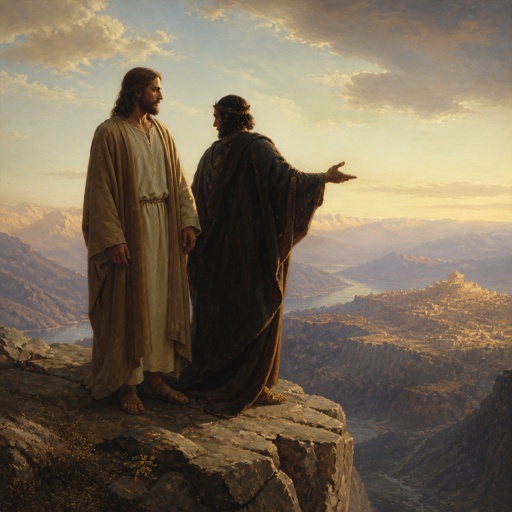
"If thou therefore wilt worship me, all shall be thine." - Luke 4:7

Luke 2:4 - "And Joseph also went up from Galilee, out of the city of Nazareth, into Judaea, unto the city of David, which is called Bethlehem; (because he was of the house and lineage of David:)"

2 Timothy 4:11 - "Only Luke is with me. Take Mark, and bring him with thee: for he is profitable to me for the ministry."

2 Chronicles 7:4 - "¶ Then the king and all the people offered sacrifices before the LORD."

Luke 2:7 - "And she brought forth her firstborn son, and wrapped him in swaddling clothes, and laid him in a manger; because there was no room for them in the inn."

2 Samuel 7:4 - "¶ And it came to pass that night, that the word of the LORD came unto Nathan, saying,"

Luke 4:2 - "Being forty days tempted of the devil. And in those days he did eat nothing: and when they were ended, he afterward hungered."

2 Corinthians 4:7 - "But we have this treasure in earthen vessels, that the excellency of the power may be of God, and not of us."
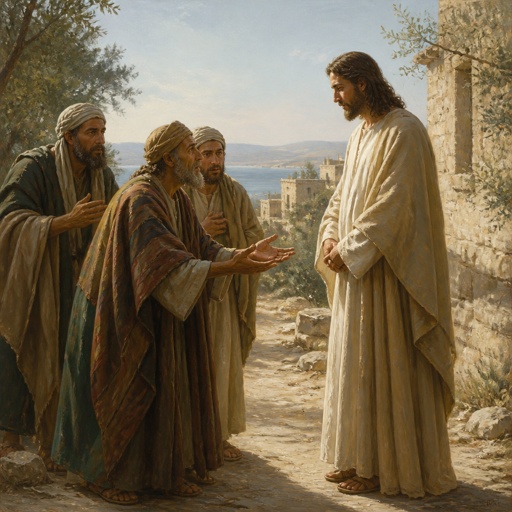
"And when they came to Jesus, they besought him instantly, saying, That he was worthy for whom he should do this:" - Luke 7:4
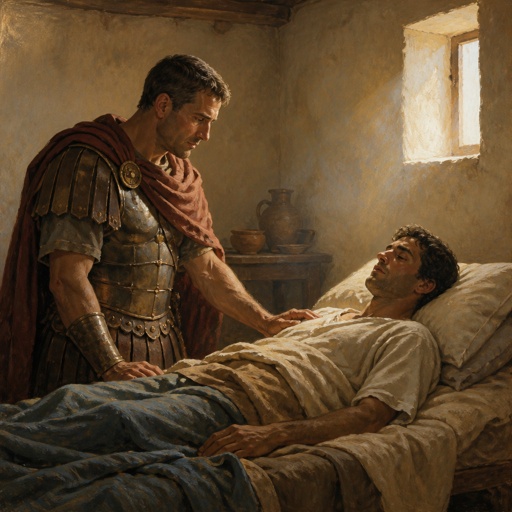
"And a certain centurion's servant, who was dear unto him, was sick, and ready to die." - Luke 7:2

Luke 7:33

Luke 7:50

Luke 7:50

2 Timothy 4:7 - "I have fought a good fight, I have finished my course, I have kept the faith:"

2 Chronicles 4:7 - "And he made ten candlesticks of gold according to their form, and set them in the temple, five on the right hand, and five on the left."

Luke 7:36-50

Luke 4:29

Luke 4:18

luke 4:16

Luke 4:18

Luke 7:41-47

Luke 7:36–50

Luke 20:7 - "And they answered, that they could not tell whence it was."