What does Luke 20:6 mean?
“But and if we say, Of men; all the people will stone us: for they be persuaded that John was a prophet.” — Luke 20:6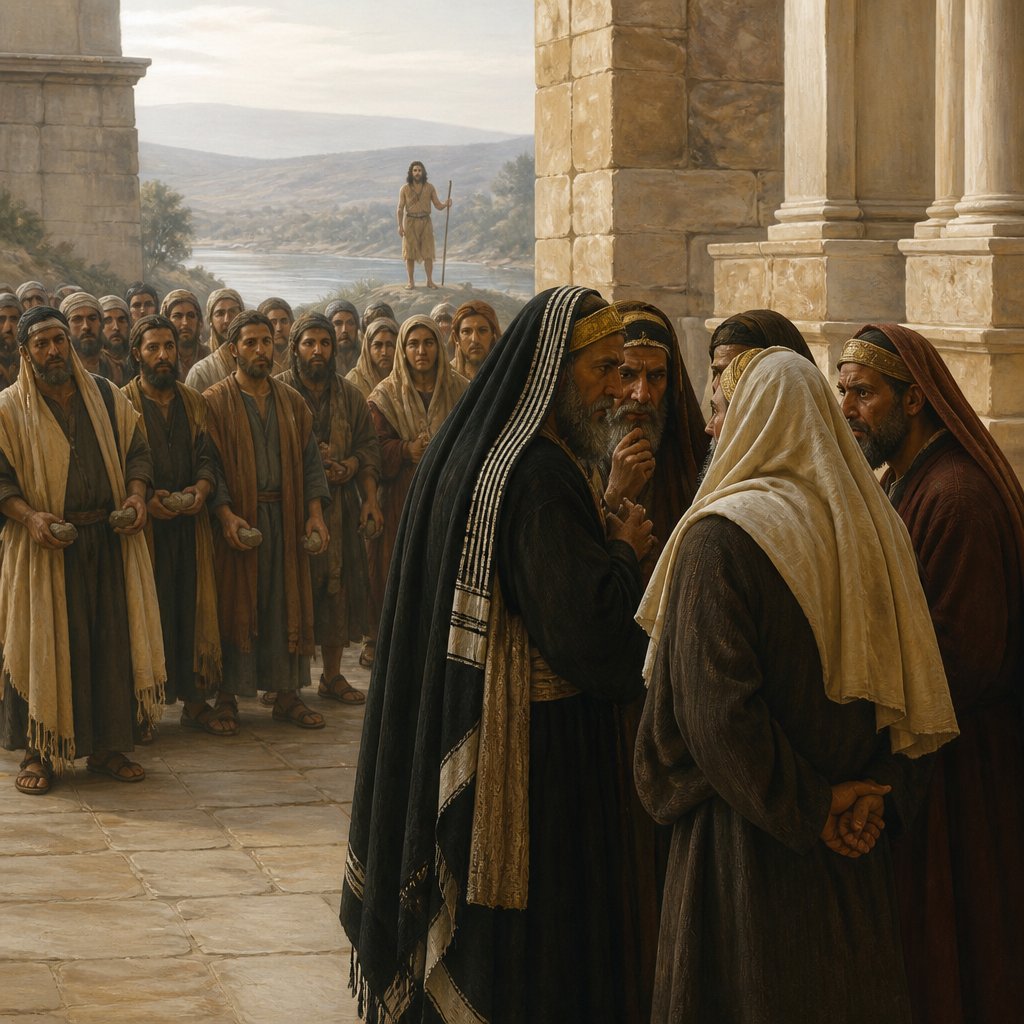
In Luke 20:6, the King James Version of the Bible records Jesus speaking to the chief priests, scribes, and elders who had questioned His authority in the temple. He says, "But and if we say, Of men; all the people will stone us: for they be persuaded that John was a prophet."
This verse comes in the context of a conversation between Jesus and the religious leaders of His time. They were challenging His authority and asking Him by what authority He was performing miracles and teaching in the temple. Jesus responds by asking them a question about the authority of John the Baptist. He does this to help them understand that their questioning of His authority is futile, and to reveal their own hypocrisy and lack of faith.
The verse carries a series of meanings and themes, and we will delve into these to provide a deeper understanding of the passage. One of the central themes of this verse is that of authority, specifically the authority of Jesus and John the Baptist. By referencing John, Jesus is seeking to demonstrate the religious leaders' lack of understanding and faith. He implies that if they acknowledge John's authority as being from God, they would also have to recognize His own authority since John testified about Him (John 5:33-35). On the other hand, if they deny John's authority, they risk alienating themselves from the people who regarded John as a prophet. This dilemma shows that the religious leaders were more concerned with maintaining their status and power than seeking the truth.
Another theme in this verse is the rejection of the prophets. In mentioning John the Baptist, Jesus evokes the memory of the prophets who were rejected and killed by the religious authorities in the past. The people stoned the prophets and rejected their message (Matthew 23:37-39), which resembles the fate awaiting John the Baptist and even Jesus Himself. This highlights a pattern of rejection and persecution faced by those who speak the truth, a theme that runs throughout the Bible.
The context of this verse also sheds light on its meaning. At this point in the Gospel of Luke, Jesus had already cleansed the temple and told the parable of the wicked tenants, both of which had enraged the religious leaders. They were seeking to trap Jesus in His words, and this context provides a backdrop for understanding Jesus' response in verse 6. His words are a rebuke to the religious leaders, challenging their lack of faith and exposing their ulterior motives.
Symbolism can be found in the reference to stoning in the verse. Stoning was a method of execution prescribed in the Old Testament for various offenses, including blasphemy and false prophecy. By alluding to stoning, Jesus is highlighting the previous rejection and persecution of the prophets, and also foreshadowing His own rejection and crucifixion. This symbolizes the suffering and rejection Jesus was to face as a result of His ministry, and it serves as a reminder of the cost of speaking the truth in a world resistant to it.
In conclusion, Luke 20:6 has rich theological and moral significance. It confronts the issue of authority and faith while also addressing the rejection and suffering of the prophets. Its context in the larger narrative of Jesus' ministry provides deeper meaning to the passage, and its symbolism adds layers of understanding to the themes of rejection and persecution. Overall, the verse serves as a poignant reminder of the cost of following and speaking the truth in a world resistant to it.
Get our apps


Artwork for Luke 20:6

Luke 20:6 - "But and if we say, Of men; all the people will stone us: for they be persuaded that John was a prophet."
"But and if we say, Of men; all the people will stone us: for they be persuaded that John was a prophet." - Luke 20:6

Luke 6:20 - "¶ And he lifted up his eyes on his disciples, and said, Blessed be ye poor: for your's is the kingdom of God."

Luke 13:20-21

Luke 13:20-21

Luke 13:20-21

Luke 13:20-21
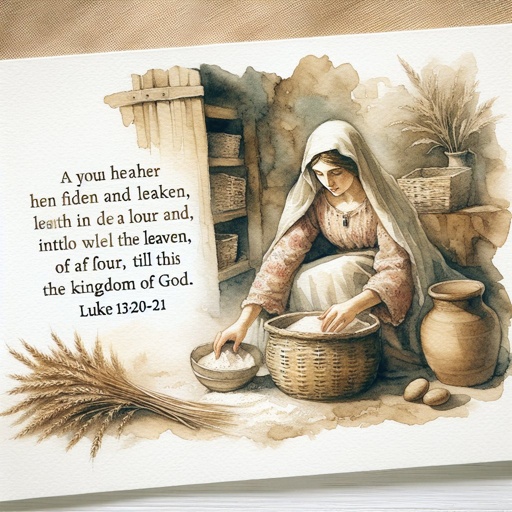
Luke 13:20-21

Luke 20:28
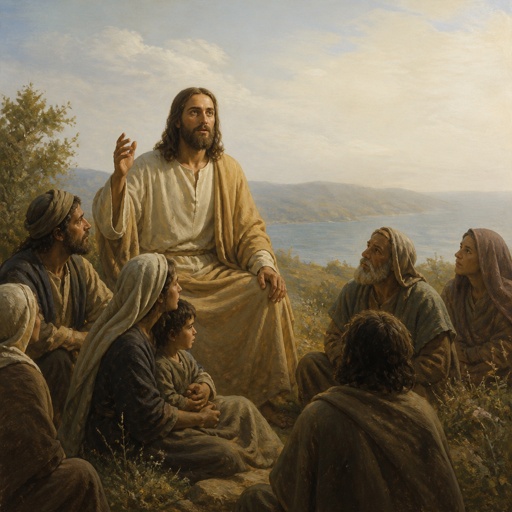
"¶ And he lifted up his eyes on his disciples, and said, Blessed be ye poor: for your's is the kingdom of God." - Luke 6:20

Luke 2:1-20

Luke 20:7 - "And they answered, that they could not tell whence it was."

Luke 6
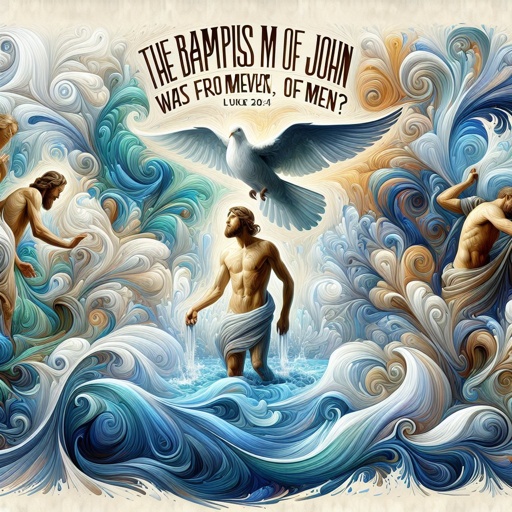
Luke 20:4 - "The baptism of John, was it from heaven, or of men?"

Luke 20:32 - "Last of all the woman died also."

Luke 20:22 - "Is it lawful for us to give tribute unto Caesar, or no?"

luke 6: 27

luke 6:30
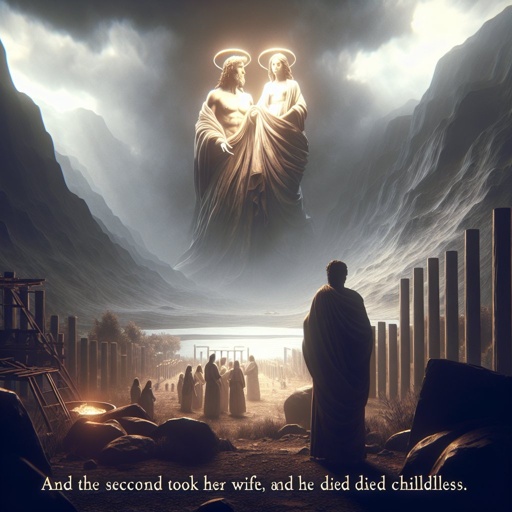
Luke 20:30 - "And the second took her to wife, and he died childless."

Luke 20:40 - "And after that they durst not ask him any question at all."

Luke 20:43 - "Till I make thine enemies thy footstool."

Luke 20:45 - "¶ Then in the audience of all the people he said unto his disciples,"

Luke 20:38 - "For he is not a God of the dead, but of the living: for all live unto him."

Luke 23:20 - "Pilate therefore, willing to release Jesus, spake again to them."

Joshua 6:20

Joshua 6:20

Genesis 20-6

Luke 20:44 - "David therefore calleth him Lord, how is he then his son?"

Luke 20:41 - "And he said unto them, How say they that Christ is David's son?"

Luke 20:39 - "¶ Then certain of the scribes answering said, Master, thou hast well said."