What does Luke 23:15 mean?
“No, nor yet Herod: for I sent you to him; and, lo, nothing worthy of death is done unto him.” — Luke 23:15
In Luke 23:15 of the King James Version (KJV), the verse reads, "No, nor yet Herod: for I sent you to him; and, lo, nothing worthy of death is done unto him." This verse takes place during the trial of Jesus before Pontius Pilate, the Roman governor of Judea. In this context, Pilate is responding to the accusations made against Jesus by the chief priests and scribes, who have brought him to Pilate seeking his death.
The verse highlights several key themes in the biblical narrative. One of the themes that stands out is the theme of innocence and unjust suffering. Pilate, a figure of authority, pronounces Jesus innocent and declares that nothing worthy of death has been done by Jesus. This speaks to the unjust and wrongful treatment of Jesus, who was falsely accused and condemned despite being blameless. This theme of innocence and unjust suffering is central to the Christian understanding of Jesus' crucifixion, as it underscores the depth of his sacrifice for humanity.
Another theme present in this verse is the theme of divine sovereignty and providence. Despite the efforts of the religious authorities to have Jesus executed, Pilate's declaration of Jesus' innocence points to a higher power at work. From a Christian perspective, this verse underscores the idea that Jesus' crucifixion was part of God's divine plan for the redemption of humanity. Despite the actions of human authorities, God's sovereignty ultimately prevails.
The verse also provides important context for understanding the political and religious dynamics of Jesus' trial. Pilate's reference to Herod reflects the complex political landscape of first-century Judea. Herod Antipas, the ruler of Galilee and Perea, was another authority figure involved in Jesus' trial. Pilate's acknowledgment that he had sent Jesus to Herod and that nothing worthy of death had been done by him underscores the lack of legitimate grounds for Jesus' execution. It also highlights the political maneuvering and shifting of responsibility that took place during Jesus' trial.
Symbolism is also present in this verse, particularly in the figure of Pilate as a symbol of worldly power and authority. As the Roman governor, Pilate wielded significant political and judicial authority, yet he ultimately succumbed to the pressure of the religious leaders and the crowd, condemning Jesus to crucifixion. In this sense, Pilate represents the limitations and failures of worldly power and the moral compromises often associated with it. This symbolism underscores the contrast between human authority and the divine authority of Jesus, who submitted to the will of God even in the face of unjust condemnation.
In conclusion, Luke 23:15 in the King James Version offers profound insights into the themes of innocence, divine sovereignty, political dynamics, and symbolism relevant to Jesus' trial and crucifixion. It underscores the unjust suffering of Jesus, the role of human and divine authority, and the complex political and religious dynamics at play. Ultimately, this verse contributes to the broader theological understanding of Jesus' sacrifice and the redemptive significance of his crucifixion in Christian belief.
Get our apps


Artwork for Luke 23:15

Luke 23:15 - "No, nor yet Herod: for I sent you to him; and, lo, nothing worthy of death is done unto him."

"No, nor yet Herod: for I sent you to him; and, lo, nothing worthy of death is done unto him." - Luke 23:15
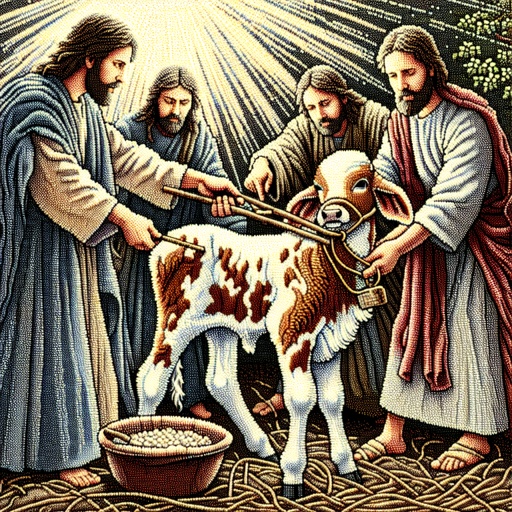
Luke 15:23

Luke 15:23 - "And bring hither the fatted calf, and kill it; and let us eat, and be merry:"

"And bring hither the fatted calf, and kill it; and let us eat, and be merry:" - Luke 15:23

Luke 23:53

Luke 19:23

luke 11:23

Luke 19:23

luke 11:23

luke 11:23

luke 11:23

Luke 23:54 - "And that day was the preparation, and the sabbath drew on."

Luke 23:23 - "And they were instant with loud voices, requiring that he might be crucified. And the voices of them and of the chief priests prevailed."

Luke 15:10

Exodus 15:23

Matthew 15:23

Luke 23:24 - "And Pilate gave sentence that it should be as they required."

Luke 15:21

Luke 15:21

Exodus 15:23

Matthew 15:23

Genesis 23-15

Luke 23:45 - "And the sun was darkened, and the veil of the temple was rent in the midst."

Luke 7:23 - "And blessed is he, whosoever shall not be offended in me."

Luke 23:21 - "But they cried, saying, Crucify him, crucify him."

Luke 23:16 - "I will therefore chastise him, and release him."

Luke 23:37 - "And saying, If thou be the king of the Jews, save thyself."

Luke 23:10 - "And the chief priests and scribes stood and vehemently accused him."

Joshua 15:23 - "And Kedesh, and Hazor, and Ithnan,"