What does Luke 24:1-3 mean?
"Now upon the first day of the week, very early in the morning, they came unto the sepulchre, bringing the spices which they had prepared, and certain others with them. And they found the stone rolled away from the sepulchre. And they entered in, and found not the body of the Lord Jesus." - Luke 24:1-3
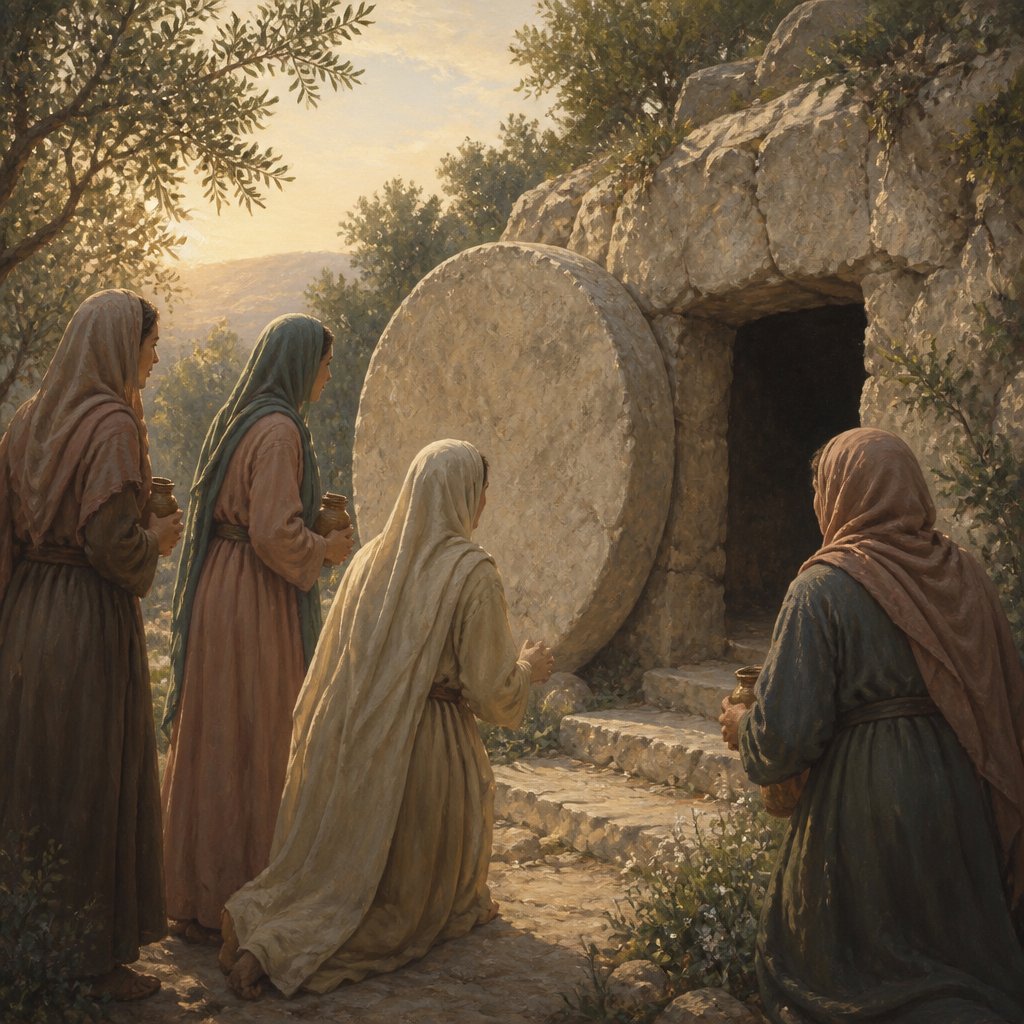
Luke 24:1-3 says, “Now upon the first day of the week, very early in the morning, they came unto the sepulchre, bringing the spices which they had prepared, and certain others with them. And they found the stone rolled away from the sepulchre. And they entered in, and found not the body of the Lord Jesus.”
This passage from the Book of Luke marks the end of the Easter story, when the women who followed Jesus came to his tomb with spices to anoint his body and found that the stone had been rolled away and the body was gone. This scene sets the stage for the most pivotal event in Christianity—the resurrection of Jesus Christ.
The account of the empty tomb is a moment of great significance, as it is the powerful evidence that Jesus had indeed risen from the dead, just as he had promised. This event was the fulfillment of the prophecy and the ultimate proof of his divinity. It is a crucial moment in the Christian faith, signifying victory over death, sin, and the promise of eternal life for believers.
The context of the passage is set in the early morning hours on the first day of the week, following the Sabbath. The women, including Mary Magdalene, Mary the mother of James, and Salome, had come to the tomb to anoint Jesus’ body with spices, as was the Jewish custom. As they arrived, they found the stone that had sealed the tomb rolled away.
The significance of the stone being rolled away cannot be overstated. In ancient times, a large stone was typically rolled in front of the entrance to a tomb to seal it shut, and its removal was a remarkable event. The absence of the stone signified that something extraordinary had taken place. The women’s discovery of the empty tomb was the catalyst for the proclamation of the resurrection, and it continues to carry deep spiritual significance for Christians today.
The theme of the passage is one of hope, triumph, and the fulfillment of prophecy. It is a powerful reminder of the victory of Christ over death and the promise of eternal life for all who believe in him. It also underscores the faithfulness of God to fulfill His promises, as Jesus had foretold his resurrection to his disciples multiple times during his ministry.
The symbolism of the empty tomb is rich and multifaceted. It serves as a powerful visual representation of the foundational truth of Christianity—the resurrection of Jesus Christ. The absence of Jesus’ body from the tomb points to the reality of his triumph over death and validates his claims of deity. The empty tomb also serves as a demonstration of God’s power and faithfulness, as He had raised Jesus from the dead according to His plan and promise.
Furthermore, the women who first discovered the empty tomb can also be seen as symbolic figures. Their presence at the scene represents their unwavering faith and devotion to Jesus, as well as their humble service in seeking to anoint his body. It is significant that they were the ones chosen to witness this momentous event and be the first bearers of the news of the resurrection, demonstrating God’s favor upon the faithful and the unexpected choices He often uses to carry out His purposes.
In conclusion, Luke 24:1-3 is a pivotal moment in the Easter story and a foundational truth of the Christian faith. The passage carries profound themes of hope, triumph, and the faithfulness of God, and it is laden with rich symbolism that speaks to the core beliefs of Christianity. The empty tomb not only serves as the historical account of Jesus’ resurrection but also as a timeless symbol of the promise of eternal life for all who believe in Him.
Have questions about Luke 24:1-3?
Dive deeper into this scripture with Bible Chat — an AI-powered tool for exploring God's Word through conversation. Ask questions, get context, and grow in your understanding of the Bible.
Get Our Apps


Luke 24:1-3 Artwork

Luke 24:1-3 - "On the first day of the week, very early in the morning, the women took the spices they had prepared and went to the tomb. They found the stone rolled away from the tomb, but when they entered, they did not find the body of the Lord Jesus."
"On the first day of the week, very early in the morning, the women took the spices they had prepared and went to the tomb. They found the stone rolled away from the tomb, but when they entered, they did not find the body of the Lord Jesus." - Luke 24:1-3

Luke 24:1

Luke 24:3 - "And they entered in, and found not the body of the Lord Jesus."

Luke 24:35

Luke 21:24

Luke 24:13-35
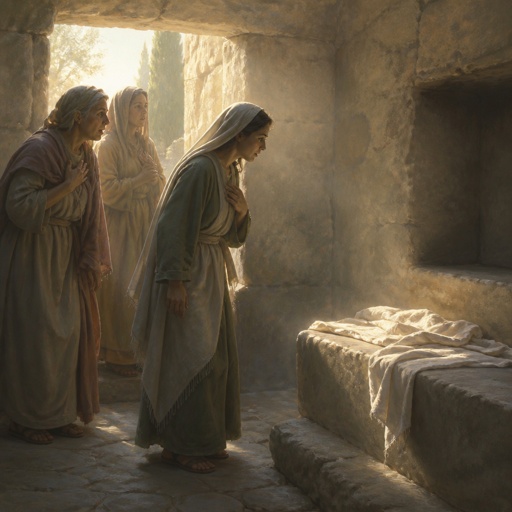
"And they entered in, and found not the body of the Lord Jesus." - Luke 24:3

Luke 3:24 - "Which was the son of Matthat, which was the son of Levi, which was the son of Melchi, which was the son of Janna, which was the son of Joseph,"

Psalm 24:3-4

Luke 21:24 And Kerusalem willbe trodden down by the Gentiles

Luke 3:1-6

Luke 3:1-6

luke 3:1-6

Luke 1:24 - "And after those days his wife Elisabeth conceived, and hid herself five months, saying,"

Luke 24:1 - "Now upon the first day of the week, very early in the morning, they came unto the sepulchre, bringing the spices which they had prepared, and certain others with them."

1 Kings 3:24 - "And the king said, Bring me a sword. And they brought a sword before the king."

Luke 24:42

Luke 13:24

luke 24:17

1 Chronicles 3:24 - "And the sons of Elioenai were, Hodaiah, and Eliashib, and Pelaiah, and Akkub, and Johanan, and Dalaiah, and Anani, seven."

Luke 24:8 - "And they remembered his words,"

LUKE 24:41-43

Luke 24:48 - "And ye are witnesses of these things."

1 Chronicles 24:3 - "And David distributed them, both Zadok of the sons of Eleazar, and Ahimelech of the sons of Ithamar, according to their offices in their service."

Luke 24:24 - "And certain of them which were with us went to the sepulchre, and found it even so as the women had said: but him they saw not."

Luke 23:24 - "And Pilate gave sentence that it should be as they required."
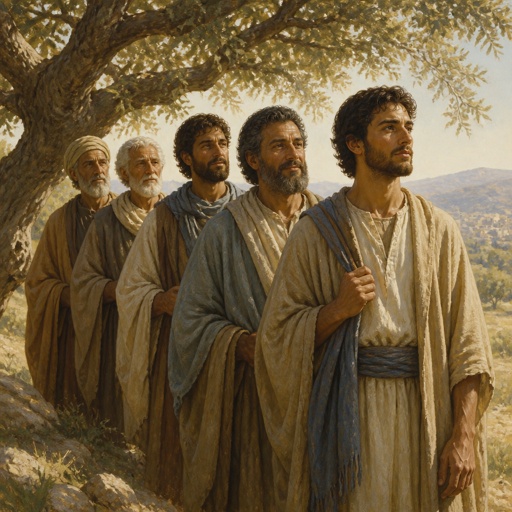
"Which was the son of Matthat, which was the son of Levi, which was the son of Melchi, which was the son of Janna, which was the son of Joseph," - Luke 3:24

Luke 24:45 - "Then opened he their understanding, that they might understand the scriptures,"

Luke 24:52 - "And they worshipped him, and returned to Jerusalem with great joy:"