What does Luke 3:28 mean?
“Which was the son of Melchi, which was the son of Addi, which was the son of Cosam, which was the son of Elmodam, which was the son of Er,” — Luke 3:28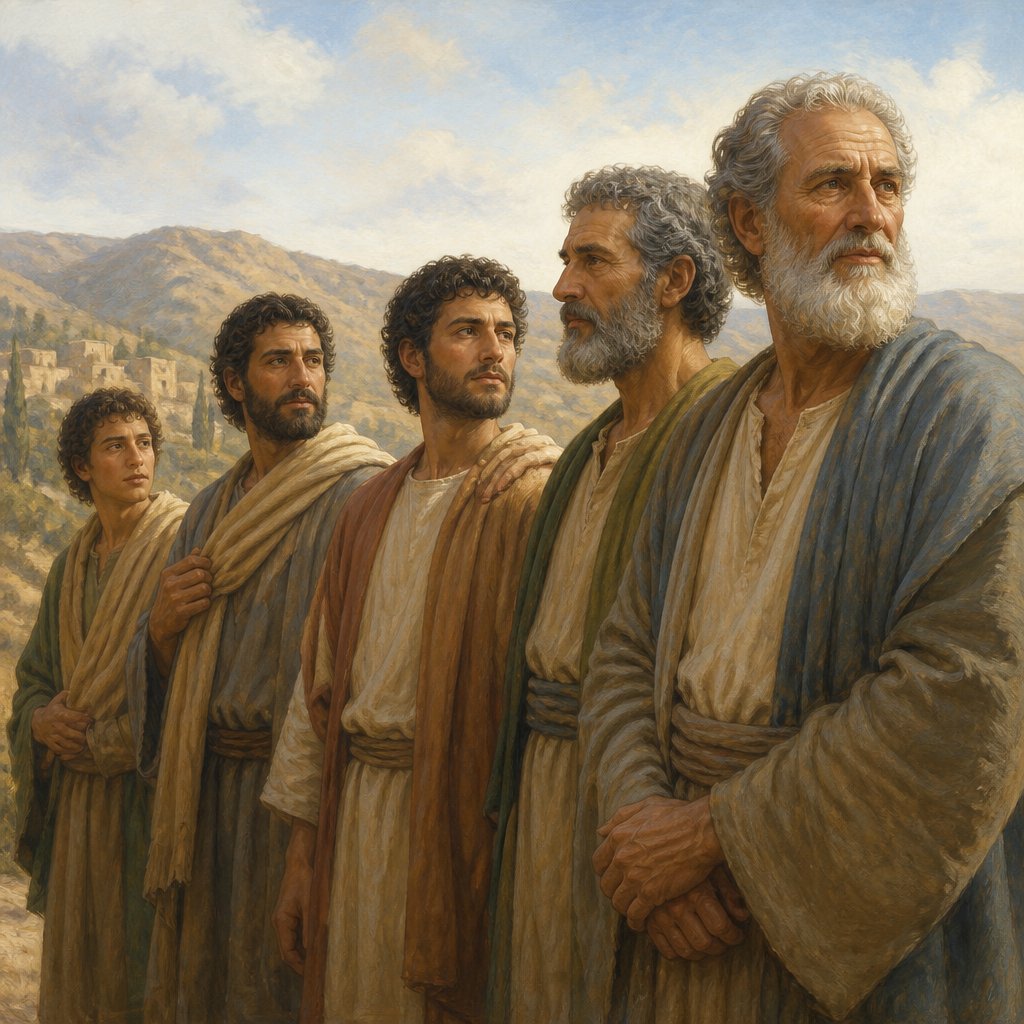
Luke 3:28 in the King James Version (KJV) of the Bible is a genealogy tracing the lineage of Jesus Christ. It reads, "the son of Melchi, which was the son of Addi, which was the son of Cosam, which was the son of Elmodam, which was the son of Er." While on the surface this verse may seem like a simple list of names, it is actually a crucial part of Luke's gospel and serves important theological and historical purposes.
The genealogy of Jesus is an important aspect of the New Testament as it establishes his lineage and his rightful claim to the throne of David. Matthew also provides a genealogy of Jesus, but it differs slightly from Luke's account. This has led to various interpretations and discussions among scholars, but it is generally believed that Matthew's genealogy traces Jesus' lineage through Joseph, while Luke's traces it through Mary.
Luke's genealogy is notable because it traces the descent of Jesus all the way back to Adam, the first man. This emphasizes Jesus' universal significance as the Savior of all humanity. It also links Jesus to the entire history of God's people, showing that he is the fulfillment of God's promises throughout the ages.
In Luke 3:28, the names mentioned are not well-known figures in biblical history, but each one plays a part in the larger narrative of God's redemptive plan. The mention of these names serves as a reminder that God works through ordinary people to accomplish his purpose. It emphasizes the continuity of God's plan throughout generations and the importance of every individual in the grand scheme of salvation history.
Furthermore, the genealogy in Luke's gospel also serves to highlight the humanity of Jesus. By tracing his lineage back to Adam, Luke emphasizes that Jesus is fully human, sharing in the same human condition and experience as all people. This is a crucial aspect of Christian theology, as it affirms that Jesus understands and empathizes with the struggles and challenges of human existence.
The use of genealogy also reflects the Jewish understanding of identity and belonging. In ancient Jewish culture, one's lineage was a crucial aspect of their identity, conveying their status, heritage, and connection to the covenant with God. By providing Jesus' genealogy, Luke is affirming his Jewish identity and his fulfillment of the promises made to the Jewish people.
The mention of specific names in Luke 3:28 also carries symbolic significance. While the meanings of these names may not be explicitly mentioned in the text, in biblical tradition, names often carry deeper meanings and serve as a reflection of an individual's character or destiny. This adds a layer of significance to the genealogy, highlighting the providential nature of God's plan and the unique role of each person in the unfolding of that plan.
Overall, Luke 3:28 and the genealogy of Jesus in Luke's gospel serve to emphasize Jesus' universal significance, his connection to the entire history of salvation, his humanity, and his fulfillment of God's promises. It is a reminder of the continuity of God's plan throughout generations and the significance of every individual in the divine narrative. This verse also underscores the theological and historical richness of the Gospel of Luke, providing a deeper understanding of Jesus and his role in the redemption of humanity.
Get our apps


Artwork for Luke 3:28

Luke 3:28 - "Which was the son of Melchi, which was the son of Addi, which was the son of Cosam, which was the son of Elmodam, which was the son of Er,"
"Which was the son of Melchi, which was the son of Addi, which was the son of Cosam, which was the son of Elmodam, which was the son of Er," - Luke 3:28

Luke 20:28

Luke 19:28

luke 13:28-37

Luke 13:28-27

Luke 13:28-27

Luke 9:28-45

Luke 13:28-27

luke 13:28-37

Luke 5:28 - "And he left all, rose up, and followed him."

Luke 22:28 - "Ye are they which have continued with me in my temptations."

Luke 4:28 - "And all they in the synagogue, when they heard these things, were filled with wrath,"

Luke 2:28 - "Then took he him up in his arms, and blessed God, and said,"

Luke 18:28 - "Then Peter said, Lo, we have left all, and followed thee."

Luke 11:28 - "But he said, Yea rather, blessed are they that hear the word of God, and keep it."

Job 28:3

Daniel 3:28

Job 28:3

Job 28:3

Luke 6:28 - "Bless them that curse you, and pray for them which despitefully use you."

Luke 17:28 - "Likewise also as it was in the days of Lot; they did eat, they drank, they bought, they sold, they planted, they builded;"

Luke 15:28 - "And he was angry, and would not go in: therefore came his father out, and intreated him."

Luke 19:28 - "¶ And when he had thus spoken, he went before, ascending up to Jerusalem."

Luke 10:28 - "And he said unto him, Thou hast answered right: this do, and thou shalt live."

2 Chronicles 28:3

Luke 23:28 - "But Jesus turning unto them said, Daughters of Jerusalem, weep not for me, but weep for yourselves, and for your children."

Luke 24:28 - "And they drew nigh unto the village, whither they went: and he made as though he would have gone further."

Luke 16:28 - "For I have five brethren; that he may testify unto them, lest they also come into this place of torment."

Luke 14:28 - "For which of you, intending to build a tower, sitteth not down first, and counteth the cost, whether he have sufficient to finish it?"