What does Luke 7:37 mean?
“And, behold, a woman in the city, which was a sinner, when she knew that Jesus sat at meat in the Pharisee’s house, brought an alabaster box of ointment,” — Luke 7:37
The Bible verse Luke 7:37 from the King James Version (KJV) reads, "And, behold, a woman in the city, which was a sinner, when she knew that Jesus sat at meat in the Pharisee's house, brought an alabaster box of ointment."
This verse comes from a larger passage in the Gospel of Luke, in which Jesus is invited to dine at the house of a Pharisee named Simon. While they are eating, a woman who is known to be a sinner in the city approaches Jesus and begins to anoint his feet with ointment. This action causes a stir among the other guests, who are taken aback by the fact that Jesus is allowing this woman, whose reputation precedes her, to touch him. Jesus then uses the opportunity to teach a powerful lesson about forgiveness and the grace of God.
The passage from Luke 7:36-50 is rich with themes and symbolism. One of the primary themes of this passage is the concept of forgiveness and grace. The woman who approaches Jesus is labeled as a sinner, likely a woman of ill repute, and her actions are scandalous in the eyes of the Pharisees. However, Jesus uses this moment to illustrate that no one is beyond the reach of God's forgiveness and love. He tells Simon a parable about two debtors, one who owes a small amount and one who owes a great amount, and how both debtors are forgiven by their creditor. Jesus then makes the point that the one who is forgiven much, loves much, emphasizing the woman's deep gratitude and love for God's grace.
Another important theme in this passage is the idea of true repentance and faith. The woman's actions symbolize her deep remorse for her sins and her faith in Jesus as the source of forgiveness. She displays humility, vulnerability, and great love in her actions, anointing Jesus' feet with her tears and wiping them with her hair. In contrast, Simon, the Pharisee, shows little hospitality or respect for Jesus. Jesus points out that the woman's actions demonstrate her faith and love, while Simon's lack of comparable actions reveals his lack of understanding and appreciation for God's grace.
There is also symbolism at play in the woman's gesture of anointing Jesus' feet with the alabaster box of ointment. In biblical times, anointing was a symbolic act used to signify consecration, dedication, and blessing. The use of the alabaster box of ointment—a costly and precious oil—symbolizes the woman's deep reverence for Jesus and her desire to honor him. Her act of anointing his feet with this expensive oil symbolizes her devotion and her acknowledgment of Jesus' worthiness.
The passage from Luke 7:36-50 serves as a reminder of the boundless nature of God's grace and forgiveness. It challenges us to examine our own hearts and attitudes towards those whom society may deem unworthy or undeserving of grace. It also prompts us to consider the depth of our own repentance and the sincerity of our faith. Just as the woman in the passage exhibited great love and gratitude for the forgiveness she received, we are called to approach God with a similar spirit of humility and love.
In conclusion, the story of the woman who anointed Jesus' feet in Luke 7:37 is a powerful illustration of the transformative power of grace, forgiveness, and true repentance. Through this passage, Jesus teaches us about the unfathomable depths of God's love and the importance of approaching him with a heart of humility and gratitude. It challenges us to examine our own attitudes towards forgiveness and reminds us that no one is beyond the reach of God's grace. Ultimately, this passage serves as a poignant reminder of the radical, transformative nature of God's love and forgiveness.
Get our apps


Artwork for Luke 7:37

Luke 7:37 - "And, behold, a woman in the city, which was a sinner, when she knew that Jesus sat at meat in the Pharisee's house, brought an alabaster box of ointment,"

Luke 7:37-38 - "And behold, a woman in the city who was a sinner, when she knew that Jesus was sitting at the table in the Pharisee's house, brought an alabaster flask of fragrant oil, and stood at His feet behind Him weeping; and she began to wash His feet with her tears, and wiped them with the hair of her head; and she kissed His feet and anointed them with the fragrant oil."

"And, behold, a woman in the city, which was a sinner, when she knew that Jesus sat at meat in the Pharisee's house, brought an alabaster box of ointment," - Luke 7:37
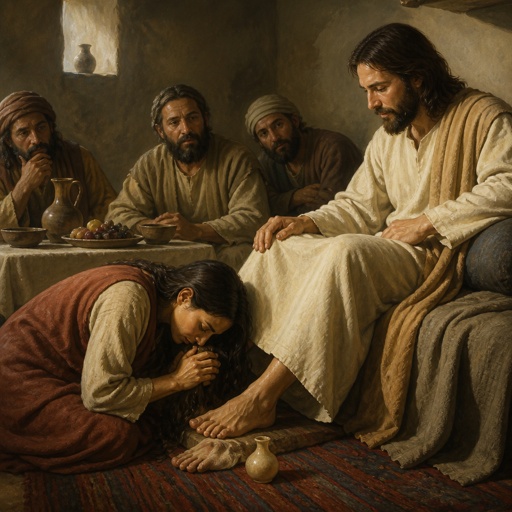
"And behold, a woman in the city who was a sinner, when she knew that Jesus was sitting at the table in the Pharisee's house, brought an alabaster flask of fragrant oil, and stood at His feet behind Him weeping; and she began to wash His feet with her tears, and wiped them with the hair of her head; and she kissed His feet and anointed them with the fragrant oil." - Luke 7:37-38

Luke 2:37

Luke 2:37

Luke 2:37

Luke 2:37

Luke 2:37

Luke (1:37) For nothing will be impossible with God.”

Luke (1:37) For nothing will be impossible with God.”

Luke (1:37) For nothing will be impossible with God.”

Luke (1:37) For nothing will be impossible with God.”

Luke (1:37) For nothing will be impossible with God.”

Luke (1:37) For nothing will be impossible with God.”

Luke (1:37) For nothing will be impossible with God.”

Luke (1:37) For nothing will be impossible with God.”

Luke (1:37) For nothing will be impossible with God.”

Luke (1:37) For nothing will be impossible with God.”

Luke (1:37) For nothing will be impossible with God.”

Luke (1:37) For nothing will be impossible with God.”

Luke (1:37) For nothing will be impossible with God.”

Luke (1:37) For nothing will be impossible with God.”

Luke (1:37) For nothing will be impossible with God.”

Luke (1:37) For nothing will be impossible with God.”

Luke (1:37) For nothing will be impossible with God.”

Luke (1:37) For nothing will be impossible with God.”

Luke (1:37) For nothing will be impossible with God.”

Luke (1:37) For nothing will be impossible with God.”

Luke (1:37) For nothing will be impossible with God.”