What does Malachi 4:2 mean?
“But unto you that fear my name shall the Sun of righteousness arise with healing in his wings; and ye shall go forth, and grow up as calves of the stall.” — Malachi 4:2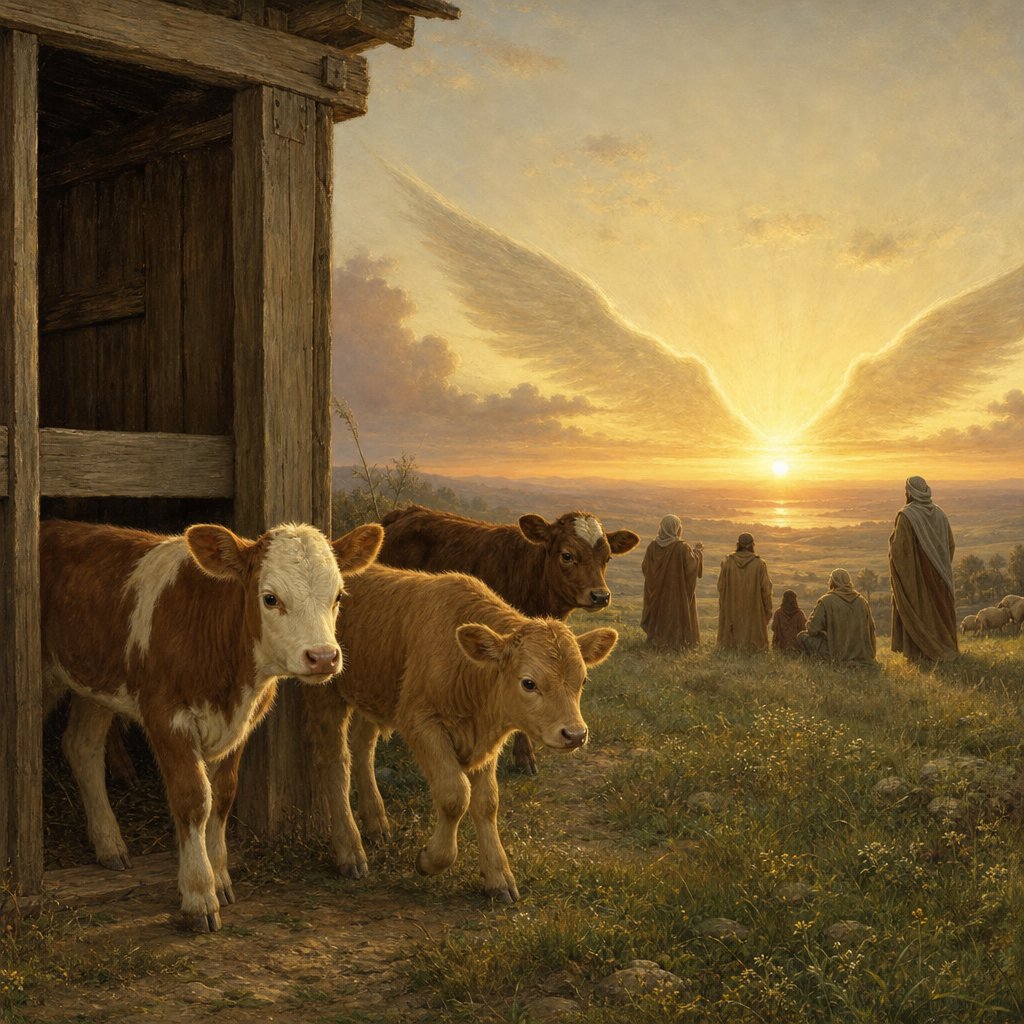
Malachi 4:2 in the KJV reads, “But unto you that fear my name shall the Sun of righteousness arise with healing in his wings; and ye shall go forth, and grow up as calves of the stall.” This sentence is spoken as a promise placed deliberately against the dark backdrop of the chapter’s opening words, where the Lord announces a coming “day” that will burn “as an oven” and leave the proud and wicked as “stubble” (Malachi 4:1). In that context, Malachi 4:2 functions as the bright counterpart to judgment: the same day that consumes evil will be experienced by the God-fearing as dawn, recovery, and release. The verse divides humanity not by power or status, but by spiritual posture—“unto you that fear my name”—a phrase that, in Malachi’s setting, describes those who revere the Lord, take Him seriously, and cling to His covenant even when the culture around them questions the profit of serving God (compare Malachi 3:14–18). The promise is not merely that God will do something, but that He will rise upon them, change their condition, and publicly vindicate their faith.
The first major image, “the Sun of righteousness,” gathers together themes of light, truth, and saving intervention. The “sun” is the great ruler of the day; it rises without being summoned by human strength, and it overcomes night simply by appearing. So the Lord declares that righteousness—His rightness, His just rule, His faithful keeping of covenant—will not remain hidden or delayed forever. It will “arise,” which implies both timing and certainty: there is an appointed morning when God’s righteousness will be manifest, not only as an abstract moral quality but as an active force that sets things right. In the immediate context of Malachi, where people complained that the arrogant seemed blessed and that evildoers appeared to escape (Malachi 3:15), “the Sun of righteousness” answers the discouragement: God’s justice is not absent; it is coming in a form as decisive as sunrise.
The second image, “with healing in his wings,” deepens the promise by moving from courtroom language (righteousness, vindication) to medical language (healing, restoration). “Healing” suggests more than comfort; it implies that something real has been wrong—woundedness, sickness, damage—and that God will mend it. In Malachi’s world this includes the spiritual weariness of those who felt forgotten, the moral corruption that had spread through priests and people, and the social harm created by faithlessness, injustice, and empty religion described earlier in the book (Malachi 1–3). The phrase “in his wings” is poetic and symbolic. It evokes the spreading rays of the sun like wings extending outward, carrying warmth and life to what was cold and barren. At the same time, “wings” naturally recalls the Biblical association of wings with protection and refuge, as when one seeks safety under covering wings. Without leaving the KJV, the verse invites you to see the Lord’s coming righteousness as both powerful and tender: it does not only expose and burn; it also covers and cures. The same divine appearing that is terror to hardened rebellion becomes health to humble reverence.
The final image, “and ye shall go forth, and grow up as calves of the stall,” portrays the effect of that healing on God’s people. “Go forth” implies release from confinement and fear, like an animal let out after being shut in. “Grow up” indicates flourishing—strength returning, life expanding. “Calves of the stall” suggests well-fed, protected young animals that, when turned loose, leap and thrive; the picture is one of energetic freedom and renewed vitality. In the prophetic setting, this is not merely about physical happiness but about restored life under God’s favor: those who feared His name will not remain crushed by the apparent triumph of evil or by the weight of delayed justice. They will step into a new state in which God’s righteousness is not only believed but seen, and in which their inward condition matches the outward reality of God’s reign.
The verse’s significance is heightened by how it fits into the closing movement of the Old Testament as arranged in the KJV. Malachi ends with expectancy: a coming “day,” a decisive divine intervention, and a call to remember the law of Moses (Malachi 4:4). Malachi 4:2 therefore functions as a final Old Testament portrait of hope for the faithful: a morning is coming when God’s righteousness will rise like the sun, bringing healing rather than harm to those who fear His name, and producing a transformed, liberated life. It assures the reverent that judgment is not the whole story; for them, the Lord’s appearing is not only an answer to wickedness, but a cure for the wounds that wickedness has caused, and a restoration into joyful strength.
Get our apps


Artwork for Malachi 4:2

Malachi 4:2 - "¶ But unto you that fear my name shall the Sun of righteousness arise with healing in his wings; and ye shall go forth, and grow up as calves of the stall."

"But unto you that fear my name shall the Sun of righteousness arise with healing in his wings; and ye shall go forth, and grow up as calves of the stall." - Malachi 4:2
"¶ But unto you that fear my name shall the Sun of righteousness arise with healing in his wings; and ye shall go forth, and grow up as calves of the stall." - Malachi 4:2

Malachi 2:4 - "And ye shall know that I have sent this commandment unto you, that my covenant might be with Levi, saith the LORD of hosts."

Malachi 4:1-2a

Malachi 4:1-2a

Malachi 4:4 - "¶ Remember ye the law of Moses my servant, which I commanded unto him in Horeb for all Israel, with the statutes and judgments."

Malachi 3:4 - "Then shall the offering of Judah and Jerusalem be pleasant unto the LORD, as in the days of old, and as in former years."

Malachi 4:5 - "¶ Behold, I will send you Elijah the prophet before the coming of the great and dreadful day of the LORD:"

Malachi 2:1 - "And now, O ye priests, this commandment is for you."

Malachi 4:6 - "And he shall turn the heart of the fathers to the children, and the heart of the children to their fathers, lest I come and smite the earth with a curse."

"And ye shall know that I have sent this commandment unto you, that my covenant might be with Levi, saith the LORD of hosts." - Malachi 2:4

Malachi 4:3 - "And ye shall tread down the wicked; for they shall be ashes under the soles of your feet in the day that I shall do this, saith the LORD of hosts."

"And now, O ye priests, this commandment is for you." - Malachi 2:1

Malachi 2:7 - "For the priest's lips should keep knowledge, and they should seek the law at his mouth: for he is the messenger of the LORD of hosts."

Malachi 2:12 - "The LORD will cut off the man that doeth this, the master and the scholar, out of the tabernacles of Jacob, and him that offereth an offering unto the LORD of hosts."

Malachi 2:5 - "My covenant was with him of life and peace; and I gave them to him for the fear wherewith he feared me, and was afraid before my name."
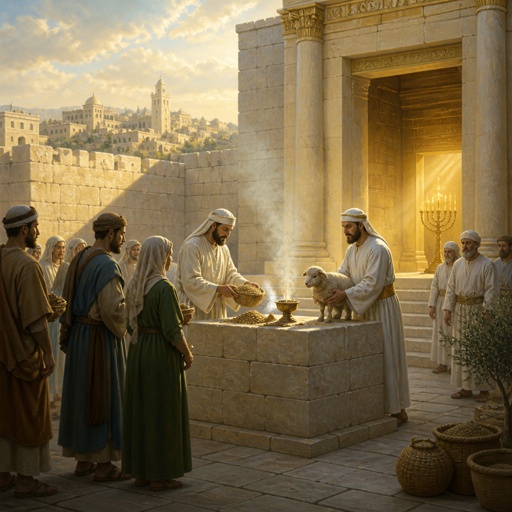
"Then shall the offering of Judah and Jerusalem be pleasant unto the LORD, as in the days of old, and as in former years." - Malachi 3:4

Malachi 3:2 - "But who may abide the day of his coming? and who shall stand when he appeareth? for he is like a refiner's fire, and like fullers' sope:"

Malachi 2:6 - "The law of truth was in his mouth, and iniquity was not found in his lips: he walked with me in peace and equity, and did turn many away from iniquity."

Malachi 2:8 - "But ye are departed out of the way; ye have caused many to stumble at the law; ye have corrupted the covenant of Levi, saith the LORD of hosts."

"¶ Remember ye the law of Moses my servant, which I commanded unto him in Horeb for all Israel, with the statutes and judgments." - Malachi 4:4

Malachi 2:3 - "Behold, I will corrupt your seed, and spread dung upon your faces, even the dung of your solemn feasts; and one shall take you away with it."

"¶ Behold, I will send you Elijah the prophet before the coming of the great and dreadful day of the LORD:" - Malachi 4:5

Malachi 2:13 - "And this have ye done again, covering the altar of the LORD with tears, with weeping, and with crying out, insomuch that he regardeth not the offering any more, or receiveth it with good will at your hand."

Malachi 2:9 - "Therefore have I also made you contemptible and base before all the people, according as ye have not kept my ways, but have been partial in the law."

Malachi 2:11 - "¶ Judah hath dealt treacherously, and an abomination is committed in Israel and in Jerusalem; for Judah hath profaned the holiness of the LORD which he loved, and hath married the daughter of a strange god."

Malachi 2: For Judah has profaned The Lord’s holy institution which He loves: He has married the daughter of a foreign god.

Malachi 4:5-6 - "Behold, I will send you Elijah the prophet before the coming of the great and dreadful day of the LORD: And he shall turn the heart of the fathers to the children, and the heart of the children to their fathers, lest I come and smite the earth with a curse."

Malachi 4:1 - "For, behold, the day cometh, that shall burn as an oven; and all the proud, yea, and all that do wickedly, shall be stubble: and the day that cometh shall burn them up, saith the LORD of hosts, that it shall leave them neither root nor branch."