What does Mark 10:18 mean?
“And Jesus said unto him, Why callest thou me good? there is none good but one, that is, God.” — Mark 10:18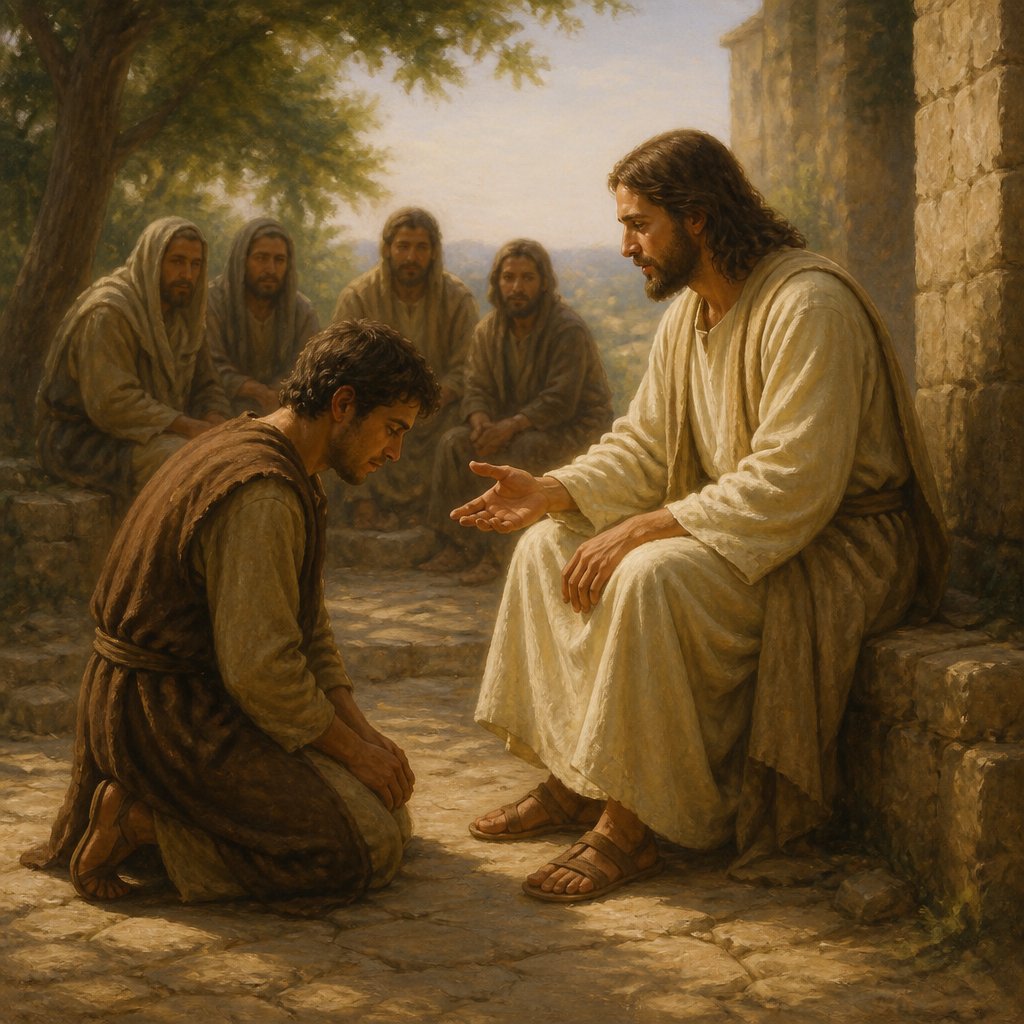
The Bible verse Mark 10:18 in the King James Version (KJV) reads, "And Jesus said unto him, Why callest thou me good? there is none good but one, that is, God."
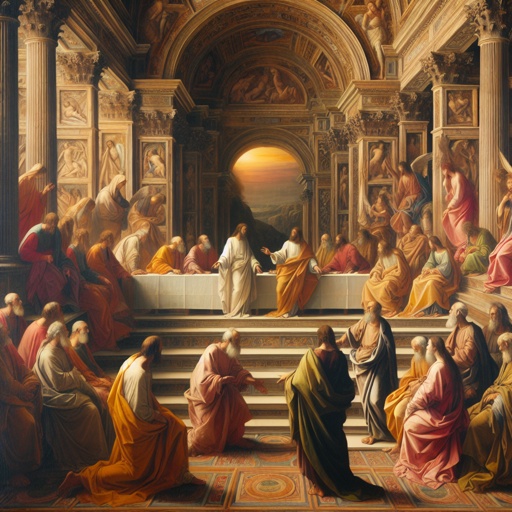
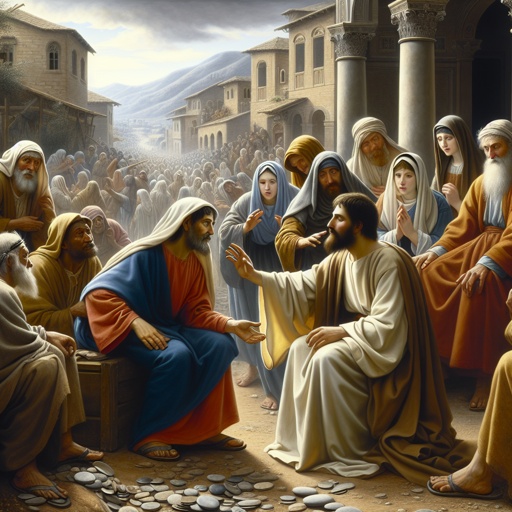
This verse is part of a passage in the Gospel of Mark where a rich young ruler approaches Jesus and asks what he must do to inherit eternal life. Jesus responds by telling him to keep the commandments; the young man claims he has kept them all since his youth. Jesus then looks at him and loves him, and instructs him to sell all that he has, give the money to the poor, and follow him. The young ruler leaves sorrowful, because he is very rich and cannot bring himself to part with his possessions.
It's within this context that Jesus makes the statement in Mark 10:18. Jesus is challenging the ruler's understanding of what it means to be "good." This verse is a profound statement about the nature of goodness and perfection, and it reveals important truths about the character of God and the human condition.
In this verse, Jesus questions the man's use of the word "good" when addressing him. He redirects the man's attention away from himself and towards God. He is making the point that goodness is not an attribute that can be truly ascribed to any human being, including himself. In doing so, Jesus is pointing to the divine nature of God as the only source of true goodness and perfection. This challenges the ruler's assumption that he has already achieved goodness through his own efforts and observance of the commandments.
The verse also highlights the fact that Jesus, as the Son of God, is ultimately pointing to God the Father as the source of all goodness. By emphasizing that only God is truly good, Jesus is teaching an important theological truth about the nature of God. This is consistent with the broader biblical teaching that attributes such as righteousness, holiness, and perfection are qualities that belong to God alone.
Symbolically, this verse serves to illustrate the incomparable nature of God's goodness. It underscores the inherent limitations of human goodness and underscores the need for divine grace and intervention in the lives of individuals. It also points to the fact that true goodness is found in relationship with God, rather than in human achievement or merit.
The broader theme of this passage in the Gospel of Mark is the contrast between worldly wealth and spiritual riches. The rich young ruler's attachment to his possessions serves as a barrier to entering the kingdom of God. Jesus' response challenges the notion that material wealth and adherence to religious laws are sufficient for salvation. Instead, Jesus calls for complete surrender and allegiance to God, even at the cost of one's earthly possessions.
The context of this verse also sheds light on the human condition and our inherent need for God's grace. The rich young ruler's inability to part with his wealth reflects the common human struggle with idolatry and the tendency to prioritize earthly treasures over spiritual riches. This passage serves as a reminder of the radical demands of discipleship and the all-encompassing claims of the kingdom of God.
In conclusion, Mark 10:18 is a pivotal verse that delves into profound theological truths about the nature of goodness and the character of God. It challenges human assumptions about righteousness and highlights the incomparable nature of God's perfection. This verse also contributes to the broader themes of wealth, discipleship, and the necessity of divine grace for salvation. Ultimately, it reminds believers of the central importance of God's goodness and the limitations of human merit.
Get our apps


Artwork for Mark 10:18

Mark 10:18 - "And Jesus said unto him, Why callest thou me good? there is none good but one, that is, God."
"And Jesus said unto him, Why callest thou me good? there is none good but one, that is, God." - Mark 10:18

Mark 10
Mark 10
Mark 10
Mark 10

Mark 2:10
Mark 10:46

Mark 10:31

Mark 10:10 - "And in the house his disciples asked him again of the same matter."
Mark 10:46

Mark 10:46

Mark 1:18 - "And straightway they forsook their nets, and followed him."

Mark 13:18 - "And pray ye that your flight be not in the winter."
Mark 15:18 - "And began to salute him, Hail, King of the Jews!"

Mark 4:18 - "And these are they which are sown among thorns; such as hear the word,"

Mark 10:35-45

Mark 10:17-30

Mark 10:35-45

Mark 10:13–16

Mark 10:17-30

Mark 10:35-45

Mark 10:35-45

Revelation 13:18 Mark of the Beast 666

Mark 10:44 - "And whosoever of you will be the chiefest, shall be servant of all."

Mark 12:18 - "¶ Then come unto him the Sadducees, which say there is no resurrection; and they asked him, saying,"

Mark 10:31 - "But many that are first shall be last; and the last first."

Mark 13:10 - "And the gospel must first be published among all nations."

Mark 8:18 - "Having eyes, see ye not? and having ears, hear ye not? and do ye not remember?"

Job 18:2 - "How long will it be ere ye make an end of words? mark, and afterwards we will speak."