What does Mark 12:21 mean?
“And the second took her, and died, neither left he any seed: and the third likewise.” — Mark 12:21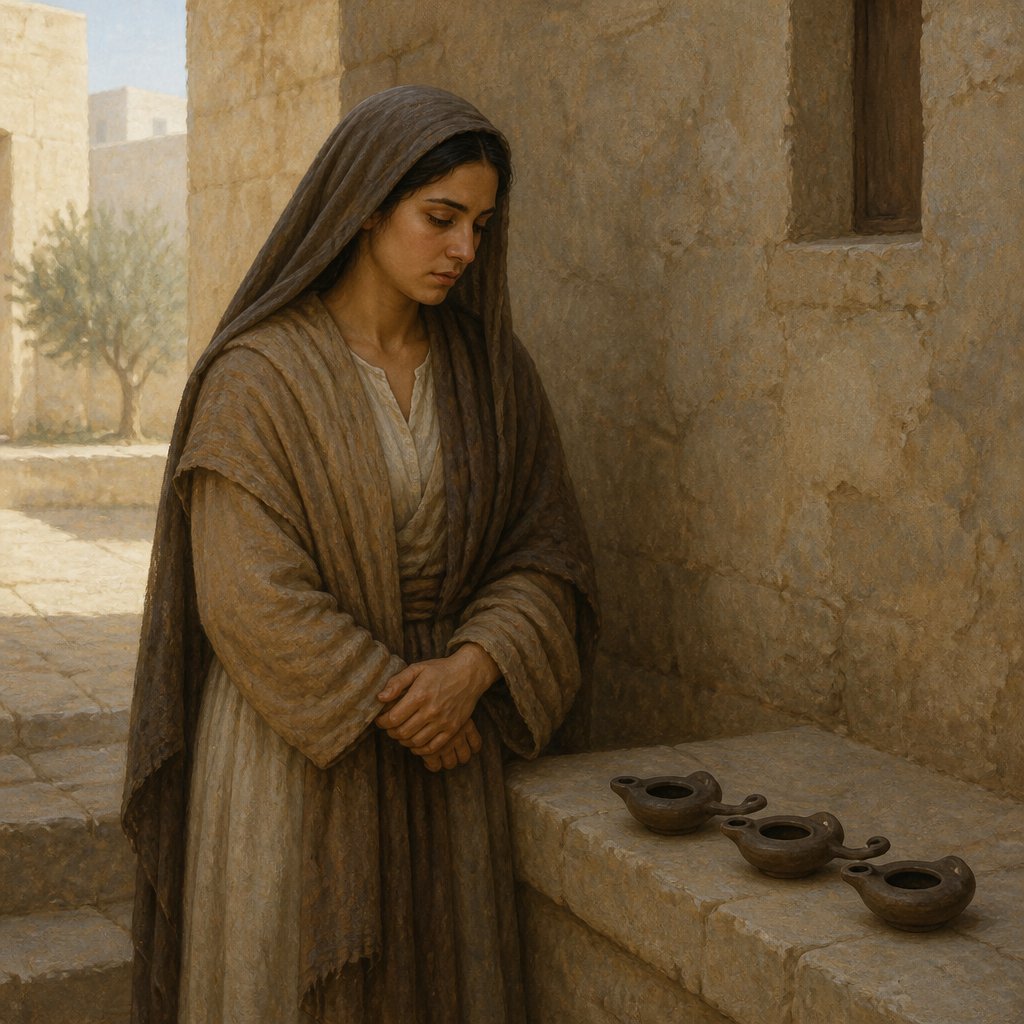
Mark 12:21 is a verse found in the New Testament of the Bible, specifically in the Gospel of Mark. This verse is part of a larger passage in which Jesus engages in a discussion with a group of Sadducees, who were a sect of Jewish religious leaders known for their denial of the resurrection of the dead. In this particular passage, the Sadducees are trying to trick Jesus with a hypothetical scenario in order to discredit his teachings on the resurrection. They present a hypothetical situation in which a woman marries seven brothers, each of whom dies without producing any children. They ask Jesus whose wife she will be at the resurrection.
In this context, Mark 12:21 quotes Jesus' response to the Sadducees' question. The verse reads in the King James Version (KJV): "And the second took her, and died, neither left he any seed: and the third likewise." This response is part of Jesus' explanation that in the afterlife, there is no marriage or giving in marriage. Instead, those who are deemed worthy to attain the resurrection from the dead will be "as the angels which are in heaven" (Mark 12:25, KJV).
The verse holds significance in several ways. First and foremost, it serves to authenticate Jesus' teachings on the afterlife and the resurrection of the dead. Rather than being swayed by the cunning question of the Sadducees, Jesus uses their question as an opportunity to teach an important truth about the nature of the afterlife. By affirming that there is no marriage or giving in marriage in the resurrection, Jesus is emphasizing that the afterlife is a state beyond the earthly institutions of marriage and procreation.
Furthermore, the verse underscores the authority and wisdom of Jesus as a teacher and a religious leader. The Sadducees, who were well-versed in Jewish law and theology, were unable to stump Jesus with their sophisticated hypothetical scenario. Instead, Jesus skillfully navigates their question and offers a compelling and authoritative response that reveals his profound understanding of divine truths.
Additionally, the verse speaks to the broader themes of the Kingdom of God and the transformative nature of the afterlife. By referencing the idea that those who are resurrected will be "as the angels which are in heaven," Jesus is pointing to the higher and transcendent state of being that awaits believers in the afterlife. This aligns with Jesus' teachings throughout the Gospels about the Kingdom of God and the new, transformed reality that will be ushered in through his redemptive work.
Symbolically, the verse serves as a reminder of the limitations and impermanence of earthly institutions and relationships. Marriage, a sacred and foundational institution in many societies, is presented as a temporal arrangement that ceases to exist in the afterlife. This symbolic representation underscores the eternal and transcendent nature of the Kingdom of God, where earthly conventions give way to a higher spiritual reality.
In conclusion, Mark 12:21 is a verse that holds deep theological and spiritual significance within the context of Jesus' teachings on the afterlife and the Kingdom of God. It reaffirms the authority and wisdom of Jesus as a teacher, while also highlighting the transformative nature of the afterlife and the limitations of earthly institutions. As believers reflect on this verse, they are encouraged to set their sights on the eternal Kingdom of God, where earthly conventions give way to a higher spiritual reality.
Get our apps


Artwork for Mark 12:21

Mark 12:21 - "And the second took her, and died, neither left he any seed: and the third likewise."
"And the second took her, and died, neither left he any seed: and the third likewise." - Mark 12:21

Matthew 2:1-2

Genesis 2:1-2

Genesis 2:1-2

Mark 12:8

Mark 12:8

Mark 15:12

mark 2:1-12

Mark 12:41 - 44
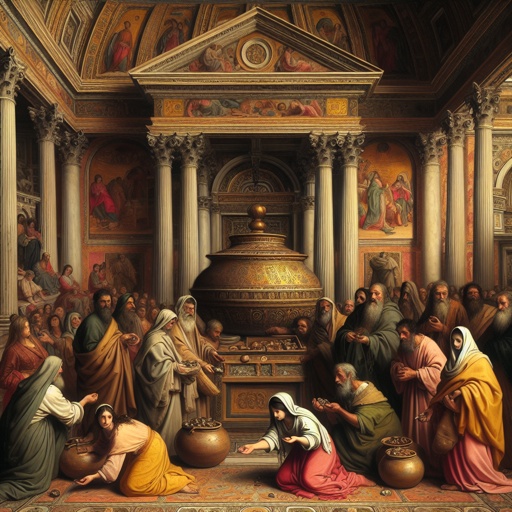
Mark 12:41 - 44

Mark 12:41 - 44

Mark 2:1-12

Mark 12:41 - 44

Mark 12:41 - 44

Mark 8:21 - "And he said unto them, How is it that ye do not understand?"

Mark 12:11 - "This was the Lord's doing, and it is marvellous in our eyes?"

Job 21:5 - "Mark me, and be astonished, and lay your hand upon your mouth."

Mark 1:21 - "And they went into Capernaum; and straightway on the sabbath day he entered into the synagogue, and taught."

Mark 1:12 - "And immediately the Spirit driveth him into the wilderness."

Mark 2:21-22 - "Mark 2:21-22 No one sews a patch of unshrunk cloth on an old garment. Otherwise, the new piece will pull away from the old, making the tear worse. And no one pours new wine into old wineskins. Otherwise, the wine will burst the skins, and both the wine and the wineskins will be ruined. No, they pour new wine into new wineskins."

Mark 12:39 - "And the chief seats in the synagogues, and the uppermost rooms at feasts:"
Mark 6:12 - "And they went out, and preached that men should repent."

Mark 7:21 - "For from within, out of the heart of men, proceed evil thoughts, adulteries, fornications, murders,"

Mark 3:12 - "And he straitly charged them that they should not make him known."

Mark 12:3 - "And they caught him, and beat him, and sent him away empty."

Mark 13:21 - "And then if any man shall say to you, Lo, here is Christ; or, lo, he is there; believe him not:"

Acts 12:12 - "And when he had considered the thing, he came to the house of Mary the mother of John, whose surname was Mark; where many were gathered together praying."

Mark 12:12 - "And they sought to lay hold on him, but feared the people: for they knew that he had spoken the parable against them: and they left him, and went their way."

Mark 11:12 - "¶ And on the morrow, when they were come from Bethany, he was hungry:"