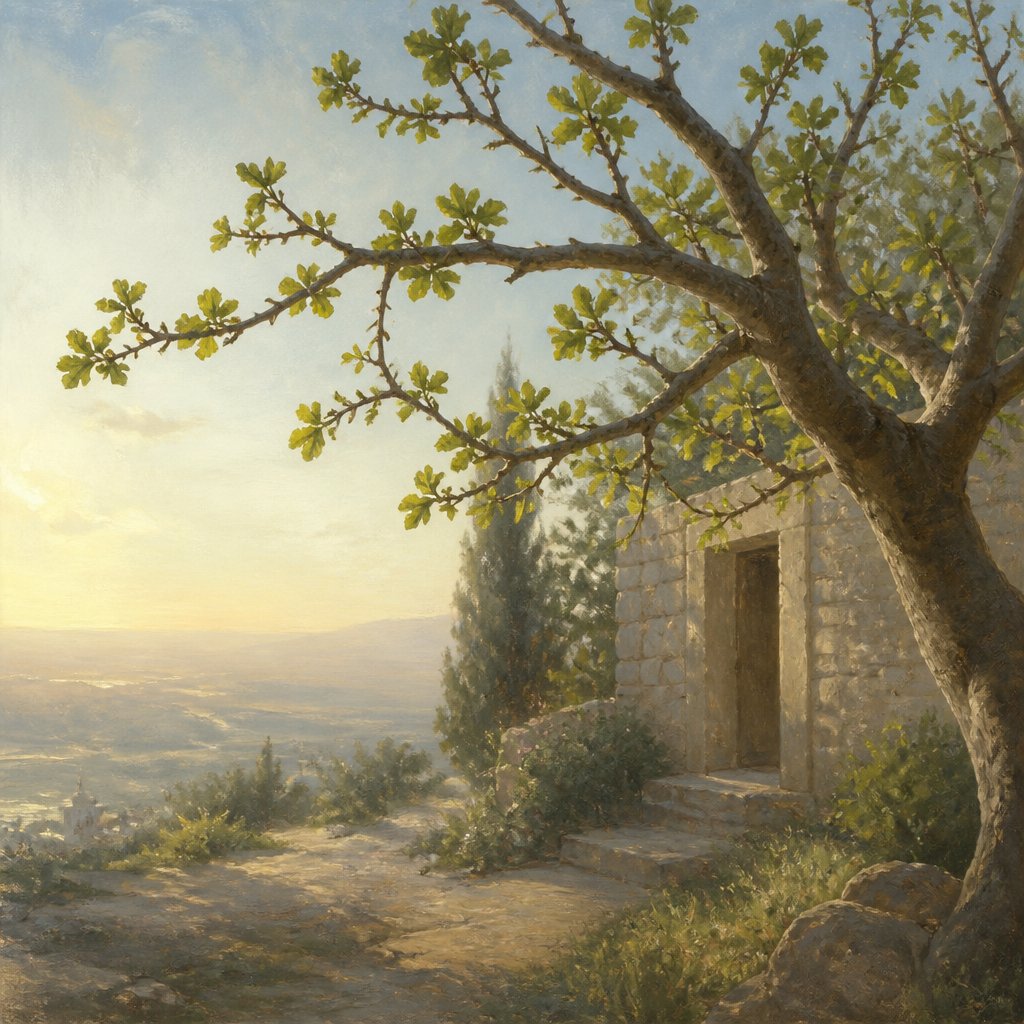
Mark 13:28-31 (KJV) reads: "Now learn a parable of the fig tree; When her branch is yet tender, and putteth forth leaves, ye know that summer is near: So ye in like manner, when ye shall see these things come to pass, know that it is nigh, even at the doors. Verily I say unto you, that this generation shall not pass, till all these things be done. Heaven and earth shall pass away: but my words shall not pass away."
This passage is part of a larger discourse in the Gospel of Mark known as the "Olivet Discourse," which occurs as Jesus speaks with his disciples on the Mount of Olives. In this specific section, Jesus is discussing the signs of the end times and the coming of the Son of Man. He uses the imagery of the fig tree to illustrate the certainty and imminence of these events.
The parable of the fig tree is a familiar idiom in the Bible, often used to symbolize the nation of Israel. In this case, Jesus uses the fig tree to illustrate the signs that will precede his return. When the disciples see a fig tree budding, they know that summer is near. In the same way, when they witness certain "things come to pass," such as the tribulations and upheavals that Jesus has described earlier in the chapter, they will know that the end is near.
The mention of "this generation" not passing away until all these things be done has led to much debate among scholars and theologians. Some interpret it as a reference to the generation living at the time of Jesus' ministry, suggesting that the end times would occur within their lifetimes. Others see it as a broader declaration, referring to the enduring relevance and applicability of Jesus' words across generations. Regardless, the emphasis is on the certainty and imminence of these events.
The passage concludes with a powerful statement about the enduring nature of Jesus' words. Jesus affirms that heaven and earth may pass away, but his words will endure forever. This assertion reinforces the authority and reliability of Jesus' teachings, as well as the certainty of the events he has foretold.
One of the central themes of this passage is the certainty of the events surrounding the end times. Jesus uses the illustration of the fig tree to emphasize the unmistakable signs that will herald his return. This serves as a reassurance to his disciples and to subsequent believers that the fulfillment of God's promises is certain and unwavering.
Another theme is the enduring nature of Jesus' words. In a world of uncertainty and change, Jesus provides a rock-solid foundation through his teachings. This assertion speaks to the eternal truth and authority of the message he brings, offering hope and stability to those who put their trust in him.
The context of this passage is crucial to understanding its significance. Jesus' discourse on the Mount of Olives occurs in the lead-up to his crucifixion, as he prepares his disciples for the events that will unfold. In this specific section, he addresses the future and the culmination of God's plan for redemption. The sense of urgency and imminence is palpable, as Jesus implores his followers to be prepared for the coming of the Son of Man.
In terms of symbolism, the fig tree represents not only the nation of Israel but also serves as a metaphor for the signs of the times. The budding of the fig tree signifies the unmistakable indicators that Jesus' followers should be alert to. This imagery underscores the need for vigilance and readiness as they await the fulfillment of God's purposes.
In summary, Mark 13:28-31 conveys a message of certainty and assurance in the face of the events that will precede the return of Christ. It underscores the reliability of Jesus' teachings and the imminence of his promised return. This passage continues to serve as a source of hope and encouragement for believers, reminding them of the unwavering nature of God's plans and the enduring truth of Jesus' words.
Get our apps


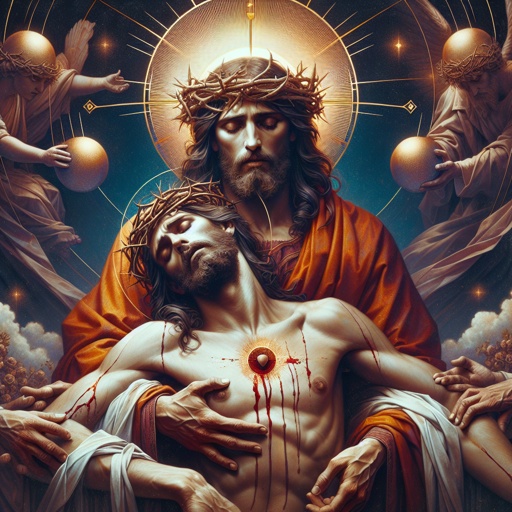
Artwork for Mark 13:28-31

Mark 13:28-31 - "Now learn this lesson from the fig tree: As soon as its twigs get tender and its leaves come out, you know that summer is near. Even so, when you see these things happening, you know that it is near, right at the door. Truly I tell you, this generation will certainly not pass away until all these things have happened. Heaven and earth will pass away, but my words will never pass away."
"Now learn this lesson from the fig tree: As soon as its twigs get tender and its leaves come out, you know that summer is near. Even so, when you see these things happening, you know that it is near, right at the door. Truly I tell you, this generation will certainly not pass away until all these things have happened. Heaven and earth will pass away, but my words will never pass away." - Mark 13:28-31

Mark 13:28-37

Mark 13:28-37

Mark 13:28-37

Mark 13:28-37

Mark 13:31 - "Heaven and earth shall pass away: but my words shall not pass away."

Mark 13:28 - "Now learn a parable of the fig tree; When her branch is yet tender, and putteth forth leaves, ye know that summer is near:"
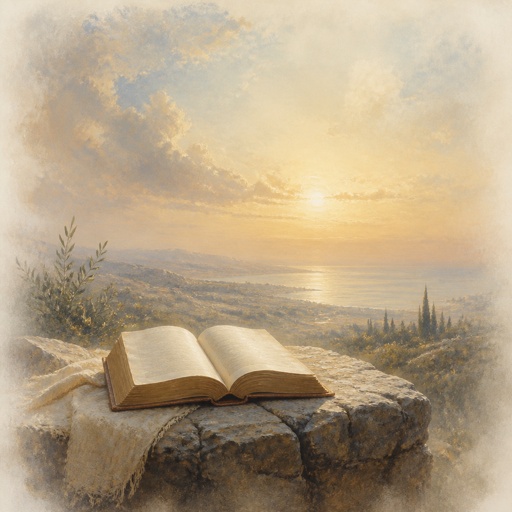
"Heaven and earth shall pass away: but my words shall not pass away." - Mark 13:31

1 John 3:1-3

Mark 10:31

Proverbs:31:28

Mark 7:31-37

Mark 3:31-34

Mark 7:31-37

Altar rebuilt in Jerusalem. Ezra 3:1-3

Exodus 28:31-43

Exodus 28:31-34

Exodus 28:31-43

Exodus 28:31-34

Exodus 28:31-34

Mark 10:31 - "But many that are first shall be last; and the last first."

Mark 2:28 - "Therefore the Son of man is Lord also of the sabbath."

Exodus 28:31 - "¶ And thou shalt make the robe of the ephod all of blue."

Mark 15:28 - "And the scripture was fulfilled, which saith, And he was numbered with the transgressors."
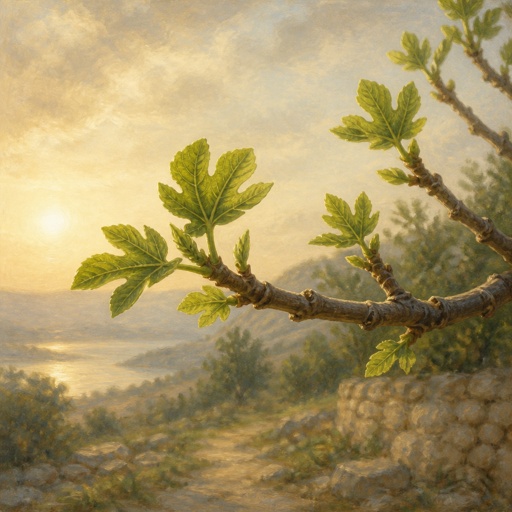
"Now learn a parable of the fig tree; When her branch is yet tender, and putteth forth leaves, ye know that summer is near:" - Mark 13:28

Mark 13;28-37

Mark 13:7

Mark 13:8
Mark 13:8