What does Mark 2:7 mean?
“Why doth this man thus speak blasphemies? who can forgive sins but God only?” — Mark 2:7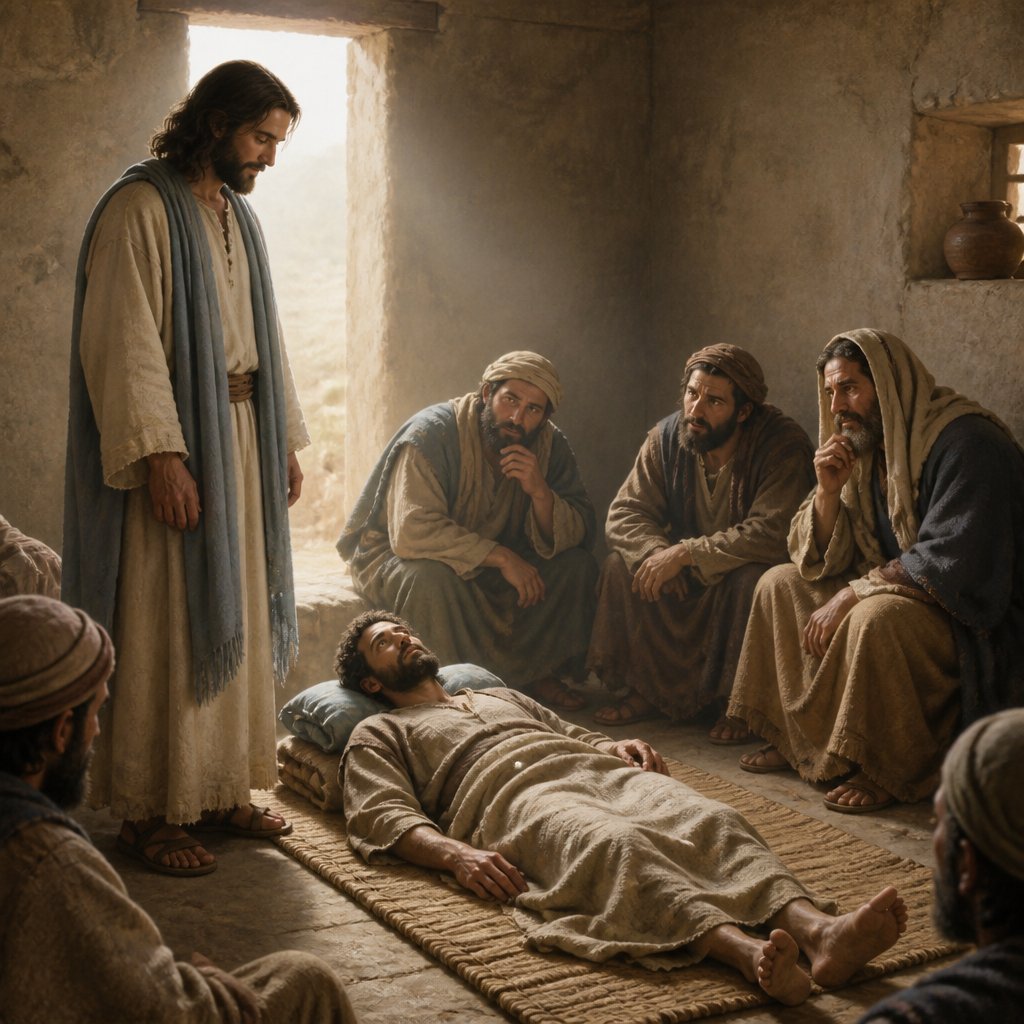
The bible verse Mark 2:7 in the King James Version (KJV) states, "Why doth this man thus speak blasphemies? who can forgive sins but God only?" This verse is part of a larger passage in the New Testament that describes Jesus healing a paralyzed man. The Pharisees and scribes, who were religious leaders of the time, were present and questioned Jesus' authority to forgive sins.
The verse carries significant meaning in the context of the passage and provides insights into the themes of faith, authority, and the divinity of Jesus Christ. This verse also holds profound symbolism relating to the nature of Jesus and the power of God.
One of the central themes of this passage is faith. The paralyzed man's friends had faith that Jesus could heal him, so they went to great lengths to bring him to Jesus, even lowering the man through the roof of the house where Jesus was teaching. This act of faith is mirrored by the faith of the woman who touched Jesus' garment and was healed in the preceding verses. The question posed by the Pharisees and scribes demonstrates their lack of faith in Jesus' power and authority to forgive sins. Their doubt and skepticism stand in stark contrast to the unwavering faith of the paralyzed man and his friends.
Another important theme in this verse is authority. The Pharisees and scribes were questioning Jesus' authority to forgive sins, as they believed that only God had the power to do so. By posing this question, they were challenging Jesus' status as a religious figure. In response, Jesus not only forgave the man's sins but also demonstrated his authority by healing the man's paralysis, proving that he had the power to both forgive and heal. This display of authority signifies Jesus' divinity and his unique role as the Son of God.
The verse also holds symbolic significance in its portrayal of Jesus. The Pharisees and scribes' question about blasphemy and forgiveness of sins highlights the fundamental difference between their understanding of Jesus and his true nature. Their perception of Jesus as a mere mortal is contrasted with the reality of his divine nature. Jesus' ability to forgive sins and perform miracles signifies his role as the Savior and the embodiment of God's love and mercy.
Furthermore, the verse underscores the exclusivity of Jesus' authority in forgiving sins. In biblical context, forgiveness of sins was a privilege reserved only for God, emphasizing the significance of Jesus' divine nature. This exclusivity serves as a powerful testament to Jesus' role as the mediator between God and humanity, offering forgiveness and reconciliation to those who believe in him.
Overall, Mark 2:7 in the King James Version encapsulates crucial themes of faith, authority, and the divinity of Jesus Christ. It offers profound insights into the nature of Jesus and the significance of his role as the Son of God. The verse serves as a reminder of the unwavering faith that is required to fully understand and accept Jesus' authority and divine nature. It also challenges us to consider our own beliefs and perceptions of Jesus, urging us to place our trust in his power to forgive and redeem.
Get our apps


Artwork for Mark 2:7
Mark 2:7 - "Why doth this man thus speak blasphemies? who can forgive sins but God only?"
"Why doth this man thus speak blasphemies? who can forgive sins but God only?" - Mark 2:7

Mark 7:2 - "And when they saw some of his disciples eat bread with defiled, that is to say, with unwashen, hands, they found fault."

Mark 13:7

Mark 13:7

Mark 8:7

Mark 13:7

Mark 7:7 - "Howbeit in vain do they worship me, teaching for doctrines the commandments of men."

Mark 7:31-37

Mark 7:31-37

Mark 2:2

Mark 7:7 (KJVA) 7 Howbeit in vain do they worship me, teaching for doctrines the commandments of men.

Mark 7:7 (KJVA) 7 Howbeit in vain do they worship me, teaching for doctrines the commandments of men.

Mark 7:7 (KJVA) 7 Howbeit in vain do they worship me, teaching for doctrines the commandments of men.

Mark 7:7 (KJVA) 7 Howbeit in vain do they worship me, teaching for doctrines the commandments of men.
"And when they saw some of his disciples eat bread with defiled, that is to say, with unwashen, hands, they found fault." - Mark 7:2

Mark 7:7 (KJVA) 7 Howbeit in vain do they worship me, teaching for doctrines the commandments of men.

Mark 7:7 (KJVA) 7 Howbeit in vain do they worship me, teaching for doctrines the commandments of men.

Mark 7:7 (KJVA) 7 Howbeit in vain do they worship me, teaching for doctrines the commandments of men.

Mark 7:16 - "If any man have ears to hear, let him hear."

Mark 7:20 - "And he said, That which cometh out of the man, that defileth the man."

Mark 2

Mark 2

Mark 7:23 - "All these evil things come from within, and defile the man."

Mark 9:2 Show only 4 people Show a mountain area According to Mark 9:2

Mark 7:7 Howbeit in vain do they worship me, teaching for doctrines the commandments of men.

Mark 7:34 - "And looking up to heaven, he sighed, and saith unto him, Ephphatha, that is, Be opened."

Mark 4:7 - "And some fell among thorns, and the thorns grew up, and choked it, and it yielded no fruit."

Mark 10:7 - "For this cause shall a man leave his father and mother, and cleave to his wife;"

mark 2:4