What does Mark 3:2 mean?
“And they watched him, whether he would heal him on the sabbath day; that they might accuse him.” — Mark 3:2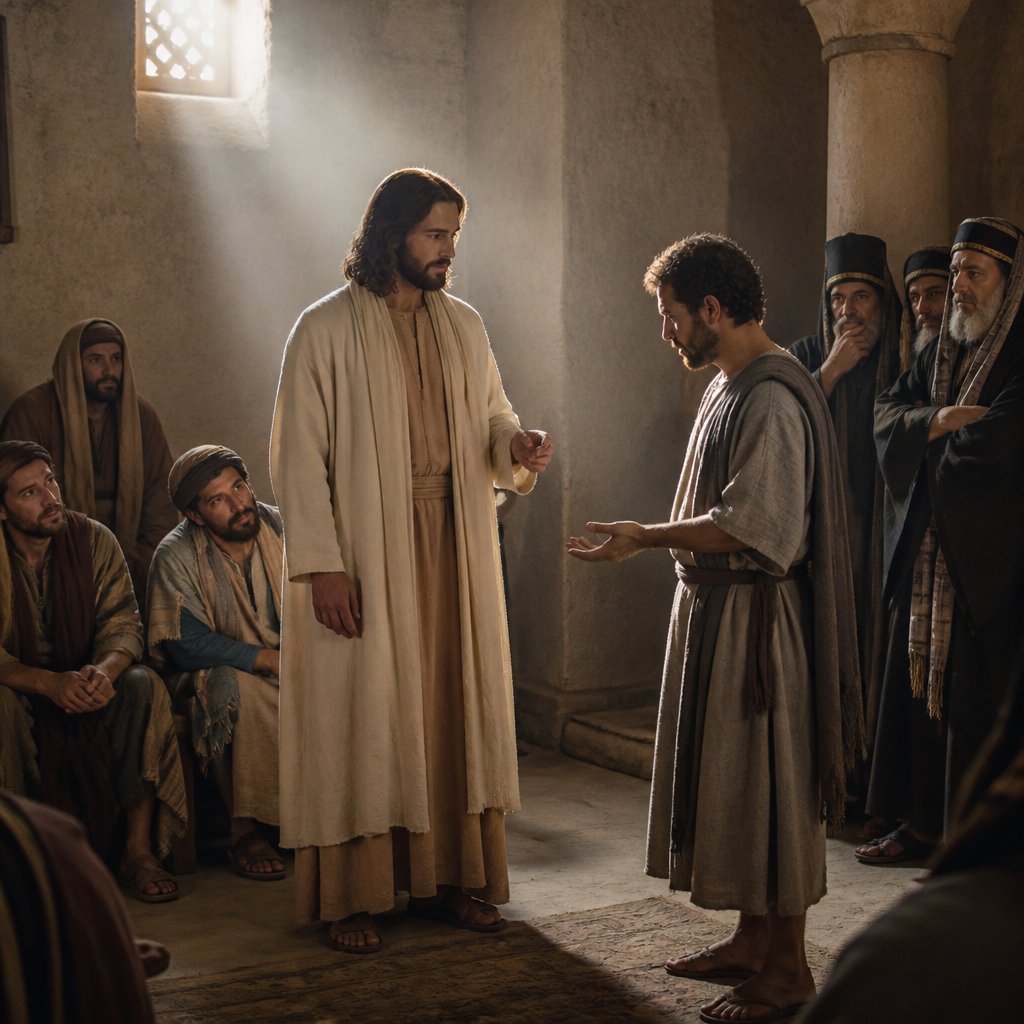
Mark 3:2 in the King James Version of the Bible reads, "And they watched him, whether he would heal him on the sabbath day; that they might accuse him."
This verse is part of a larger passage in the Gospel of Mark in which Jesus heals a man with a withered hand on the Sabbath. The Pharisees and religious leaders are watching Jesus closely, waiting to see if he will break their Sabbath laws by healing on the holy day. Their motivation, however, is not concern for upholding the law, but rather to find an opportunity to accuse Jesus of wrongdoing. This passage is significant for several reasons and holds rich meaning for believers.
One of the themes present in this passage is the conflict between the religious establishment and Jesus. Throughout the Gospels, we see Jesus challenging the traditions and interpretations of the Jewish religious leaders. In this particular instance, Jesus is challenging their understanding of the Sabbath. The religious leaders had added numerous rules and regulations to the Sabbath, turning it into a burden rather than a blessing. Jesus' act of healing on the Sabbath challenges their legalistic approach and demonstrates his authority over the Sabbath.
Another theme present in this passage is the compassion and mercy of Jesus. Despite the watching eyes of the religious leaders and the potential for accusation, Jesus chooses to heal the man with the withered hand. This act of healing demonstrates Jesus' concern for the physical well-being of individuals and his willingness to show mercy, even in the face of opposition. It is a reminder to believers of Jesus' compassion and willingness to extend grace in the face of legalistic or judgmental attitudes.
The context of this passage is also important for understanding its significance. In the larger narrative of the Gospel of Mark, we see Jesus repeatedly clashing with the religious leaders over matters of tradition, law, and interpretation. This particular instance of healing on the Sabbath serves as a microcosm of the broader conflict between Jesus and the religious establishment. It sets the stage for the ongoing tension that will ultimately lead to Jesus' crucifixion.
In terms of symbolism, the withered hand itself can be seen as symbolic of the brokenness and need for healing that all individuals experience. The man with the withered hand represents all who are in need of restoration, whether it be physical, emotional, or spiritual. Jesus' healing of the man's hand serves as a symbol of his ability to bring wholeness and restoration to all who come to him in faith.
Overall, Mark 3:2 and the surrounding passage carry important theological and practical implications for believers. They highlight the conflict between legalism and grace, the compassionate nature of Jesus, and his authority over traditional religious practices. The passage serves as a reminder to believers to seek a balance between upholding biblical principles and extending mercy and grace to others. It also challenges us to consider our own attitudes and motivations when it comes to matters of tradition and religious practice. Ultimately, this passage points to the transformative power and authority of Jesus Christ, who brings healing and restoration to all who come to him in faith.
Get our apps


Artwork for Mark 3:2
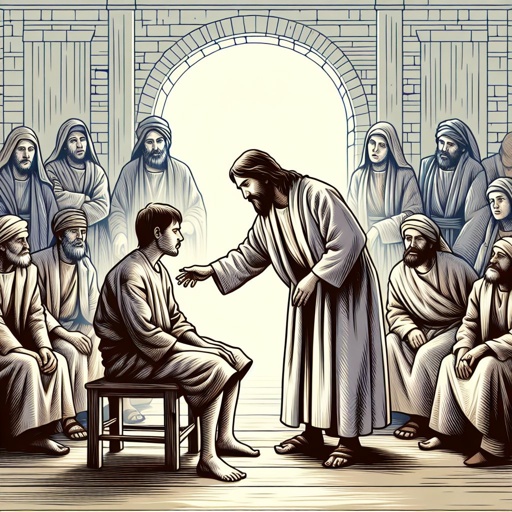
Mark 3:2 - "And they watched him, whether he would heal him on the sabbath day; that they might accuse him."
"And they watched him, whether he would heal him on the sabbath day; that they might accuse him." - Mark 3:2

Mark 2:3 - "And they come unto him, bringing one sick of the palsy, which was borne of four."

"And they come unto him, bringing one sick of the palsy, which was borne of four." - Mark 2:3

2 Timothy 3:16

Mark 3:3 - "And he saith unto the man which had the withered hand, Stand forth."

Mark 3:31-34

Mark 2:2

Mark 3:16 - "And Simon he surnamed Peter;"

Mark 4:3 - "Hearken; Behold, there went out a sower to sow:"

Mark 2

Mark 2

Mark 3:30 - "Because they said, He hath an unclean spirit."

Mark 3:15 - "And to have power to heal sicknesses, and to cast out devils:"

Mark 9:2 Show only 4 people Show a mountain area According to Mark 9:2

Mark 3:24 - "And if a kingdom be divided against itself, that kingdom cannot stand."

Mark 3:25 - "And if a house be divided against itself, that house cannot stand."

Mark 3:19 - "And Judas Iscariot, which also betrayed him: and they went into an house."

Mark 3:12 - "And he straitly charged them that they should not make him known."

Mark 12:3 - "And they caught him, and beat him, and sent him away empty."

mark 2:4

Mark 2:1

Mark 2:27

Mark 2:10

mark 2:4

mark 2:4

Mark 2:9

Mark 9:2 Show only 4 people and one of them is Jesus Show a mountain area According to Mark 9:2

mark 2:4

Mark 2:1