What does Mark 5:31 mean?
“And his disciples said unto him, Thou seest the multitude thronging thee, and sayest thou, Who touched me?” — Mark 5:31
The Bible verse Mark 5:31 in the King James Version (KJV) states, "And his disciples said unto him, Thou seest the multitude thronging thee, and sayest thou, Who touched me?"
This verse is found in the fifth chapter of the Gospel of Mark in the New Testament. It is part of a larger narrative about a woman who had been suffering from a hemorrhage for twelve years and sought healing from Jesus by touching the hem of his garment. This verse comes as part of the interaction between Jesus and his disciples after he felt power go out from him when the woman touched him.
The context of this verse is essential to understand its full meaning. Earlier in the chapter, we learn about the woman with the issue of blood who had suffered for twelve years and had spent all her resources on seeking healing to no avail. When she heard about Jesus, she believed that if she could just touch the hem of his garment, she would be healed. As she reached out and touched Jesus, she was indeed healed. Jesus, feeling power go out from him, turned and asked who had touched him. In the midst of a large crowd pressing around him, his disciples questioned why he would ask such a question when so many people were touching him.
This verse addresses a common theme found throughout the Gospels, namely the tension between the physical and the spiritual. For the disciples, the pressing crowd was a physical reality, and they couldn't understand why Jesus would ask who had touched him in such a situation. However, Jesus perceived the touch of the woman as something spiritual – an act of faith that resulted in healing. This interaction exemplifies the spiritual awareness and sensitivity of Jesus compared to the more earthly perspective of his disciples.
The verse also addresses the idea of individuality within a crowd. Despite the multitude of people pressing around Jesus, he was able to discern the touch of the woman and recognize it as a significant moment of faith and healing. This demonstrates Jesus's attentiveness to the needs of individuals within the larger context of the crowd. He does not overlook the woman's touch but acknowledges it and affirms her faith, showing that he values each person on a personal level.
Furthermore, this verse also illustrates the power of faith. The woman's belief that touching Jesus's garment would bring healing led to her being made whole. Her act of faith demonstrated her trust in Jesus's ability to heal and made her a powerful example of the connection between faith and healing.
Symbolically, the woman's touch can be seen as a representation of the power of faith and the ability to reach out to Jesus for healing and restoration. It also highlights the idea of spiritual healing and the compassionate nature of Jesus. Additionally, the crowd can be seen as a symbol of the distractions and noise of the world, while Jesus's attention to the woman demonstrates his ability to cut through the chaos and focus on the individual.
In conclusion, Mark 5:31 in the King James Version of the Bible captures a profound moment in the ministry of Jesus, highlighting themes of spiritual awareness, individuality within a crowd, the power of faith, and the compassionate nature of Jesus. This verse serves as a reminder of the importance of faith and the personal attention that Jesus gives to each individual, even in the midst of a crowded and chaotic world.
Get our apps


Artwork for Mark 5:31

Mark 5:31 - "And his disciples said unto him, Thou seest the multitude thronging thee, and sayest thou, Who touched me?"

"And his disciples said unto him, Thou seest the multitude thronging thee, and sayest thou, Who touched me?" - Mark 5:31

Mark 10:31

Mark 7:31-37

Mark 3:31-34

Mark 7:31-37

Mark 10:31 - "But many that are first shall be last; and the last first."

Mark 13:31 - "Heaven and earth shall pass away: but my words shall not pass away."

Mark 3:31 - "¶ There came then his brethren and his mother, and, standing without, sent unto him, calling him."

Job 33:31 - "Mark well, O Job, hearken unto me: hold thy peace, and I will speak."

Mark 4:31 - "It is like a grain of mustard seed, which, when it is sown in the earth, is less than all the seeds that be in the earth:"

Mark 2:5

Mark 12:31 - "And the second is like, namely this, Thou shalt love thy neighbour as thyself. There is none other commandment greater than these."

"But many that are first shall be last; and the last first." - Mark 10:31

Mark 11:31 - "And they reasoned with themselves, saying, If we shall say, From heaven; he will say, Why then did ye not believe him?"

Mark 7:31 - "¶ And again, departing from the coasts of Tyre and Sidon, he came unto the sea of Galilee, through the midst of the coasts of Decapolis."

Mark 15:31 - "Likewise also the chief priests mocking said among themselves with the scribes, He saved others; himself he cannot save."

Mark 16:4-5

Mark 16:4-5

Mark 16:4-5

Mark 1:31 - "And he came and took her by the hand, and lifted her up; and immediately the fever left her, and she ministered unto them."

Mark 14:31 - "But he spake the more vehemently, If I should die with thee, I will not deny thee in any wise. Likewise also said they all."

Mark 5:17 - "And they began to pray him to depart out of their coasts."

John 5:31 - "If I bear witness of myself, my witness is not true."

"And the second is like, namely this, Thou shalt love thy neighbour as thyself. There is none other commandment greater than these." - Mark 12:31

Mark 15:5 - "But Jesus yet answered nothing; so that Pilate marvelled."

Mark 8:31 - "And he began to teach them, that the Son of man must suffer many things, and be rejected of the elders, and of the chief priests, and scribes, and be killed, and after three days rise again."
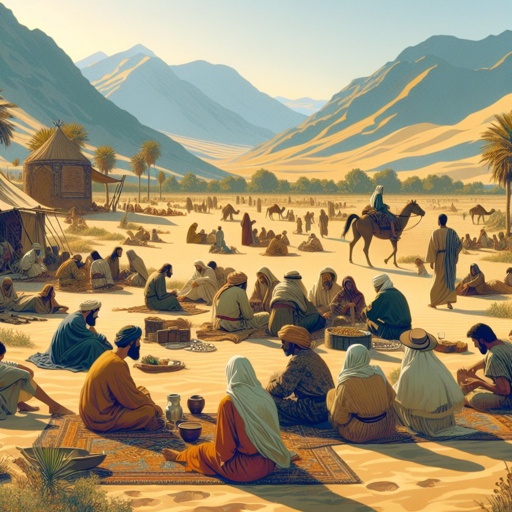
Mark 6:31 - "And he said unto them, Come ye yourselves apart into a desert place, and rest a while: for there were many coming and going, and they had no leisure so much as to eat."

Proverbs 31:5 - "Lest they drink, and forget the law, and pervert the judgment of any of the afflicted."

Mark 5:1 - "And they came over unto the other side of the sea, into the country of the Gadarenes."