What does Mark 5:8 mean?
“For he said unto him, Come out of the man, thou unclean spirit.” — Mark 5:8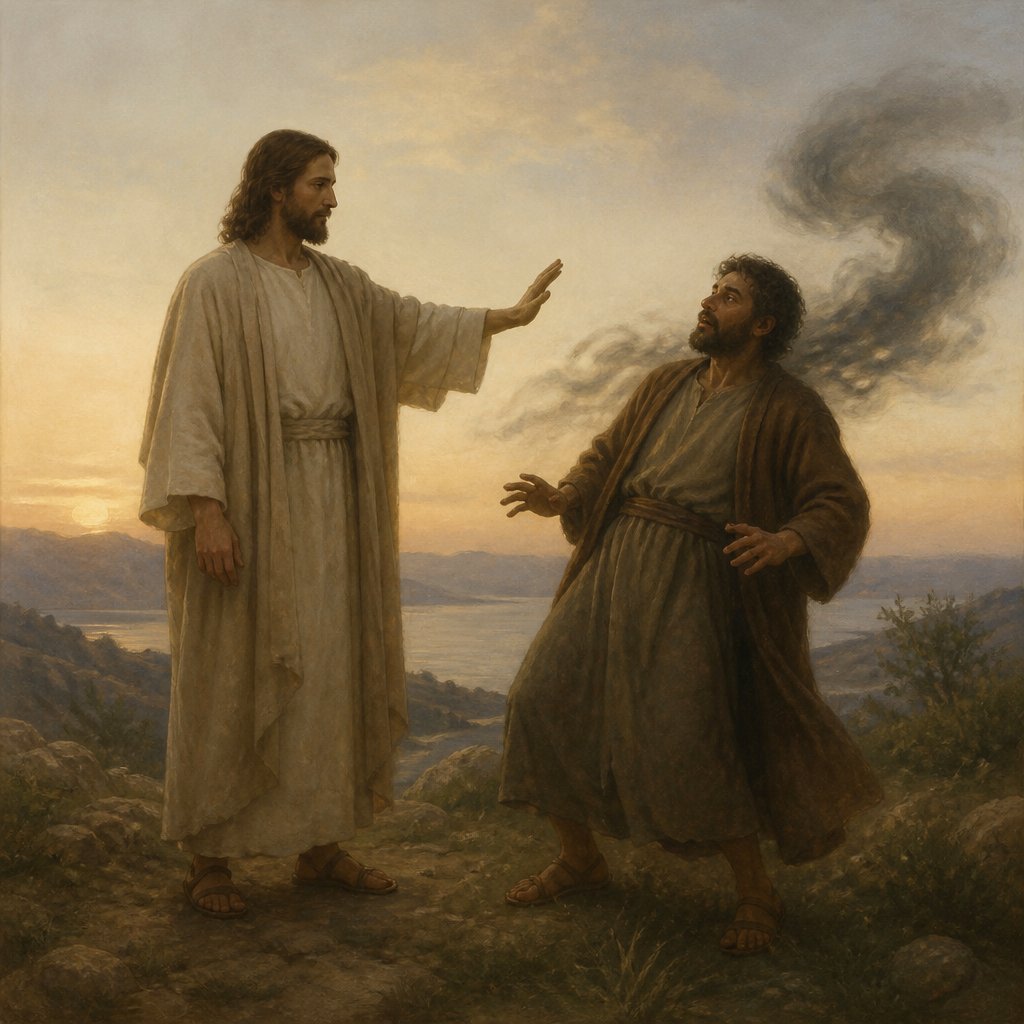
The Bible verse Mark 5:8 in the King James Version (KJV) reads: "For he said unto him, Come out of the man, thou unclean spirit." This verse is part of a larger passage that describes Jesus' encounter with a demon-possessed man in the region of the Gadarenes. This passage is rich in symbolism and offers valuable insights into the themes of spiritual warfare, deliverance, and the power of Jesus over evil spirits.
The context of this verse is crucial to understanding its significance. In Mark 5:1-20, Jesus and his disciples arrive in the region of the Gadarenes, where they are immediately approached by a man who is possessed by an unclean spirit. The man is described as living among the tombs, possessed by an evil spirit that gives him superhuman strength and causes him to engage in self-harming behavior. When the man sees Jesus, he falls at his feet and cries out, "What have I to do with thee, Jesus, thou Son of the most high God?" (Mark 5:7). It is at this point that Jesus commands the unclean spirit to come out of the man, as described in Mark 5:8.
The symbolism in this verse is profound. The presence of the unclean spirit in the possessed man represents the pervasive influence of evil and sin in the world. The man's tormented state serves as a vivid illustration of the effects of spiritual bondage and the destructive power of evil in people's lives. The unclean spirit's acknowledgment of Jesus as the "Son of the most high God" underscores the authority and divinity of Jesus, as well as the recognition of his power over the forces of darkness.
Furthermore, Jesus' command for the unclean spirit to come out of the man signifies his role as a deliverer and victorious conqueror over evil. His authority to cast out the unclean spirit demonstrates his divine power and the fulfillment of his mission to "destroy the works of the devil" (1 John 3:8). This verse highlights the theme of spiritual warfare, depicting Jesus as a mighty warrior who confronts and defeats the forces of darkness in the world.
The broader context of the passage also sheds light on the transformative nature of Jesus' deliverance. After Jesus commands the unclean spirit to leave the man, the spirit convulses the man and then comes out of him, leaving the man in a state of peace and sanity. This miraculous transformation emphasizes the power of Jesus to restore and heal those who are oppressed and enslaved by spiritual bondage. It conveys the message of hope and redemption, demonstrating that through Jesus, individuals can be set free from the grip of sin and evil and be restored to wholeness and a sound mind.
In addition to these powerful themes, the verse also underscores the importance of recognizing and acknowledging the presence of evil in the world. The unclean spirit's manifestation in the possessed man serves as a reminder of the reality of spiritual warfare and the ongoing battle between good and evil. It prompts believers to be vigilant and discerning, as well as to rely on the authority of Jesus to confront and overcome the forces of darkness.
In conclusion, Mark 5:8 in the King James Version (KJV) offers profound insights into the themes of spiritual warfare, deliverance, and the power of Jesus over evil spirits. Through its rich symbolism and narrative context, this verse conveys the victorious authority of Jesus as a deliverer and healer, and it emphasizes the transformative nature of his ministry. It serves as a reaffirmation of the hope and redemption that Jesus offers to those who are oppressed by spiritual bondage, and it calls believers to stand firm in their faith and rely on the power of Jesus to overcome the forces of darkness in the world.
Get our apps


Artwork for Mark 5:8

Mark 5:8 - "For he said unto him, Come out of the man, thou unclean spirit."
"For he said unto him, Come out of the man, thou unclean spirit." - Mark 5:8

Mark 8:5 - "And he asked them, How many loaves have ye? And they said, Seven."
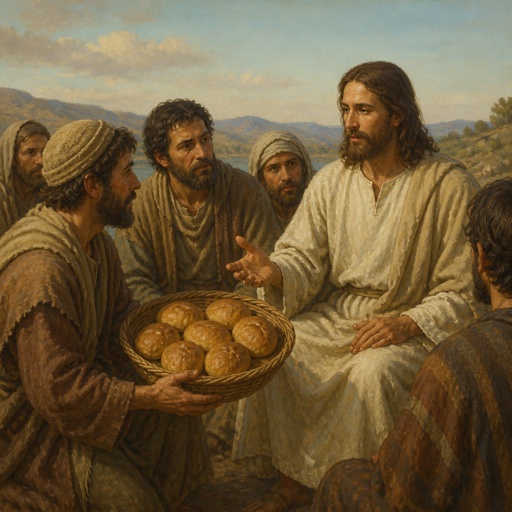
"And he asked them, How many loaves have ye? And they said, Seven." - Mark 8:5

Mark 8:35

Mark 8:35

Mark 12:8

Mark 13:8
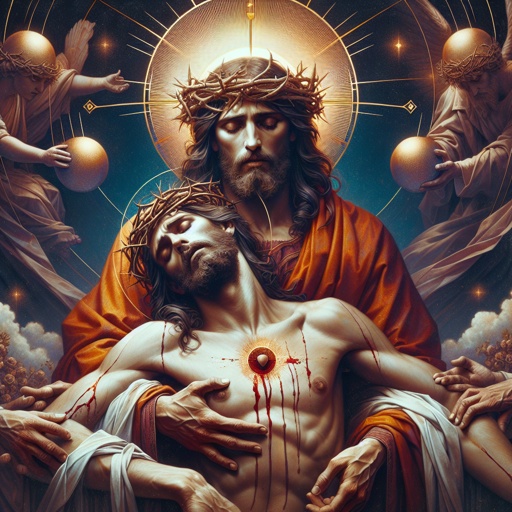
Mark 13:8

Mark 8:35

Mark 13:8

Mark 8:7

Mark 8:35

Mark 12:8

Mark 2:8

Mark 2:5

Mark 8:27 - 35

Mark 8:27 - 35

Mark 16:6-8

Mark 8:27 - 35

Mark 8:27 - 35

Mark 16:6-8

Mark 16:6-8

Mark 8:27 - 35

Mark 16:4-5

Mark 16:4-5

Mark 16:4-5

Mark 8:8 - "So they did eat, and were filled: and they took up of the broken meat that was left seven baskets."

Mark 8:30 - "And he charged them that they should tell no man of him."

Mark 5:17 - "And they began to pray him to depart out of their coasts."