What does Mark 7:2 mean?
“And when they saw some of his disciples eat bread with defiled, that is to say, with unwashen, hands, they found fault.” — Mark 7:2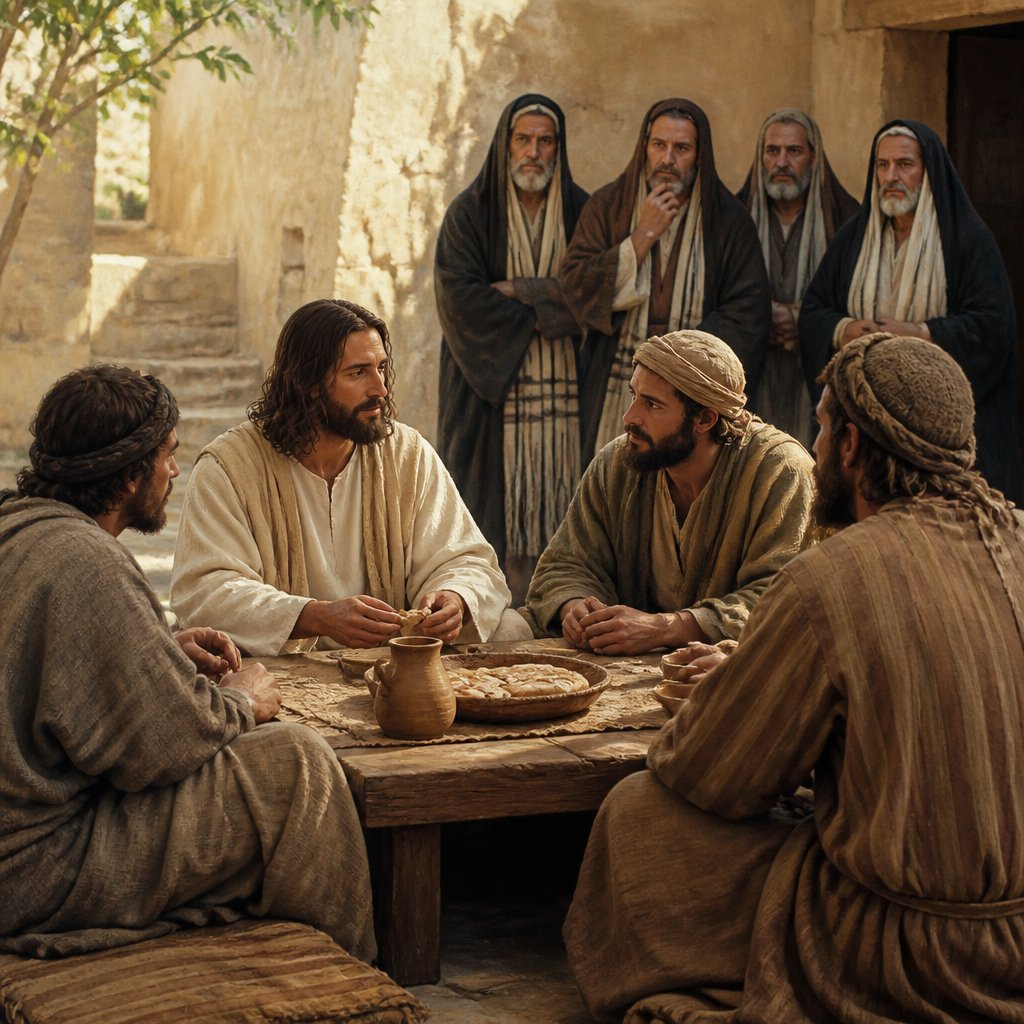
The Bible verse Mark 7:2 from the King James Version (KJV) states, "And when they saw some of his disciples eat bread with defiled, that is to say, with unwashen, hands, they found fault." This verse is part of a larger narrative in the Gospel of Mark, where Jesus is confronted by the Pharisees and scribes regarding the traditions of the elders and the observance of the ceremonial washing of hands before eating.
The context of this verse is important for understanding its deeper meaning. In the preceding verses, the Pharisees and scribes question Jesus about why his disciples do not follow the tradition of the elders by eating with unwashed hands. This ritual washing of hands before meals was not a matter of hygiene, but a religious tradition that the Pharisees believed was essential for maintaining ritual purity. However, Jesus responds by quoting the prophet Isaiah, saying, "This people honoureth me with their lips, but their heart is far from me. Howbeit in vain do they worship me, teaching for doctrines the commandments of men" (Mark 7:6-7, KJV).
This confrontation between Jesus and the religious leaders serves as a larger commentary on the nature of religious observance and tradition. The Pharisees and scribes were more concerned with outward appearances and adherence to man-made traditions, rather than with the true condition of the heart. Jesus challenges their legalistic approach to religion and emphasizes the importance of inner purity and the intentions of the heart. This theme of inward purity over outward ritual observance is a recurring theme throughout the Gospels.
The symbolism within this verse is significant in understanding its deeper meaning. The act of eating with unwashed hands symbolizes the Pharisees' preoccupation with external appearances and their neglect of matters of the heart. By highlighting this tension between external rituals and inner purity, Jesus is pointing to a deeper spiritual truth. He emphasizes that true worship is not based on adhering to man-made traditions, but on the condition of one's heart and the sincerity of one's relationship with God.
Furthermore, this verse also serves as a commentary on the nature of legalism within religious traditions. The Pharisees were so focused on upholding the traditions of the elders that they had lost sight of the true essence of God's commandments. Jesus' response to their criticism of his disciples' eating habits challenges the legalistic mindset and calls for a return to the heart of God's law, which emphasizes mercy, justice, and faithfulness (Matthew 23:23, KJV).
In conclusion, Mark 7:2 from the King James Version offers a profound commentary on the nature of religion, traditions, and the true essence of worship. By challenging the legalistic approach of the Pharisees, Jesus emphasizes the importance of inner purity and the intentions of the heart. The symbolism within this verse underscores the deeper spiritual truth that true worship is not based on outward rituals, but on the condition of one's heart and the sincerity of one's relationship with God. This passage continues to serve as a reminder for Christians to prioritize matters of the heart and to guard against the pitfalls of legalism within religious traditions.
Get our apps


Artwork for Mark 7:2

Mark 7:2 - "And when they saw some of his disciples eat bread with defiled, that is to say, with unwashen, hands, they found fault."
"And when they saw some of his disciples eat bread with defiled, that is to say, with unwashen, hands, they found fault." - Mark 7:2

Mark 2:7 - "Why doth this man thus speak blasphemies? who can forgive sins but God only?"

Mark 13:7

Mark 13:7

Mark 8:7

Mark 13:7

Mark 7:7 - "Howbeit in vain do they worship me, teaching for doctrines the commandments of men."

Mark 7:31-37

Mark 7:31-37

"Why doth this man thus speak blasphemies? who can forgive sins but God only?" - Mark 2:7

Mark 2:2

Mark 7:7 (KJVA) 7 Howbeit in vain do they worship me, teaching for doctrines the commandments of men.

Mark 7:7 (KJVA) 7 Howbeit in vain do they worship me, teaching for doctrines the commandments of men.

Mark 7:7 (KJVA) 7 Howbeit in vain do they worship me, teaching for doctrines the commandments of men.

Mark 7:7 (KJVA) 7 Howbeit in vain do they worship me, teaching for doctrines the commandments of men.

Mark 7:7 (KJVA) 7 Howbeit in vain do they worship me, teaching for doctrines the commandments of men.

Mark 7:7 (KJVA) 7 Howbeit in vain do they worship me, teaching for doctrines the commandments of men.

Mark 7:7 (KJVA) 7 Howbeit in vain do they worship me, teaching for doctrines the commandments of men.

Mark 7:16 - "If any man have ears to hear, let him hear."

Mark 7:20 - "And he said, That which cometh out of the man, that defileth the man."

Mark 2

Mark 2

Mark 7:23 - "All these evil things come from within, and defile the man."

Mark 9:2 Show only 4 people Show a mountain area According to Mark 9:2

Mark 7:7 Howbeit in vain do they worship me, teaching for doctrines the commandments of men.

Mark 7:34 - "And looking up to heaven, he sighed, and saith unto him, Ephphatha, that is, Be opened."

Mark 4:7 - "And some fell among thorns, and the thorns grew up, and choked it, and it yielded no fruit."

Mark 10:7 - "For this cause shall a man leave his father and mother, and cleave to his wife;"

mark 2:4